
Fan of blended iced coffee
Wants to blend ice cubes into the drink. Check whether this is allowed for each model, and what limits apply; the Consumentenbond includes ice crushing in its blender assessments.


If you want to blend ice cubes into your drink, choose a model that specifically states it can crush ice, and follow the limits on quantity and use. For chilled coffee with milk and no blended ice, a compact blender for cold ingredients may be enough. Choose a rechargeable or mains-powered model based on the available power supply and how you want to clean the parts after use.
Wants to blend ice cubes into the drink. Check whether this is allowed for each model, and what limits apply; the Consumentenbond includes ice crushing in its blender assessments.
Wants to use a compact cup and chooses between a rechargeable model and one that plugs into a socket based on the cottage’s facilities. The Consumentenbond describes a personal blender as a blender with a smaller cup that you can use to make a drink and take with you.
Makes iced coffee with milk and looks for easily accessible blades and parts that can be cleaned according to the instructions. The Consumentenbond recommends checking the guidance for each part.
First, decide whether the ice will go into the blender or be added to the drink after blending. Then consider the available power supply, portion size, and how to clean the cup and blades.
| What to consider | What to look for | Who is this important for? |
|---|---|---|
| Crushing ice cubes | Check the ice-crushing information and instructions for the exact model variant, including the permitted quantity. | If I want to blend ice cubes into my drink, I first check that my recipe is within the model’s guidelines; around 36% of consumers prioritise ice crushing. |
| Power and portability | Check whether there’s a suitable socket, how the model is charged, and whether you want to take the motor base with you. | If you want to blend in different parts of the cottage, weigh up a rechargeable model against the availability of a socket; around 29% of consumers prioritise power supply and portability. |
| Cleaning after using milk | Check which parts can be removed and which the manufacturer says are dishwasher-safe. | If I want to tidy up quickly after making a milky drink, I want to know which parts I can reach and clean easily; around 21% of consumers put cleaning first. |
| Cup size | Compare the capacity and maximum fill line of the exact model with the amount of coffee, milk and any ice you plan to use. | For a small portion, I don’t want to bring a bigger cup than necessary, but there still needs to be room for the ingredients; around 14% of consumers choose mainly based on portion size and ease of use. |
For the nutribullet Flex NBP013BL and Portable NBP003NBL, the manufacturer specifies that they can crush small quantities of ice. The Consumentenbond includes ice crushing in its blender assessments, but that doesn’t mean every model can handle the same quantity or recipe.
Check the instructions for the exact model and match the quantity and size of the ice to your recipe.
A cup designed for taking with you doesn’t, in itself, tell you how the blender is powered. The Bosch MMB2111S and Philips HR2670/01 mentioned here are compact mains-powered models, while the nutribullet models described run on a battery.
Before buying, check how the appliance itself is powered and whether that suits the cottage.
Only the parts specified by the manufacturer are dishwasher-safe. The Consumentenbond recommends checking the instructions.
Check the cup, lid and blade assembly separately. Bear in mind that you may need to wash them by hand if the cottage doesn’t have a dishwasher.
The Portable NBP003NBL and Flex NBP013BL are cordless personal blenders with cups holding 475 ml and 590 ml respectively.
The VitaPower Serie 2 MMB2111S is a compact mains-powered blender with a 0.6 l To Go cup.
The Blend & Go 3000 Series HR2670/01 is a compact mains-powered blender with a travel cup and two speeds.
According to Tefal, the cordless Lightmix BL1C0430 has a 300 ml cup and is designed for small portions of drinks.
Here you’ll find compact blenders and smoothie makers for drinks. Check whether the ice-crushing information for each model suits your recipe, and look at its power supply and cleaning instructions.
 No image available
A portable blender to consider if you want to make a drink and take it with you.
The product name specifies ice crushing, a 710 ml cup, 3 automatic programmes and dishwasher-safe parts.
 No image available
A compact mains-powered blender for anyone who wants to make a drink on the spot.
The product name specifies a 0.6 l capacity, 350 W and ice crushing. Check the instructions for the limits on using ice.
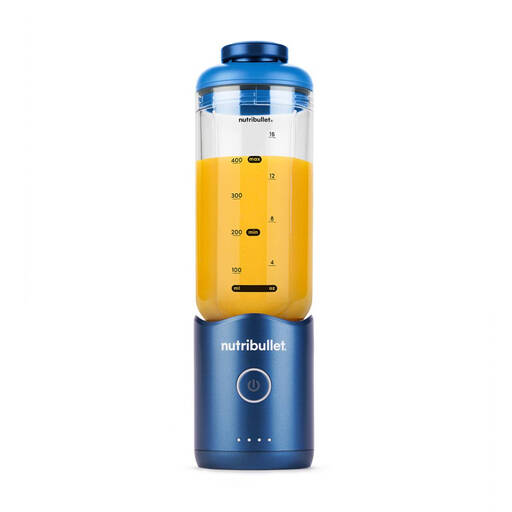 No image available
A cordless model to consider if you don’t want to use a socket where you’re blending.
The cup has a stated capacity of 590 ml. According to nutribullet, the Flex can crush small quantities of ice.
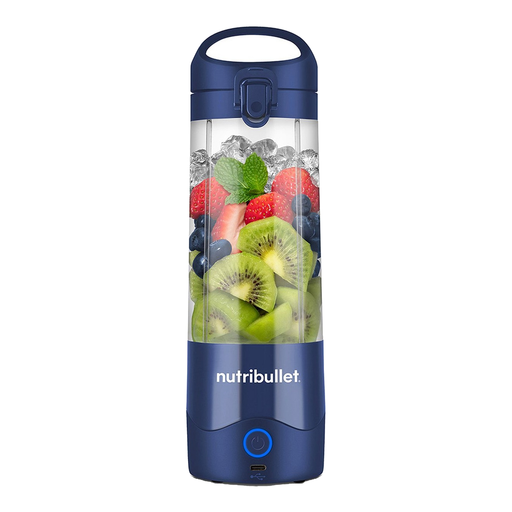 No image available
A smaller cordless cup to consider if you want to make a compact portion.
The product name specifies a capacity of 475 ml and USB-C charging. According to nutribullet, this model can crush small quantities of ice.
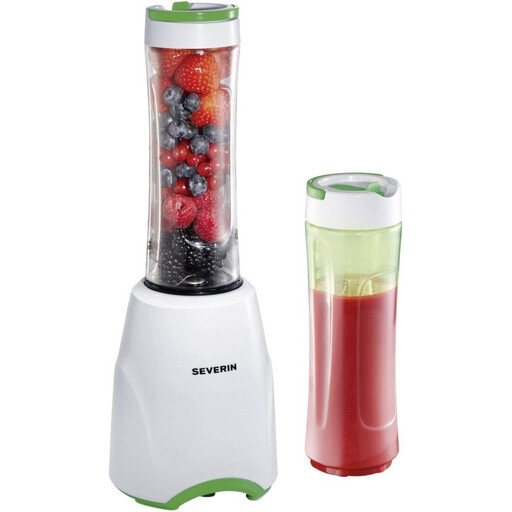 No image available
A smoothie maker to consider for preparing a smoothie or another drink.
No. Don’t assume you can just because a model is cordless or portable. For the nutribullet Flex NBP013BL and Portable NBP003NBL, the manufacturer specifies that they can crush small quantities of ice. Check the instructions for your model to make sure your recipe and the maximum fill line are within the limits.
Remove the cup from the base and check the instructions to see whether each part is dishwasher-safe. Use clean kitchen utensils for drinks containing milk. The Voedingscentrum recommends keeping chilled milk products at 4 °C and returning them to the fridge after use.
Use cooled coffee for iced coffee. The Consumentenbond recommends letting boiling liquids cool before pouring them into a blender jug. Also check the temperature limit in the instructions for your chosen model.
No. According to the Dutch Government, there is no fixed period for the statutory guarantee in the Netherlands: you’re entitled to a product that works properly for the length of time you could reasonably expect it to. If something is faulty, the seller must provide a solution; any additional guarantee doesn’t replace these rights.
The Dutch Government states that products including electronic goods must carry the CE marking in the EU. EU rules for materials that come into contact with food also apply to parts that touch your drink. A product listing in an online shop alone doesn’t prove that a specific blender complies with all applicable rules; check the product information and marking.