
Ice-cube mocha maker
You want a cold drink with finely crushed ice, rather than just blended coffee. Look for an explicit ice-processing claim for the exact model, and follow the instructions supplied with it.


For a frozen mocha with ice cubes, choose a model whose manufacturer explicitly says that the exact version can process ice; a higher wattage or a general smoothie claim isn’t enough. A mains-powered blender is suited to processing ice at home, while nutribullet says the rechargeable nutribullet Flex NBP013W can handle only a small quantity of ice. Also check the cup, instructions and cleaning guidance.
You want a cold drink with finely crushed ice, rather than just blended coffee. Look for an explicit ice-processing claim for the exact model, and follow the instructions supplied with it.
You want to blend and drink a single portion from a handy cup, with as little washing-up as possible. Compare the cup supplied and the cleaning instructions for that version.
You want to make your mocha somewhere other than the kitchen. If you’re considering a rechargeable model, check how it charges and whether there are limits on the amount of ice it can handle.
Start by checking the ice function of the exact version. Then compare the cup and cleaning requirements with how you want to make your drink during a short break.
A good fit if: you make frozen mocha at home and want a model with an explicit ice function. nutribullet says the Pro 900 NB907MACL can crush ice; Braun lists an ice-crushing/pulse function for the JB1051BK.
The trade-off: Braun says the model comes with both a glass jug and a to-go bottle; compare the included parts with what you need to make a single drink.
A good fit if: you want to blend without a plug socket and use a small quantity of ice. For the Flex NBP013W, nutribullet says it can crush ice, with the limitation ‘small quantity’.
The trade-off: this limitation doesn’t confirm that a cup full of ice is suitable; you’ll also need to factor in charging.
| What to consider | What should you check? | Who is this most important for? |
|---|---|---|
| Crushing ice finely | Look for an explicit ice-processing claim for the exact model and follow the instructions; don’t judge suitability on wattage alone. | If you want to crush ice cubes into your mocha, you’ll need to know whether the blender is designed for it. Around 33% of consumers prioritise ice processing. |
| One portion in a drinking cup | Check the capacity, fill line and whether a cup with a drinking lid is included. | If you want to make a single mocha directly in the cup, the key thing is whether it suits your portion size and how you plan to use it. Around 27% of consumers prioritise the convenience of a single-serve blender. |
| Blending without a plug socket | Check how the model charges and what quantity of ice is permitted. | If you want to use the blender somewhere without a plug socket, charging and the ice limit will be important. Around 20% of consumers prioritise not needing a plug socket. |
| Cleaning after use | Check whether each part is dishwasher-safe; don’t assume the same rules apply to the cup, lid, blades and motor base. | If you want to avoid lots of washing-up after a short break, the cleaning instructions for each part matter. Easy cleaning is the main concern for around 20% of consumers. |
Not every blender can crush ice cubes. An explicit ice-processing claim may also apply only to a limited quantity.
Check the instructions for the exact version before adding ice. The Consumentenbond also points out that not every blender is suitable for ice cubes.
Cleaning instructions can vary from one part to another. A dishwasher-safe cup doesn’t automatically mean the blades or motor base can go in the dishwasher too.
Check the manual for the cup, lid and blade assembly separately.
Braun says the PowerBlend 1 JB1051BK comes with both a glass jug and a smoothie-to-go bottle.
Compare everything in the box with how you plan to use the blender.
Extra parts may take up more storage space than you’d planned for a single drink.
For mains-powered use, the Pro 900 NB907MACL is a model worth comparing; the Flex NBP013W is rechargeable.
Braun says the PowerBlend 1 JB1051BK comes with a glass jug and a smoothie-to-go bottle.
The Blend & Go HR2670/01 is designed for blending and drinking from the supplied cup.
Tefal says the Blend Up BL19H4F0 comes with two bottles for taking your drink on the go.
These Joybuy picks are compact blenders for drinks with ice. For each model, check the instructions for the permitted quantity of ice and cleaning guidance.
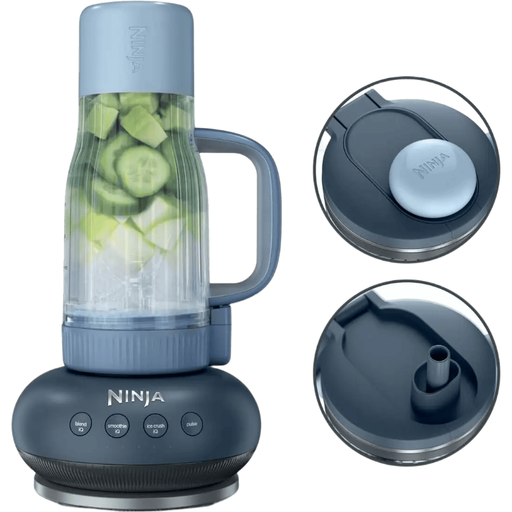 No image available
The product name mentions ice crushing; check the manual for the permitted quantity and instructions for using ice cubes.
The product name lists a removable 710 ml travel cup, three automatic programmes and dishwasher-safe parts.
 No image available
The product name mentions ice crushing; check the manual to see what quantity and type of ice are permitted for this version.
The product name lists a 0.6 l capacity, 350 W power and a white/silver finish.
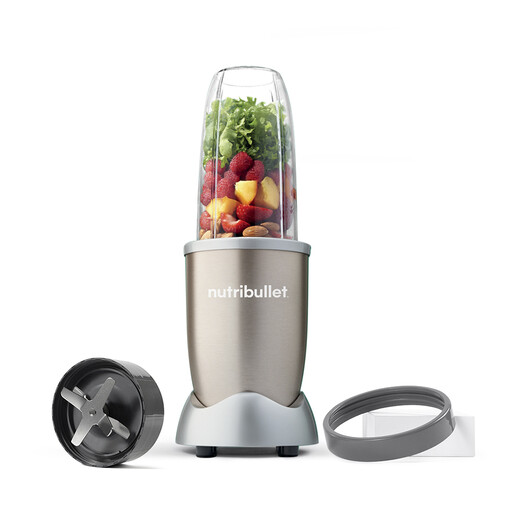 No image available
The product name mentions an Ice Grinder; check the manual for the quantity of ice permitted for this version.
The product name lists 900 W power, a 700 ml capacity and a Champagne finish.
 No image available
If you want to use this version for frozen mocha, first check the manual to see whether ice cubes are allowed.
The product name lists 250 W power and a 500 ml glass jug.
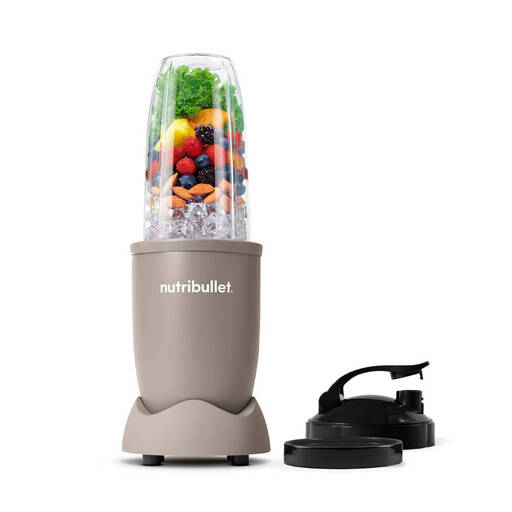 No image available
Before using it with ice cubes, check whether the instructions for this version allow it.
The product name lists a 700 ml capacity, a to-go lid and accessories. According to the product details, hot ingredients or liquids are not permitted and the maximum temperature is 21 °C.
No. A high wattage on its own doesn’t confirm that a blender is suitable for ice cubes. Look for an ice-processing claim and instructions for the exact model; treat ‘small quantity’ for the nutribullet Flex NBP013W as a limitation.
Let hot coffee cool first and follow the temperature instructions for your specific model. The Consumentenbond advises letting hot liquid cool first, and sticking to the stated maximum fill level and using a tightly closed lid.
Check the manual for each removable part before putting it in the dishwasher. The Consumentenbond advises washing blades by hand to help prevent them from becoming blunt too quickly.
There is no set statutory guarantee period in the Netherlands; if a product is faulty, the seller is your point of contact, according to the Rijksoverheid. Online purchases generally come with a cooling-off period of up to 14 days after delivery, subject to legal exceptions, according to ACM ConsuWijzer. A manufacturer’s guarantee is in addition to your statutory rights.
According to the Netherlands Food and Consumer Product Safety Authority, products intended to come into contact with food in the Netherlands must comply with the Commodities Act Decree on Packaging and Consumer Articles. Also check that the instructions suit the ingredients and parts of your blender.