
Anyone who wants to make an ice-cold mocha
You want to blend ice into a cold coffee drink. So check the instructions for ice and the permitted quantity, rather than relying solely on the wattage or a general claim that it makes smoothies.


First, choose a blender whose instructions clearly state how much ice it can handle: not every blender that makes smoothies can crush ice cubes. Then consider noise, power supply, cup capacity and cleaning in relation to your office setup. Manufacturer claims about ice or a quiet setting are not independent tests of how the blender will perform with your recipe.
You want to blend ice into a cold coffee drink. So check the instructions for ice and the permitted quantity, rather than relying solely on the wattage or a general claim that it makes smoothies.
You want to keep noise to a minimum in a shared workspace. A quieter setting may be useful, but also check whether it can handle the amount of ice you want to blend.
You want to move the blender and cup around easily. Consider whether there’s a socket where you’ll be preparing your drink, and whether a rechargeable model will be easy to charge.
Consumentenbond assesses ice processing and noise as separate aspects of its tests. For a frozen mocha, start by checking the instructions for ice for the exact model, then consider what will work in practice in your workplace.
| What to consider | What should you check? | Who is this most important for? |
|---|---|---|
| Blending ice | Check the instructions for the exact model, the permitted quantity of ice and the recommended method. | If I want a mocha with recognisable pieces of ice, I’ll first check what the model can handle. Around 33% of consumers put ice processing first. |
| Noise around colleagues | Check whether there’s a quieter setting and whether it’s suitable for the way you want to prepare your drink with ice. | If I work near other people, I want to know how loud the blender is on the setting I need. Around 27% of consumers put keeping things peaceful for colleagues first. |
| Cleaning after use | Check which parts can be removed and which, according to the manual, are dishwasher-safe. | If I have little time to wash up after my break, I’ll check how the cup and blade need to be cleaned. Around 20% of consumers put cleaning first. |
| Cup and power supply | Check the cup capacity, whether you need a socket and whether the lid is suitable for taking with you. | If I move between workspaces or there’s no socket nearby, portability and charging are important. Around 20% of consumers put portability first. |
Not every blender can crush ice cubes. For example, the nutribullet Portable NBP003NBL is only specified for a small quantity of ice.
Check the ice instructions for the full model number, and follow the stated quantity and method.
Tefal’s comparison for the quiet setting is with the maximum setting on the same model. It doesn’t tell you how loud the appliance is when blending ice.
Check whether the setting can handle the way you want to prepare your drink with ice, and choose a place and time that fit your office’s arrangements.
The name Tefal BL190A doesn’t, by itself, confirm that it’s the full BL190AF0 version. Nor has the black nutribullet Flip we found been confirmed as the same version as the pink NBP016MA we researched.
Check the full model number, version and included cup before applying specifications to a retailer’s listing.
Preparing a cold drink doesn’t mean you can ignore the product’s milk storage instructions.
Voedingscentrum advises returning opened milk to the fridge promptly and storing it at 4 °C. For semi-skimmed milk, it recommends using it within one week of opening. Always follow the label too.
The Portable NBP003NBL and Flip NBP016MA are two cordless options, with different cup capacities and stated ice-processing capabilities.
The Blend Up BL190AF0 is a compact, mains-powered blender with a take-away bottle; the Lightmix BL1C02 is a smaller rechargeable blender.
The Blend & Go HR2670/01 combines a mains-powered blender with a portable cup for individual drinks.
This selection of Joybuy products includes compact mains-powered blenders and portable models for drinks on the go. Before making a frozen mocha, check whether the exact model can process ice and how much it can handle.
 No image available
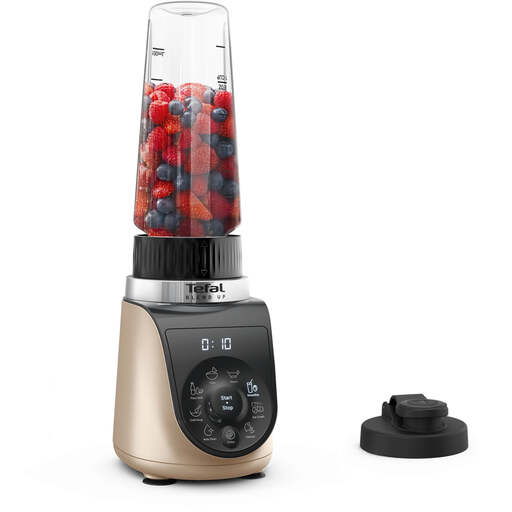
A compact, mains-powered option for anyone who values ice processing and removable parts that are easy to clean.
0.6 litres; 350 W; two speeds. The product title says it can crush ice; the description recommends speed 2 for ice and says the removable parts can be washed.
 No image available
A compact personal blender to consider if you’re looking for a mains-powered model.
The product description says it can blend frozen fruit. Check the full version and instructions for ice before choosing it for ice cubes.
 No image available
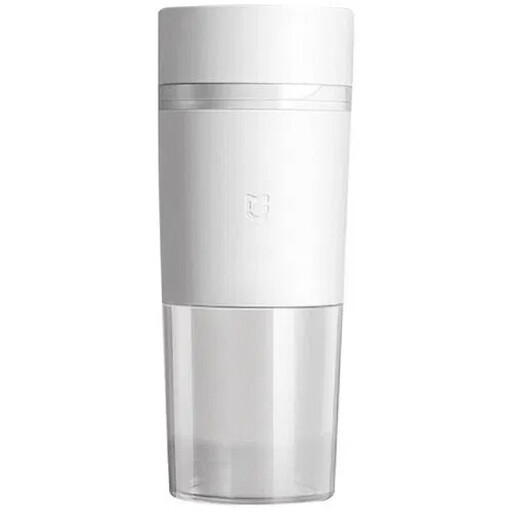
A rechargeable option for anyone who wants to blend somewhere without a socket and take their drink with them.
The product title mentions USB-C charging and a 20-minute run time. The description mentions cordless use, a drinking lid and a 0.48-litre cup.
 No image available
A portable option to consider if there’s no socket where you’ll be preparing your drink.
The product description lists a 400 ml capacity, a rechargeable battery and USB-C. Check the instructions for ice for this exact model.
 No image available
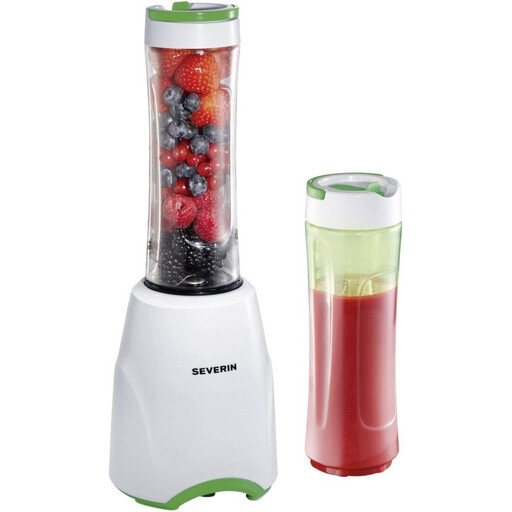
A mains-powered model with take-away cups to consider if you want to blend ice and clean the parts after use.
The product description says it can crush ice, and mentions two removable drinking cups and dishwasher-safe parts. Check the recommended quantity of ice and which parts are dishwasher-safe.
No, not every blender can crush ice cubes. Consumentenbond warns about this, so check the manual for the exact model and the permitted quantity. For example, nutribullet only specifies a small quantity of ice for the Portable NBP003NBL.
Only remove parts that the manual says can be removed, and check which of them are dishwasher-safe. Tefal lists removable blades and a dishwasher-safe bottle for the Blend Up BL190AF0; Philips lists dishwasher-safe parts for the HR2670/01.
Return opened milk to the fridge promptly after use and store it at 4 °C. Voedingscentrum recommends keeping semi-skimmed milk in the fridge for up to one week after opening; also follow the label on the product you’re using.
No. According to the Dutch government, statutory warranty in the Netherlands has no fixed period: you’re entitled to a product that meets what you can reasonably expect. If a product is faulty, the seller must provide a solution; a manufacturer’s warranty is additional.
No. The Dutch government describes CE marking as indicating that applicable legal product requirements have been met, not as a performance test for ice. Check whether the blender is suitable for ice separately by consulting the instructions for the exact model.