
A home blender for iced coffee
You mainly make frozen mocha at home and want to know whether your blender can handle ice cubes. The Consumentenbond (Consumers’ Association) warns that not every blender can crush ice cubes.


For frozen mocha in a small kitchen, a mains-powered blender is a sensible choice if you blend at home and want to use ice. A rechargeable model is handy if you want to blend without a socket, but nutribullet only specifies small quantities of ice for the Flex and Portable models reviewed. Check the dimensions and cleaning instructions for the exact model, and follow the manual when using coffee or other hot liquids.
You mainly make frozen mocha at home and want to know whether your blender can handle ice cubes. The Consumentenbond (Consumers’ Association) warns that not every blender can crush ice cubes.
You want a single-serve cup, base and accessories that fit on your worktop or in a cupboard. So compare more than just the cup: check the dimensions of the appliance too.
You want to blend without a socket and can plan around charging and any restrictions on ice. For the portable models reviewed, nutribullet specifies that only small quantities of ice can be crushed.
A good fit if: you usually blend at home and want a model that explicitly says it can crush ice.
Bear in mind: you’ll need a socket and space for the base and accessories.
A good fit if: you want to blend without a socket and a small portion of ice is enough.
Bear in mind: you’ll need to charge it, and the manufacturer specifies an ice-use restriction for the models reviewed.
For every model, check the instructions for using ice first. Then measure up to make sure the whole appliance, including the cup and accessories, will fit in your kitchen.
| What to consider | What should you check? | Who is this important for? |
|---|---|---|
| Crushing ice | Look for an explicit statement about ice for the exact model, and check how much ice you can use. | If I make frozen mocha, I want to know whether my blender can handle ice cubes; around 36% of consumers prioritise ice crushing. |
| Space and portion size | Compare the appliance dimensions with the space you have and the cup capacity with your preferred portion size. | With limited cupboard space, I want both the base and the cup to fit; around 29% of consumers prioritise space and portion size. |
| Cleaning | Check whether each part can be removed or is dishwasher-safe, and follow the manual. | After making a drink, I want to remove any residue easily; around 21% of consumers prioritise cleaning. |
| Blending without a socket | Check whether the model is rechargeable and read the instructions on ice and cup capacity. | If I can’t blend near a socket, a rechargeable model matters; around 14% of consumers prioritise cordless use. |
Size and power alone don’t tell you whether a model can handle ice cubes. The Consumentenbond points out that not every blender is suitable for ice cubes.
Check the information and manual for the exact model for an explicit mention of ice, along with any limits on quantity or use.
nutribullet says the Flex and Portable can crush small quantities of ice. That doesn’t mean they’re automatically suitable for a large portion or one with a lot of ice.
Adjust your portion to suit the instructions for the model you choose.
A paid-for warranty offer is separate from your statutory consumer rights. The Government of the Netherlands explains that there is no fixed statutory warranty period for all products in the Netherlands, and that the seller must provide a solution if a product is faulty.
Before choosing a paid-for plan, check what additional cover it provides.
Offers mains-powered models and rechargeable blenders. Cup capacity and the manufacturer’s stated ice-crushing capabilities vary by model.
Offers compact Blend & Go models and a 5000 Series model that Philips says can be used with ice cubes.
According to Tefal, the Blend Up BL190A has a 700 ml travel bottle, a self-cleaning setting and removable blades.
The VitaPower Serie 2 MMB2111S is a smoothie-to-go blender with a 0,6 l cup.
This selection includes compact blenders for personal drinks, with both mains-powered and rechargeable models. Check whether ice can be used with the exact model.
 Image unavailable
A compact model for making a personal drink; the product information says it can crush ice.
Capacity: 0,6 l. Power: 350 W. Two speeds. Dimensions: 123 × 119 × 350 mm. The product information lists removable, dishwasher-safe parts.
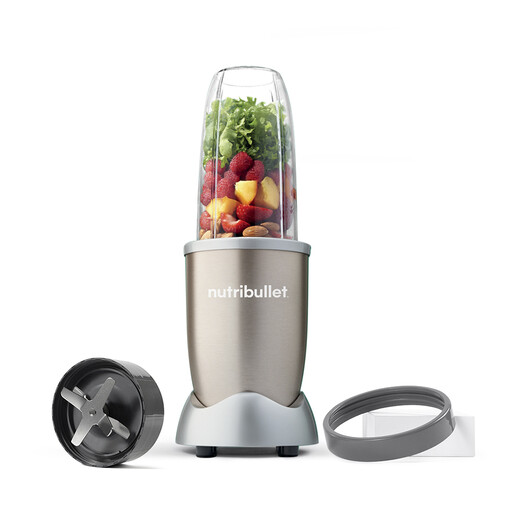 Image unavailable
A mains-powered model for making a personal portion with ice; the product information says it can process ice cubes.
Power: 900 W. Capacity: 700 ml. The product information lists pulse technology and a dishwasher-safe cup and drinking ring. Do not blend ingredients or liquids warmer than 21 °C, and add liquid before blending.
 Image unavailable
A compact blender for a personal drink; the product information says it can crush ice.
Power: 250 W. Capacity: 500 ml. Glass jug. The product information lists removable, dishwasher-safe parts.
 Image unavailable
A rechargeable model for making a personal drink without a socket.
Capacity: 475 ml. Rechargeable via USB-C. The product information lists removable parts and a travel lid.
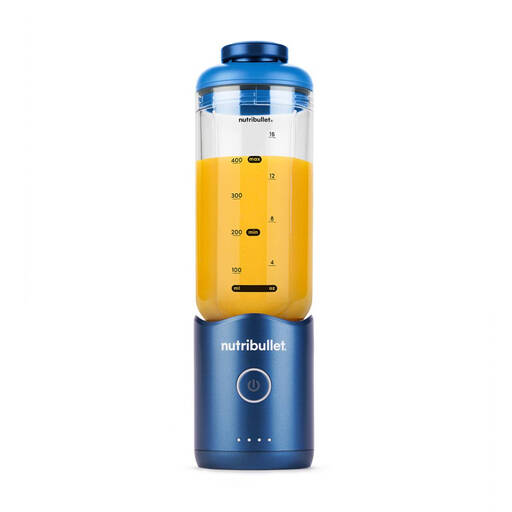 Image unavailable
A rechargeable blender for making a personal portion without a socket; the product information says it can crush ice.
Capacity: 590 ml. The product information lists a removable blade assembly and dimensions of 8 × 8 × 31 cm. nutribullet says the Flex can crush small quantities of ice. Do not blend hot liquids.
Don’t assume it’s safe: Joybuy’s warning for the nutribullet Flex says not to blend hot liquids, due to pressure build-up and the risk of burns. Follow the manual for your exact model and, if necessary, let the coffee cool first.
No. Don’t assume that the whole appliance is dishwasher-safe just because that description is used. nutribullet says the Pro 900 cups can go on the top rack and the blade should be rinsed with soap and water. Check the instructions for each part of your model.
In the Netherlands, you’re entitled to a product that meets expectations, and the seller must provide a solution if your complaint is justified. The Government of the Netherlands explains that there is no fixed statutory warranty period for all products.
Parts intended to come into contact with the drink must meet the applicable requirements for food contact materials, according to the Netherlands Food and Consumer Product Safety Authority. This alone doesn’t tell you whether a specific model meets those requirements.