
Iced coffee fan who likes crushed ice
Wants to know whether the blender can process ice cubes for a chilled coffee drink, rather than just blending liquid shakes.


Start by checking whether the exact blender model is suitable for processing ice cubes. A smoothie claim or high wattage alone isn’t proof. The Consumers’ Association warns that not every blender can crush ice; if you have a mains socket, a mains-powered model is an option, while a rechargeable model is most useful if you want to blend without a socket.
Wants to know whether the blender can process ice cubes for a chilled coffee drink, rather than just blending liquid shakes.
Wants to blend in different places in or around the holiday cottage, and is weighing up charging the blender against using a mains lead.
Is looking for a cup and parts that are easy to wash and store in a temporary kitchen.
Choose this option if: you have a usable socket in the holiday cottage and want a model with a clearly confirmed ice function.
Trade-off: you’ll need a socket and mains lead. Also check that the cup is the right size for the portion you want to make.
Choose this option if: you also want to blend somewhere without a usable socket.
Trade-off: you’ll need to charge it. For the exact model, check both the instructions for using ice and what’s included in the way of a cup and lid.
| What to consider | What to look for when buying | Who it matters most to |
|---|---|---|
| Processing ice cubes | Check that the instructions allow the exact model to be used for ice; a smoothie claim or wattage rating alone isn’t enough. | If I want to make frozen mocha with ice cubes, I want to know whether this particular model is suitable. Around 36% of consumers put ice processing at the top of their list when buying. |
| Blending without a socket | Check whether the model is mains-powered or rechargeable, and look at the charging method and instructions for using ice. | If I want to blend outdoors or somewhere without a socket, being free from a mains lead is important. Around 29% of consumers give use without a fixed socket top priority. |
| Cup and cleaning | Check which parts are included and whether the instructions say they can be washed by hand or in the dishwasher. | In a shared kitchen, I want to wash as few separate parts as possible and store the cup easily. Easy cleaning comes first for around 21% of consumers. |
| Functions and accessories | Compare the complete model and the parts included; extra programmes only matter if you’ll use them. | For a drink I make occasionally, I mainly want to pay for the functions I really need. Occasional use is the top consideration for around 14% of consumers. |
Wattage and a general smoothie claim don’t tell you whether the exact blender model is suitable for processing ice cubes.
Check the model-specific ice function or instructions, and follow the guidance for your chosen recipe.
A different model code or included cup could mean that information about the functions and accessories doesn’t apply to the version you’re looking at.
Before deciding, compare the full model code and box contents with the manufacturer’s information.
In the Netherlands, statutory rights are separate from any manufacturer’s warranty or additional cover.
The Government of the Netherlands states that there is no fixed statutory warranty period. Check which rights and additional terms apply to your purchase before choosing extra cover.
Tefal features the Blend Up BL190A in a recipe for iced coffee with ice cubes.
The Pro 900 NB907MAB is a mains-powered model for which the manufacturer lists ice crushing as a feature.
For the Blend & Go HR2670/01, Philips lists a compact drinking cup and dishwasher-safe parts.
The BC251EUGY is sold as a rechargeable portable blender.
This selection includes personal blenders that can crush ice, with both mains-powered and rechargeable models.
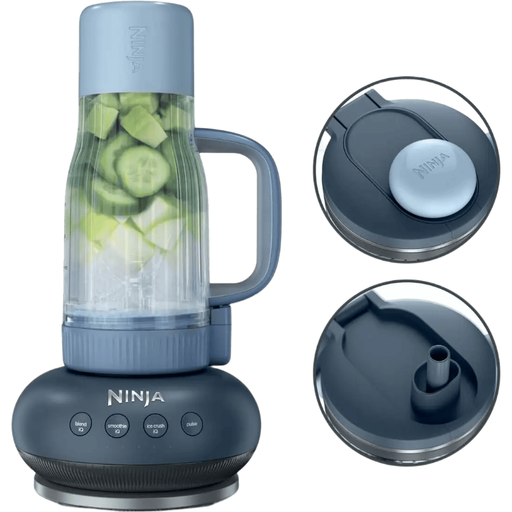 No image available
An option if you want to crush ice and take the cup with you after blending. The product information lists a 710 ml travel cup with a leak-proof lid and dishwasher-safe, removable parts.
 No image available
A mains-powered model whose product information lists ice crushing; follow the instructions for using the ice function. This version has a 0.6-litre jug, 350 W of power and a 0.85 m mains lead. The removable parts are dishwasher-safe.
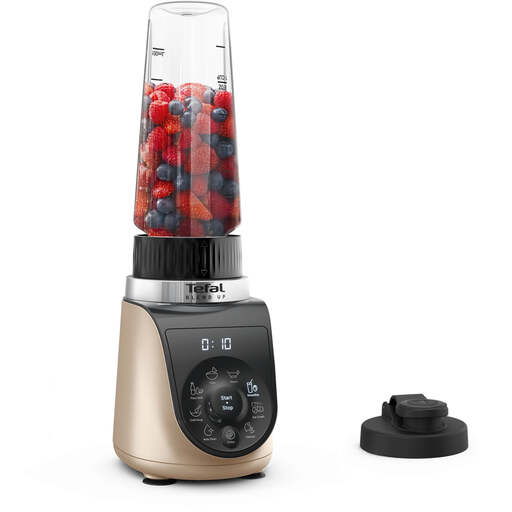 No image available
Tefal features the Blend Up BL190A in a recipe for iced coffee with ice cubes. Before buying, check the full version and the relevant instructions for the cup and processing ice.
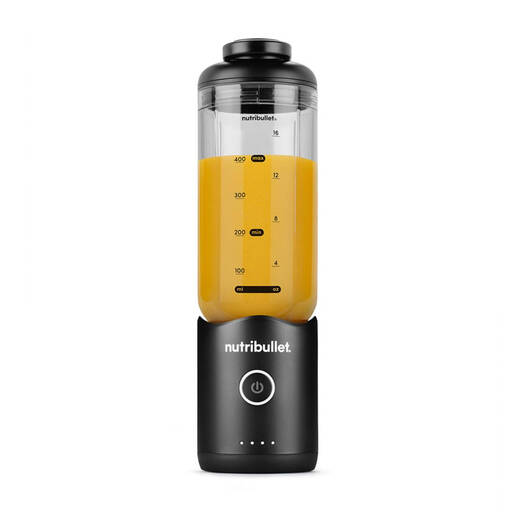 No image available
A rechargeable option for blending without a socket; the product information lists ice crushing and blending frozen ingredients. The cup holds 590 ml and charges via USB-C.
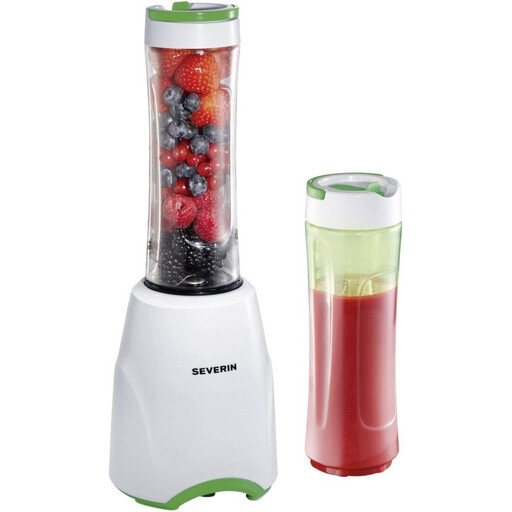 No image available
An option if you want to crush ice and take a drinking cup with you. The product information lists two Tritan drinking cups, dishwasher-safe parts and a 0.8 m mains lead. Not suitable for children under 8; children aged 8 and over should only use the appliance under supervision.
No, not every blender can crush ice cubes. The Consumers’ Association advises checking the ice function of the specific model; Tefal features the Blend Up BL190A in an iced coffee recipe with ice cubes. Also check the instructions for the exact version.
Check that the cup and blade unit supplied match the instructions, and that you have the specified power supply or charge. Follow the model-specific guidance for ice, filling and cleaning.
The Netherlands Nutrition Centre advises putting semi-skimmed milk back in a 4 °C fridge promptly after use. It recommends keeping highly perishable food and drink, including milk, out of the fridge for no more than two hours.
Yes. According to the Netherlands Food and Consumer Product Safety Authority, an electric blender must carry a CE mark if it falls under the relevant rules for electrical products. Ask the seller for the mark and supporting documentation; a CE mark says nothing about ice-crushing performance.
Not necessarily. The Government of the Netherlands states that there is no fixed statutory warranty period in the Netherlands and that the seller must offer a solution if a product is faulty. Compare any additional cover with the rights you already have, and check the terms that apply.