If you work at a fixed desk with colleagues nearby, choose a mains-powered blender with a quiet setting. A rechargeable model is a better fit if you don’t want to use a plug socket. Also check the jug capacity, cleaning instructions for each part and the guidance for your recipe. The Consumentenbond stresses that wattage alone doesn’t determine how well a blender makes a smoothie.
Who is this type of blender suitable for?
For colleagues in a quiet workspace
If you want to blend during office hours while others are working nearby, compare the quiet setting with information about the noise made by the specific model, and think about when you’ll use it. Tefal compares the quiet setting on the BL19H4F0 with the maximum setting on the same appliance.
A portable office blender
If you often move between workspaces or don’t have a convenient plug socket, a rechargeable model could be a good option. You’ll need to charge it and carry the motor base with you; nutribullet specifies USB-C charging for the Portable.
For quick and easy cleaning
In a shared kitchen, you’ll want to clean the cup, lid and blades easily after use. Check the cleaning instructions for each part: Braun describes detachable, dishwasher-safe parts for the PowerBlend 3 range, but not every version necessarily comes with the same accessories.
What should you look for when buying?
Start with the power supply: this will help you decide whether a mains-powered or rechargeable blender suits your workspace. Then compare the noise information, cleaning requirements and cup capacity with the way you plan to use it.
| What to consider |
What to look for |
Who is this most important for? |
| Noise in a shared space |
Look for noise measurements for the specific model or a quiet setting. Only compare settings if the measurement conditions are the same. |
If I’m blending while colleagues are working, I want to know how noisy the appliance is and whether it has a quiet setting. Around 33% of consumers say noise in a shared space is their main concern when buying. |
| Power at your blending spot |
Check whether the appliance runs on mains power or charges via USB-C, and what you’ll need to carry between workspaces. |
If there’s no plug socket at my workspace, or I don’t want to use a cable there, charging the blender beforehand is an important consideration. Around 27% of consumers prioritise being able to blend wherever they want. |
| Cleaning after use |
Check the cleaning instructions for each part, such as the cup, lid, blades and motor base. Also check what facilities are available at your office. |
If I want to leave the shared kitchen tidy after making a smoothie, it matters how I can clean each part. Around 20% of consumers prioritise a quick and thorough clean-up. |
| Serving size and recipe |
Compare the cup capacity and maximum fill line with your serving size. Follow the ingredient instructions and, where possible, look for a test of the exact model. |
If I want to make the right serving size and I’m not sure how my avocado recipe will turn out, I look beyond the wattage alone. Around 20% of consumers prioritise portion size and smoothie texture. |
Common buying mistakes
-
Assuming a high wattage guarantees a smooth avocado smoothie
The Consumentenbond points out that power doesn’t tell you everything about the smoothie you’ll get. What’s more, a general smoothie test isn’t the same as a test using avocado.
Where possible, look for a test of the exact model and follow the ingredient instructions. Treat wattage as a specification, not a measure of the result.
-
Confusing a travel cup with cordless operation
A portable blender may still need to be plugged into the mains. With a rechargeable blender, you’ll need to factor in charging it and carrying the motor base.
First check whether there’s a plug socket where you want to blend. Then compare what you’ll need to carry for the version you choose.
-
Leaving a smoothie unrefrigerated on your desk
How long it keeps depends partly on the ingredients. A drinking lid doesn’t replace refrigeration.
Drink your smoothie soon after making it or keep it chilled. Follow the storage advice for the ingredients in your recipe.
Brands to consider
Tefal
The Blend Up BL19H4F0 is a compact mains-powered blender with travel bottles. It’s worth considering if you have a regular place to blend and want easy clean-up.
- Tefal specifies a quiet setting, removable blades and dishwasher-safe bottles.
- The claim ‘up to 2 times quieter’ compares the quiet setting with the maximum setting on the same model, not with other blenders; it isn’t an independently measured noise level.
nutribullet
The Portable NBP003NBL is a rechargeable blender for places where you don’t want to use a plug socket.
- nutribullet says it comes with a USB-C cable, drinking lid and 475 ml cup.
- Remember that you’ll need to charge it, and carry and clean the motor base. The stated blending cycles are manufacturer specifications, not a guarantee of how it will perform with a particular avocado smoothie.
Philips
The 3000 Series Blender HR2620/40 is a compact mains-powered blender with a tumbler for taking on the go.
- Philips specifies a 350 W motor and a tumbler.
- This product information doesn’t provide an independent noise level or test result for avocado. Wattage alone doesn’t predict the result.
Braun
The PowerBlend 3 range includes a Smoothie2Go option for anyone also considering a jug blender.
- Braun describes a 600 ml Smoothie2Go cup and detachable, dishwasher-safe parts for the range.
- Check the version you choose: the range information doesn’t confirm that every model comes with the same accessories.
Joybuy products for personal smoothies
The products below are designed for personal smoothies; the selection also includes rechargeable models and blenders with a travel cup. Check that the features of each version suit your workspace and how you plan to use it.
 No image available
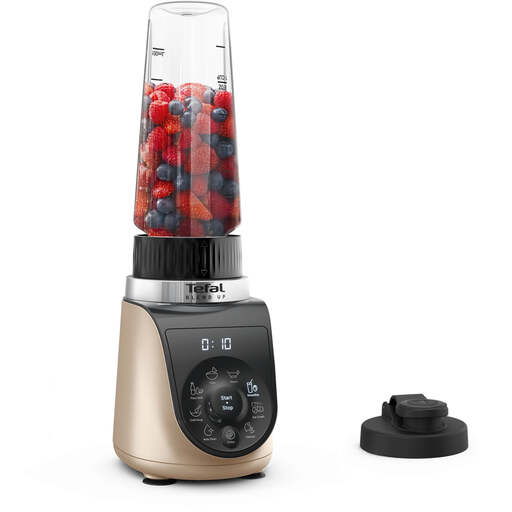
Tefal BL190A Blend Up Personal Smoothie Blender
The product name positions this model as a personal smoothie blender.
Joybuy
 No image available
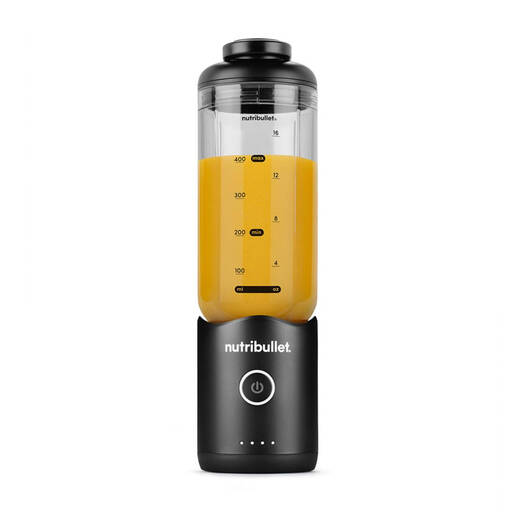
nutribullet Flex 590 ml Portable Blender Black
A rechargeable model could be a good fit if you don’t want to use a plug socket where you blend.
The product name specifies a 590 ml capacity, rechargeable battery, USB-C charging and a collapsible design. Do not use with hot liquids.
Joybuy
 No image available
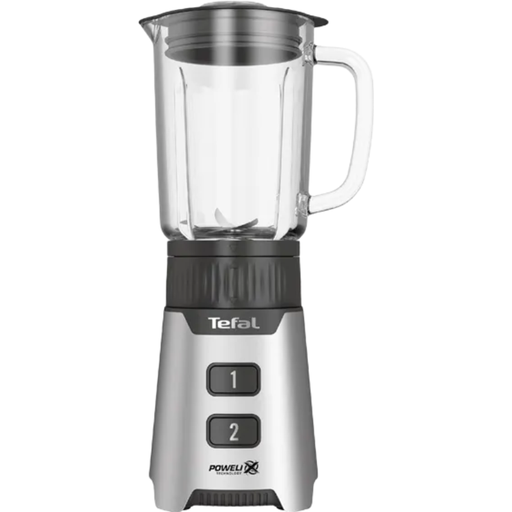
Tefal BL16GE30 Mini Blender, 400 W, 700 ml
This model could be worth considering if you’re looking for a mini blender to take on the go; check that its capacity suits your serving size.
The product name specifies 400 W and a 700 ml capacity. Wattage alone doesn’t predict how smooth an avocado smoothie will be.
Joybuy
 No image available
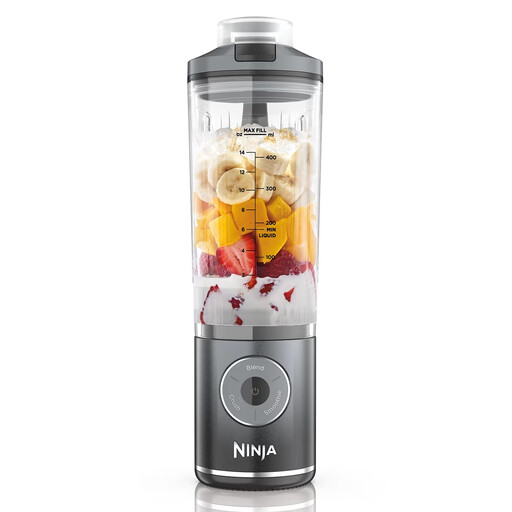
Ninja Blast BC251EUGY Portable Blender
The product name identifies this as a portable blender; check the product information for your chosen version to see whether it has the features you need at the office.
Joybuy
 No image available
Aigostar Marden BL-250 Blender, 250 W, 500 ml glass jug
Check whether the version with a glass jug suits the way you want to prepare a serving at the office.
The product name specifies 250 W and 500 ml. The product information limits use to domestic settings and excludes commercial and industrial use; check that this suits your intended use.
Joybuy
Frequently asked questions
Is a quiet setting quiet enough for a shared office?
It depends on the space and when you blend. Tefal compares the quiet setting on the BL19H4F0 with the maximum setting on the same appliance; this isn’t an independently measured noise level or a guarantee that colleagues won’t hear it.
What should I check before using and washing a blender at the office?
Read the manual for the exact model for guidance on assembly, the fill line, permitted ingredients and cleaning. Check which parts are dishwasher-safe; a dishwasher-safe bottle doesn’t mean the motor base can go in the dishwasher too.
Can I make an avocado smoothie to drink later in the working day?
Keep smoothies made with perishable ingredients chilled. The Voedingscentrum advises that an opened fruit smoothie can be kept in the fridge for 1–2 days, and recommends a fridge temperature of 4 °C. Milk and other highly perishable ingredients should not be left out of the fridge for more than 2 hours, according to the Voedingscentrum’s general advice; also follow the storage advice for the other ingredients.
Do I need extra cover if my blender develops a fault?
You don’t need to pay for an extended warranty to benefit from your statutory rights when buying as a consumer in the Netherlands. The Netherlands Government explains that there is no fixed statutory warranty period in the country; the reasonable lifespan depends on the product. Contact the seller if the product is faulty. Extra cover is only worth considering if its terms give you something beyond your existing rights.
Which Dutch product safety rules are relevant?
The NVWA outlines requirements for electrical appliances and rules for materials that come into contact with food. Which rules apply depends, among other things, on the voltage and the specific version. So check the product information for the model you choose; the word ‘blender’ alone doesn’t mean that one set of requirements applies to every version.


