
Holidaymaker making one smoothie
Wants to blend avocado with liquid in a small cup and drink from it or take it along without needing lots of kitchen equipment.


If your holiday cottage has a suitable socket and you’ll mainly be blending there, a compact blender with a drinking cup is a good fit. If you also want to blend in places without a socket, choose a rechargeable model and bear in mind that it needs charging and that cup capacities vary. Also check which parts can be cleaned and whether the exact model is suitable for your ingredients; the stated motor power alone won’t tell you how smooth your smoothie will be.
Wants to blend avocado with liquid in a small cup and drink from it or take it along without needing lots of kitchen equipment.
Wants to blend outside the kitchen too and can recharge the battery between uses.
Wants to clean the cup and accessible parts easily after breakfast, and checks which parts are dishwasher-safe for each model.
A good fit if: your holiday cottage has a suitable socket and you’ll usually blend there.
Bear in mind: the blender needs to be plugged in while blending; a portable cup doesn’t make the motor cordless.
A good fit if: you also want to blend somewhere without a socket.
Bear in mind: you’ll need to charge the battery, and capacities vary by model.
| What to consider | What should you check? | Who is this important for? |
|---|---|---|
| Ingredients and blending results | Check which ingredients and filling instructions the manufacturer specifies for the exact model. Wattage alone won’t tell you what the texture will be like. | If I want to blend avocado with my usual ingredients, I first check that the appliance is designed for this. For around 36% of consumers, suitability for their preferred smoothie texture is the top priority. |
| Blending without a socket | Decide where you want to blend, then check how the model is charged and what the manufacturer says about use per charge. | If I want to blend out of reach of a socket, I bear in mind that the battery needs to be charged beforehand. Around 29% of consumers prioritise cordless blending. |
| Cleaning | Check which parts are removable and which the manufacturer says are dishwasher-safe. | In a temporary kitchen, I don’t want more washing-up than necessary, so I check the cleaning instructions for the cup, lid and blades. Easy cleaning is the main priority for around 21% of consumers. |
| Cup capacity | Compare the capacity and maximum fill line of the exact model with the quantity you want to make each time. | If I’m making one portion, I want a cup that suits my recipe without taking up unnecessary space. For around 14% of consumers, the desired portion size is the deciding factor. |
The stated power rating on its own doesn’t tell you how well a model blends avocado, liquid and any other ingredients.
Check the ingredients permitted and the instructions for the exact model. If you want to compare performance, look for a relevant independent test.
A plug-in blender may come with a cup you can take with you, but the motor still needs to be plugged in while blending.
Before buying, check whether the model needs to be plugged in or runs on a battery.
The colour, full model number and included accessories can vary between versions.
Compare the full model number, colour and box contents before choosing a product.
The Blend & Go HR2670/01 is a plug-in option for anyone wanting to make one smoothie in a portable cup while staying in their holiday cottage.
The Portable NBP003B is a rechargeable model for anyone who doesn’t want to blend right next to a socket every time.
The rechargeable Lightmix BL1C0430 is designed for a small portion you can drink straight from the cup.
The Smoothie Mix & Go SM 3735 is a plug-in option for use in your holiday cottage.
This selection includes compact plug-in blenders and rechargeable models for making a smoothie in or around your holiday cottage.
 No image available
A plug-in option for anyone wanting to make a smoothie to take with them; bear in mind the availability of sockets.
The product name lists 250 W, a capacity of 500 ml and a glass jug.
 No image available
A good fit for anyone wanting to make a smoothie without having the blender plugged into a socket while blending; the battery needs to be charged beforehand.
Rechargeable via USB-C; the product information lists a cup capacity of 475 ml.
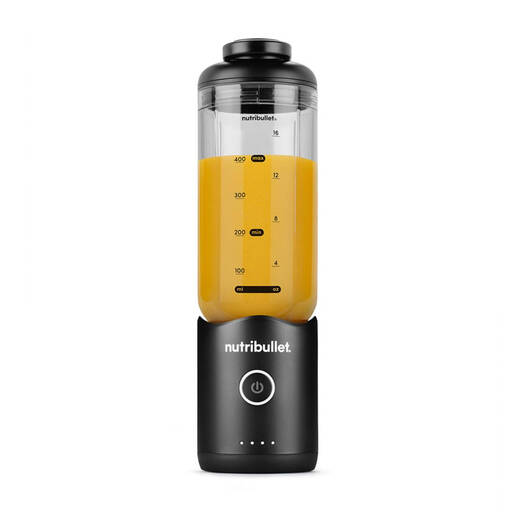 No image available
A rechargeable option for anyone who wants to blend cordlessly and is looking for a 590 ml cup; remember to charge the battery.
The product name lists USB-C charging and a capacity of 590 ml.
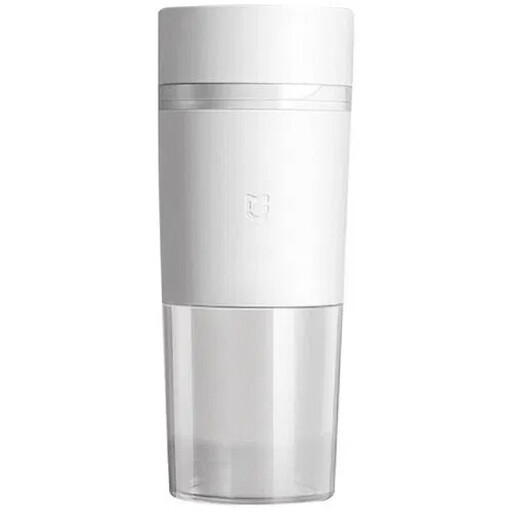 No image available
A portable option for anyone wanting to make a smoothie without a connected power cord; the battery needs to be charged for cordless blending.
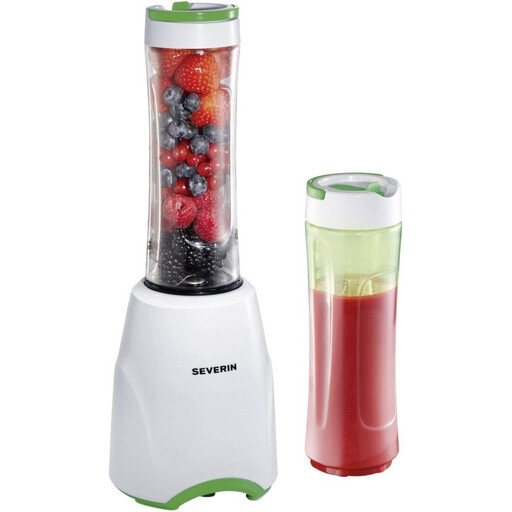 No image available
A good fit for anyone blending in their holiday cottage using a socket and wanting to take their smoothie in a removable cup.
Severin lists two removable, dishwasher-safe drinking cups, each with a capacity of 0.6 l, and a power rating of 300 W. A suitable socket is needed for use.
No, it depends on where you want to blend. If there’s a suitable socket in a fixed spot, a compact plug-in blender is also a sensible choice. For cordless use, compare the charging method and cup capacity of the exact battery-powered model.
Don’t assume so. Tefal says the Lightmix cup is dishwasher-safe, and Philips lists dishwasher-safe parts for the HR2670/01. Follow the instructions for the cup, lid, blades and motor unit for the exact model.
According to ACM ConsuWijzer, statutory consumer rights apply in addition to any manufacturer’s warranty. If, during normal use, the product doesn’t meet what you could reasonably expect from it, the seller must offer a solution. There is no single fixed warranty period in the Netherlands that applies to every blender.
According to ACM ConsuWijzer, when you buy a product online, you generally have up to 14 days after delivery to change your mind; statutory exceptions may apply. Before using the product, check the information about trying it out and returning it.
The European Commission explains that CE marking is mandatory for product categories covered by applicable harmonised EU rules, including electrical and electronic equipment. The Netherlands Food and Consumer Product Safety Authority states that consumer products intended to come into contact with food must comply with the applicable food-contact rules. A CE mark is not, in itself, a performance test or proof that a specific product listing complies with all the rules.