
Single-serve blender for home
You make one smoothie with soft, pitted apricots during your lunch break and would rather not wash up a large jug. The Netherlands Nutrition Centre advises removing the stones from apricots first.


If you mainly want to make one smoothie with soft, pitted apricots near a plug socket, look for a compact blender and check its usable cup capacity and how easy it is to clean. If you want to blend during your break without a plug socket, choose a rechargeable model to suit your ingredients and how you plan to use it. For frozen fruit, the instructions for the exact model matter more than the stated wattage alone.
You make one smoothie with soft, pitted apricots during your lunch break and would rather not wash up a large jug. The Netherlands Nutrition Centre advises removing the stones from apricots first.
You want to blend at your break spot and can charge the appliance beforehand. In that case, a rechargeable model is a different choice from a blender that needs a plug socket.
You also use frozen ingredients and want to check what the exact model can handle. The Consumentenbond points out that many blenders find frozen fruit more difficult to process than soft fruit.
First decide whether you’ll blend at home and take your smoothie with you, or blend at your break spot. Then consider portion size, your ingredients and which parts you’ll need to clean.
| What to consider | What to look for | Who is this most important for? |
|---|---|---|
| Portion and cup | Check the usable capacity and whether the model comes with a drinking lid. Remove the stones from apricots before blending. | If I’m making one smoothie and don’t want to wash up a large jug, I’ll focus on a cup that’s the right size for my portion. Around 36% of consumers say single-serve capacity is their main purchasing need. |
| Blending without a plug socket | Decide whether you’ll make your smoothie at home and take it with you, or blend it at your break spot. If it’s the latter, check how the exact model charges and any limits on its use. | If I want to blend at my break spot, I need a model that works there without a plug socket. Around 29% of consumers give blending without a plug socket top priority. |
| Frozen ingredients | Check the manual for permitted ingredients, quantities and preparation methods. Wattage alone doesn’t tell you how your recipe will turn out. | If I regularly use frozen fruit, I want to know whether the model I choose is suitable for it. Around 21% of consumers rank processing frozen fruit above portion size and portability. |
| Cleaning | Check which parts are removable and dishwasher-safe, and follow the cleaning instructions for each specific part. | After a short break, I want as little washing-up as possible. Around 14% of consumers say easy cleaning is their main purchasing need. |
The Netherlands Nutrition Centre warns that grinding fruit stones into a smoothie can be dangerous; motor power doesn’t change that.
Remove the stone and cut the flesh into pieces before blending.
The Consumentenbond explains that soft fruit is easier for many blenders to process than harder or frozen ingredients.
Choose a blender based on the recipes you usually make, and check the instructions for the exact model.
A cup that lets you take a prepared smoothie with you doesn’t mean the blender itself works without a plug socket.
Decide whether you want to blend at home and take your drink with you, or blend during your break.
The compact Blend & Go 3000 HR2670/00 is designed for drinks you make in the cup and take with you.
The Original 600 NB603DG plugs in, while the Portable NBP003W is rechargeable. So your choice also depends on where you want to blend.
The Blend Up BL19H4F0 is sold with two travel bottles.
The PowerBlend 1 JB1051BK combines a blender jug with a smoothie-to-go bottle.
These product picks are aimed at single-serve smoothies, with both compact plug-in blenders and portable rechargeable models.
 No image available
A compact option for making one smoothie on the worktop. Check that the cup and lid suit the way you plan to use it.
250 W; 500 ml; glass jug.
 No image available
A rechargeable option if you want to blend during your break without a plug socket. Check that the capacity suits your portion.
475 ml; rechargeable battery; USB-C charging.
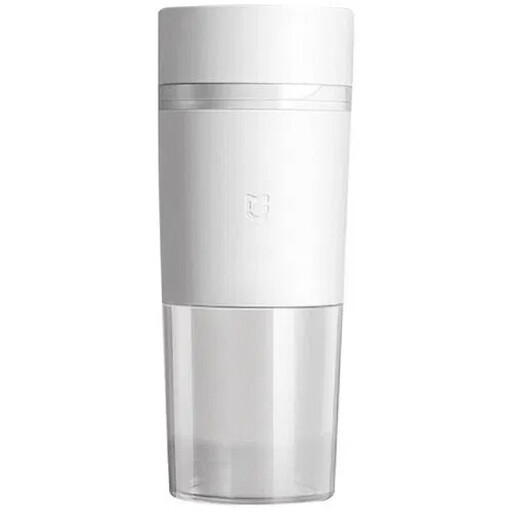 No image available
A portable option if you want to blend during your break without a plug socket. Check the cup capacity and charging details to make sure they suit your needs.
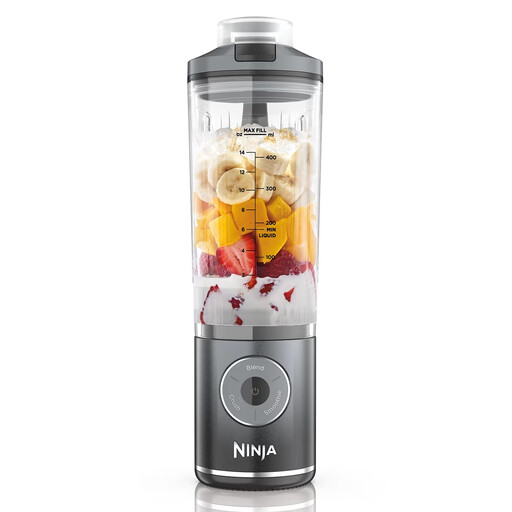 No image available
A portable blender for making a smoothie to take with you and blending without a plug socket. Check which cup comes with this model.
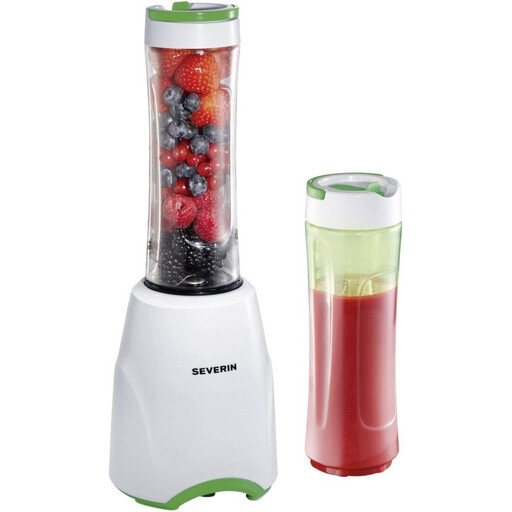 No image available
An option if you want to make a smoothie near a plug socket and take the cup with you. Check which accessories are included with this model.
No, remove the stone before blending. The Netherlands Nutrition Centre warns that grinding fruit stones into a smoothie can be dangerous.
Don’t choose on wattage alone. According to the Consumentenbond, most budget blenders can handle soft fruit, while many find harder or frozen ingredients more difficult to process. Check the instructions for the exact model to see whether it’s suitable for your recipe.
Keep the smoothie chilled. The Netherlands Nutrition Centre recommends keeping an opened fruit smoothie in the fridge for 1–2 days; this isn’t advice to leave it unrefrigerated.
For online purchases, ACM ConsuWijzer generally states that you have a statutory cooling-off period of up to 14 days after delivery, subject to legal exceptions. You’re also entitled to a product that, under normal use, meets what you could reasonably expect. A commercial guarantee does not replace these statutory rights.
The NVWA gives kitchen appliances as an example of electrical appliances that must meet applicable statutory safety requirements. The technical rules that apply depend, among other things, on the specific appliance.