What should you look for when buying?
Start with the care label on your textiles, then compare the machine and the space where it will go. Energy and water figures on the label are based on a standardised cycle, not every individual wash.
| What to consider |
What to look for |
Who is this important for? |
| Gentle washing |
Check for a delicate programme, temperature settings and spin settings. |
If you want to wash absorbent layers gently according to their care labels, choosing the right setting is key. Around 36% of consumers say textile care is their top priority when buying. |
| Noise and installation |
Compare the spin-noise rating on the label and measure the space available. |
If other people use the laundry room or nearby rooms, consider noise and vibrations, and check the connections and floor. Around 29% of consumers put noise and installation top of their list. |
| Drum size |
Compare the load capacity with your usual laundry and the load size for the programme you want to use. |
If the same machine will also handle your everyday household washing, look for a capacity that suits your overall laundry needs. Around 21% of consumers put capacity first. |
| Energy and water consumption |
Compare kWh per 100 cycles and litres per cycle on the energy label. |
If you want to compare machines by their energy and water consumption, look at the figures on the label alongside the capacity. Around 14% of consumers say consumption is their top priority when buying. |
The European Commission explains that the energy and water figures on the label are based on standardised test cycles. Use them to compare machines on the same basis, rather than as a forecast of how much a delicate programme will use.
Washing machines at Joybuy
These washing machines are designed for household laundry. Compare the programmes, capacity and dimensions listed for each model with your textiles and the space available.
 No image available
Bosch WGB2440BFG Serie 8, 9 kg
An option to compare if you’re looking for a machine for everyday washing and also want to check for a delicate programme.
9 kg; 1400 rpm; energy class A; adjustable temperature; 69 dB spin noise; delicate and wool/hand-wash programmes; cold-wash option; AquaStop and anti-vibration side panels.
View at Joybuy
 No image available
Midea MF110W80BA10/W-NL, 8 kg
The listed Delicate and 20°C programmes are worth checking if the care label recommends a gentle wash at a low temperature.
8 kg; 1400 RPM; 72 dB spin noise; Delicate; 20°C Low Temp Wash; AquaStop leak protection.
View at Joybuy
 No image available
Comfee' CFP01EW70W-JD, 7 kg
A model to consider if the stated depth of 400 mm matters for the space available.
7 kg; design depth 400 mm; 16 wash programmes, including a wool programme.
View at Joybuy
 No image available
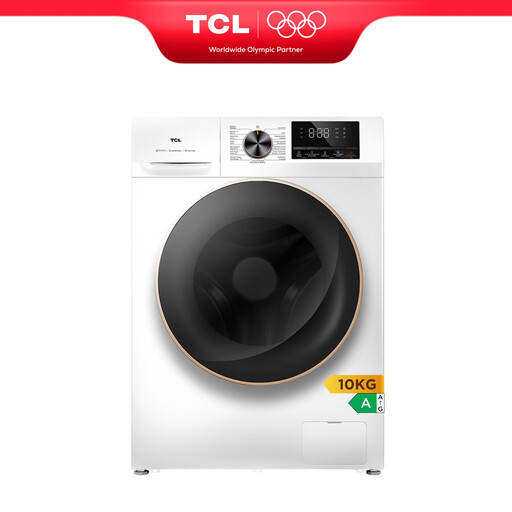
TCL FP1210WA0, 10 kg
Compare this model’s capacity and stated spin noise, and separately check whether any of its programmes suit the care label on your absorbent textiles.
10 kg; energy class A; 72 dB spin noise; 15-minute programme; drum-cleaning programme; child lock.
View at Joybuy
 No image available
TCL FF1006WB0, 6 kg
The stated depth may be useful if space is limited. Also check which programme suits the care label on your textiles.
6 kg; depth 45 cm; energy class B; 15-minute quick-wash programme; automatic load sensing.
View at Joybuy
Frequently asked questions
Can you wash period underwear on a hot hygiene programme?
Don’t assume so based on the programme name alone. Follow the care label on your own garment: HEMA recommends washing the period underwear it discusses at no more than 30 °C on a delicate programme, while Modibodi recommends cold, gentle washing for its products. These instructions don’t automatically apply to other textiles.
What should you check when connecting a washing machine in a shared laundry room?
Before installation, check that the surface is stable, and inspect the water supply, drainage and socket. Bosch Netherlands also recommends removing the transit bolts before first use and checking the connections for leaks. Follow the manual for your chosen model.
What can you do if your washing machine develops a fault?
Contact the retailer first to discuss a solution. According to the Dutch government, the retailer can’t simply send you to the manufacturer; the right solution depends on the fault and the circumstances.
Is an energy label compulsory, and can your old washing machine be taken away?
The Dutch government states that an energy label is compulsory for household appliances such as washing machines. If you’re buying a new, similar appliance as a private customer, the old-for-new scheme applies: the retailer must take your old appliance away free of charge. Online delivery also offers options for handing it in or arranging free collection at a later date.


