
Vandaag of morgen in huis

Kwaliteit gegarandeerd

Welkomstaanbiedingen ontgrendelen: GRATIS bezorging | Tot 80% korting | Gratis 30 dagen JoyPlus-proefperiode
Download de app
Peppermint sweets might seem like a simple purchase, but the difference between a roll of peppermints, strong menthol pastilles, peppermint balls and sugar-free mints is significant. One variety is mainly intended as a sweet treat at home, while another is more convenient for on the go, at work or after a meal.
If you only look at the packaging or brand name, you could end up choosing a product that doesn't suit your intended use. So pay particular attention to the sugar content, flavour strength, packaging and ingredients.
Sugar-free peppermint typically contains sweeteners such as sorbitol, maltitol, xylitol, sucralose or aspartame. That doesn't automatically mean the product contains no energy. What's more, excessive consumption of polyols can have a laxative effect. Always check the nutritional information and warnings on the packaging.
Products containing aspartame often state that they are a source of phenylalanine. This is relevant for people with phenylketonuria. The product information for Fisherman's Friend and several Smint varieties includes this warning.
A label such as "extra strong" or "strong menthol" tells you something about the flavour experience, but not about the exact composition. Menthol, peppermint oil, liquorice extract and flavourings can each create a different mouthfeel. If you're expecting a soft, sweet mint, you may find a strong menthol variety too intense.
Also check whether the product contains sugar, gelatine, milk, soya or other ingredients. The composition can vary between flavours and product lines.
A bag or jar with a high gram weight might seem good value, but a compact tin or roll can be more practical for daily use. For home or a sweet jar, peppermint in bulk packs or larger bags is ideal. For a bag, car or coat pocket, smaller portions are often more suitable.
So don't just compare the selling price — also compare the weight, number of pieces and type of packaging.
Choose regular peppermint if you're after a classic, sweet flavour. If you want to avoid sugar, look at sugar-free mints or chewing gum. The product information should clearly state which sweeteners have been used.
According to the product information, Sportlife Peppermint Chewing Gum contains no sugar and uses, among others, maltitol, sorbitol, sucralose and acesulfame-K. This gum is an alternative to hard mint sweets when you want to chew for longer.
With sugar-free varieties, look out for:
There are broadly three flavour profiles:
Peppermint balls usually have a hard outer shell and sometimes a soft centre. Pastilles dissolve gradually. Chewing gum lasts longer but requires a different way of using it. Also check whether you prefer hard peppermint, a soft filling or chewing gum.
For on the go, a tin, roll or resealable bag is practical. In the office, a larger jar or pack with multiple portions can be handy. A pack of loose peppermints is often suitable for sharing, but pay attention to hygienic storage and close the packaging properly after opening.
For vegan or gluten-free options, always check the current packaging. For example, Wilhelmina Sugar-Free Peppermint is described as vegan and gluten-free according to the product information provided. Recheck the ingredients list if the packaging or recipe has changed.
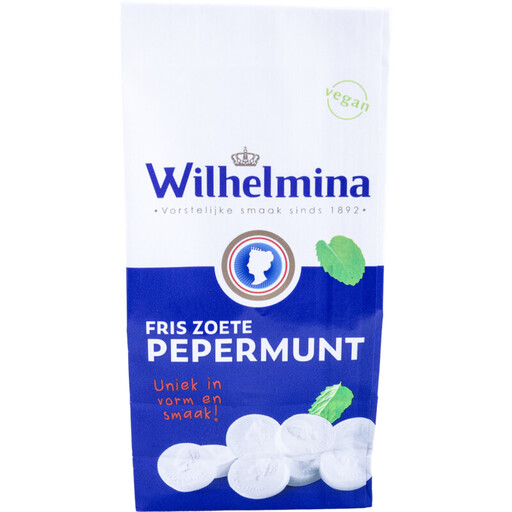
Why this suits the profile: A generous pack for home, a sweet jar or moments when you want to enjoy a classic mint regularly.
The contents and weight are clearly stated, so you can compare the price per 100 grams more easily than with small rolls.
200 grams, natural peppermint oil according to the product information, vegan and gluten-free as per the stated specifications.

Why this suits the profile: A compact choice for those who are often on the go and want to carry a sturdy tin of loose mints with them.
The product information states the sugar-free composition and the sweeteners used, so you don't have to rely solely on the front of the packaging.
70 grams, 50 mints according to the product description, with zinc lactate and a resealable tin.

Why this suits the profile: For those who deliberately want a strong menthol flavour and prefer sugar-free pastilles.
This variety explicitly states extra strong menthol and sorbitol with no added sugar. This makes the flavour profile clearer upfront.
75 grams, sugar-free formula according to the product information and a pronounced menthol flavour. Check the warning about sorbitol on the packaging.
Beyond this selection, there are also options for other preferences. King Peppermint Balls and Mentos Peppermint Balls have a hard outer shell with a soft centre. Fortuin English Peppermint and Wilhelmina focus on a classic, sweet peppermint. For chewing gum, Sportlife Peppermint is a practical choice in four portion packs.
If you're after a fruity flavour, you could look at Smint Strawberry with vitamin C. According to the brand's own product information, this variety contains vitamin C, but that doesn't automatically make it suitable as a replacement for a varied diet. Always check the ingredients, allergens and nutritional values on the current packaging with every purchase.
We've put together a full, up-to-date list of products that fully meet these strict selection criteria and comply with current European safety regulations.
That depends on your preference and how you use it. Sugar-free peppermint can be suitable when you want to avoid sugar, but it often contains polyols and other sweeteners. So read the ingredients list and take note of the warning about excessive consumption.
The best-before date is on the packaging. Store peppermint in a dry, cool place away from direct sunlight. Seal an opened bag or jar properly to limit moisture and flavour loss. Do not use the product if the packaging is damaged.
Not necessarily. A strong menthol flavour can be too intense for young children or people who are used to a soft mint. Also check the age recommendations, sweeteners and allergens. If in doubt, a classic peppermint or milder mint variety is a more sensible starting point.
