
Workshop hosts who want participants to compare grind settings
An adjustable mill lets participants choose between a fine and coarse grind. Peugeot Saveurs and Zassenhaus each list six grind settings for the models reviewed.


A manual pepper mill with an adjustable grind setting is a good choice when participants want to choose and compare the grind themselves, without needing batteries. Choose an electric mill if one-handed grinding while cooking matters more; check what power it needs and whether batteries are included. For every model, also check which peppercorns it can handle, how to refill it and how to clean it according to the instructions.
An adjustable mill lets participants choose between a fine and coarse grind. Peugeot Saveurs and Zassenhaus each list six grind settings for the models reviewed.
Button operation can be useful when you need your other hand for a pan or a utensil. According to Russell Hobbs Netherlands, the Russell Hobbs Classics 23460-56 runs on four AA batteries per mill; these are not included.
Check the refill and cleaning instructions for your chosen model. Food businesses have food safety and allergen obligations; the Netherlands Food and Consumer Product Safety Authority sets these out for businesses covered by the relevant regulations.
A good choice when: participants want to set or compare the grind themselves, without relying on batteries.
Bear in mind: grinding requires a free hand and turning the mill by hand.
A good choice when: one-handed operation while cooking is a priority.
Bear in mind: check the power requirements; the Russell Hobbs set reviewed requires four AA batteries per mill, which are not included.
| What to consider | What should you check? | Who is this important for? |
|---|---|---|
| Control over the grind | Check the settings, how to adjust them and whether the model is suitable for peppercorns. | As a workshop host, I want participants to compare different grinds. For around 33% of consumers, grind setting is a top priority. |
| Using it while cooking | Check how the mill is operated and what power it needs, including what comes in the box. | If you want to keep one hand free for a pan, easy operation while cooking is key. Around 27% of consumers prioritise one-handed operation. |
| Shared use and hygiene | Read the cleaning instructions for the exact model and consider whether they suit your workshop. | When sharing a mill, I want to be able to clean it according to the model’s instructions. Around 20% of consumers prioritise cleaning when a mill is shared. |
| Refilling and what you need | Check how to refill the model and whether you need batteries or other supplies. | For repeated use, I want to know how refilling works and what I need to have ready beforehand. Refilling and supplies are top priorities for around 20% of consumers. |
Grinding mechanisms and suitable ingredients vary from model to model. For the Derwent set reviewed, Cole & Mason describes a carbon steel mechanism for pepper and a separate ceramic mechanism for salt.
Check that the exact version is explicitly suitable for peppercorns.
According to the manufacturer, the Russell Hobbs Classics 23460-56 uses four AA batteries per mill, which are not included.
Before the workshop, check what power the model needs and what is included in the box.
According to Peugeot Saveurs, the wooden Peugeot Paris mill reviewed must not be immersed or put in the dishwasher.
Follow the cleaning instructions for the exact model and take into account how it will be used during the workshop.
The manual Paris u’Select pepper mill reviewed is designed for grinding with an adjustable setting.
The Classics 23460-56 is an electric salt and pepper mill set for anyone looking for button operation.
The POTSDAM pepper mill reviewed has a ceramic grinding mechanism that can be adjusted from the base.
The Contoured Mess-Free Pepper Grinder is designed for manual use, with a clear view of the contents and easy storage.
The Derwent Black Wood set reviewed combines a manual pepper mill with a separate salt mill.
This selection includes electric salt and pepper mills and manual pepper mills for use while cooking or at a workshop.
 No image available
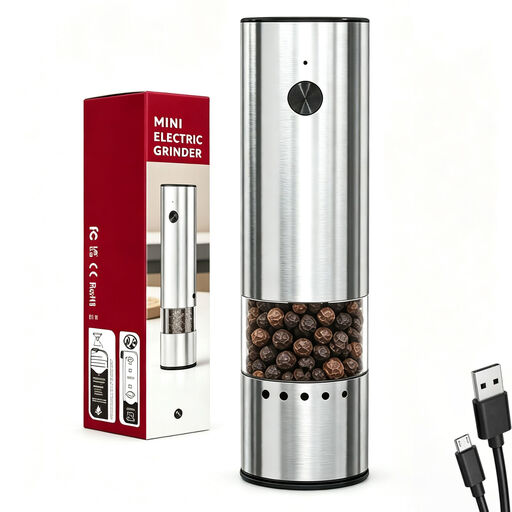
Suitable for anyone who wants to grind electrically while cooking and use a choice of settings.
The product name lists a ceramic grinding mechanism, five settings and a 30 ml reservoir.
 No image available
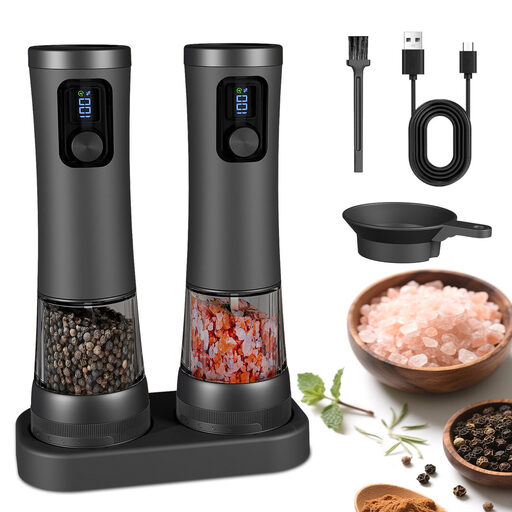
Suitable for anyone looking for electric operation and a set with two mills.
The product name lists a rechargeable design, LED lighting, an adjustable ceramic grinding mechanism and a cleaning brush.
 No image available
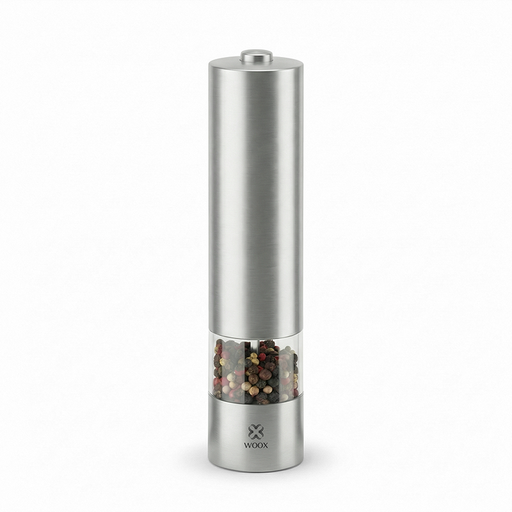
Suitable for anyone who wants to grind pepper electrically using a button.
The product name lists stainless steel, AS, a ceramic grinding mechanism and AA batteries. The usage warning says the mill is for dried peppercorns and salt only; do not use it for wet ingredients or hard spices.
 No image available
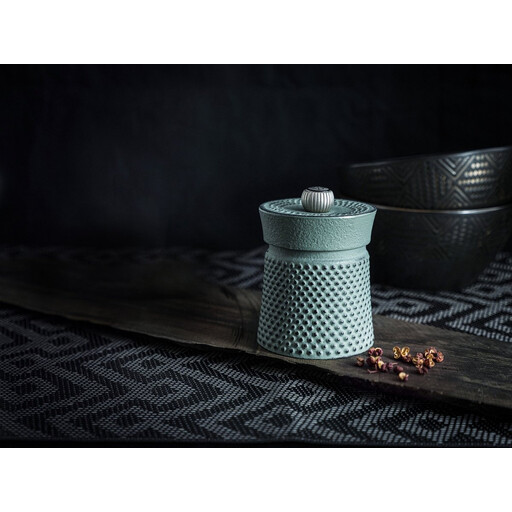
Suitable for anyone who wants to grind pepper by hand and adjust the grind.
The product name lists a cast iron finish.
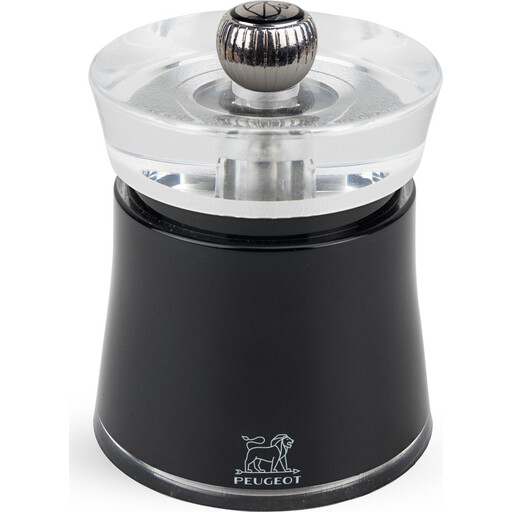 No image available
Suitable for anyone who wants to grind by hand and adjust the grind.
The product name lists an acrylic finish. The product information also mentions a transparent top.
Check the instructions for the exact model. For the Derwent set reviewed, Cole & Mason describes different grinding mechanisms for pepper and salt; Peugeot Saveurs advises against using a Peugeot salt mill for pepper or other spices.
Follow the cleaning instructions for your chosen model. For the wooden Paris mill reviewed, Peugeot Saveurs recommends a soft cloth and advises against using liquids or putting it in the dishwasher. For the mill housings listed, Zassenhaus recommends a soft, damp cloth and no harsh cleaning products.
For electric models, check what power they need; the Russell Hobbs Classics 23460-56 requires four AA batteries per mill, which are not included. Consumer purchases in the Netherlands are also covered by a legal guarantee: ACM ConsuWijzer explains that this applies in addition to any seller’s guarantee.
That depends on the organiser’s role. The Netherlands Food and Consumer Product Safety Authority requires businesses that prepare, process or sell food to have a food safety plan based on HACCP or an applicable approved hygiene code. Businesses offering food to consumers must provide information about any allergens present; the description of a workshop alone does not determine whether the organiser is subject to these obligations.