
Fans of chunky pepper dip
If you want to chop roasted peppers and perhaps nuts without blending everything until smooth, start by comparing choppers. The Consumentenbond says choppers are suitable for chopping foods including nuts.


For a chunky pepper dip with recognisable pieces of pepper or nuts, a chopper or a hand blender with a chopper attachment is better suited to the job. For a larger, sufficiently moist batch that needs to be smooth, a jug blender is worth considering. Before you buy, check the usable capacity, the accessories included and the cleaning instructions: a large jug won’t necessarily handle a small, thick batch well.
If you want to chop roasted peppers and perhaps nuts without blending everything until smooth, start by comparing choppers. The Consumentenbond says choppers are suitable for chopping foods including nuts.
If you’re making a larger, sufficiently moist batch and want a smooth dip, look at the usable jug capacity and how easy it is to clean. The Consumentenbond points out that a blender jug may be less suitable for small or thick batches.
If you want to slice, grate or chop ingredients as well as make dip, check whether a food processor with the right attachments would suit your other kitchen tasks. The Consumentenbond describes these uses for food processors.
Best for: making a chunky dip with ingredients such as walnuts, while also being able to blend directly in a bowl or pan.
Bear in mind: check that the specific model you’re considering includes a chopper attachment and that its bowl is large enough for the quantity you need.
Best for: chopping and mixing when your main task is making a compact, chunky dip.
Bear in mind: a chopper isn’t a hand blender, and it won’t necessarily make every dip as smooth as a jug blender.
Best for: blending a larger, sufficiently moist batch until smooth.
Bear in mind: according to the Consumentenbond, jug blenders are less suitable for small or very thick batches and often create more washing-up.
Best for: regularly slicing, grating or preparing other ingredients as well as making dip.
Bear in mind: extra attachments need storage space. Also check that the bowl is the right size for your recipe.
The breakdown below is for consumers choosing an appliance to make roasted pepper dip for a family meal.
| What to consider | What to look for when buying | Suitable for |
|---|---|---|
| Chunky texture | Check whether the model includes a chopper and what speed or pulse settings it offers. | If you want to keep pieces of pepper or nuts, having control over the chopping is the priority. Around 36% of consumers put a chunky texture first. |
| Smooth blending | Check the recommended filling quantity and guidance for thick mixtures; don’t base your choice on wattage alone. | If you prefer a smooth dip, the key factors are whether the mixture is moist enough and whether it suits the jug. Around 29% of consumers put smoothness first. |
| Batch size and versatility | Compare your recipe quantity with the usable bowl or jug capacity, and check which attachments are included. | If you want to make enough dip for a meal or use the appliance for other recipes too, capacity and extra features matter. Around 21% of consumers put these needs first. |
| Cleaning and storage | Check the cleaning instructions for each component and how many separate parts you’ll need to store. | If you want to spend less time washing up and putting things away after a meal, the number of accessories may be a factor. Around 14% of consumers put easy cleaning first. |
The Consumentenbond says jug blenders are less suitable for small or thick batches. So the size of the jug alone can’t guarantee that your recipe will blend well.
Compare the quantity you usually make with the recommended filling quantity and guidance for thick mixtures.
A jug blender may need more washing-up and storage space. You may also have to make the recipe in several batches.
A chopper is a separate accessory and isn’t automatically included with every model. Without the right attachment, you won’t be able to chop ingredients in the same way.
Check the full model name and the list of components included with the version you want to buy.
For the Tefal Blendforce II BL435831, Tefal lists both 1,25 litres and 1,75 litres on its own product page. These figures don’t clearly establish the usable capacity for your recipe.
Ask for confirmation of the usable capacity of the exact model before deciding how large a batch to make.
According to the Dutch Government, statutory guarantee rights in the Netherlands don’t have a fixed time limit; what you can reasonably expect from the product is what matters. An additional warranty is separate from these rights.
Compare the terms of an additional warranty with your existing rights. Report a faulty product to the retailer.
The Chopper 3000 HR1501/00 is an example of a standalone chopper for making dips.
The ErgoMixx MSM67160 is a hand blender with a chopper, while the MultiTalent 3 MCM3501M is a food processor for more food preparation tasks.
The MultiQuick 7 MQ7025X is a hand blender model with a small chopper.
The Blendforce II BL435831 is a jug blender option if you want to blend a wetter dip until smooth.
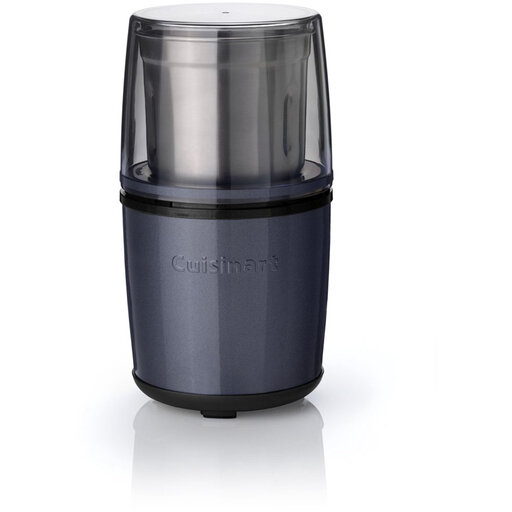
This Joybuy selection includes standalone choppers, jug blenders and hand blenders with chopper attachments for different pepper dip textures and batch sizes.
 No image available
An option for chopping ingredients for a dip; the product description mentions nuts and dips among other uses.
The blades are made of stainless steel and the bowl is removable. The description says the bowl and blades are dishwasher-safe.
 No image available
A jug blender option if you want to blend a sufficiently moist vegetable dip until smooth.
The product description lists a maximum jug capacity of 1,9 litres and a usable capacity of 1,0 litre. The blender has a pulse setting.
According to the instructions, ingredients must not be hotter than 60 °C, and the appliance must not run for more than 2 minutes at a time.
 No image available
The product description mentions chopping dips and nuts, making it suitable if you want to prepare ingredients for a chunky dip.
The description lists a 2,0-litre glass bowl, two speeds and stainless steel blades.
Cut larger ingredients into pieces of around 2 cm beforehand, and don’t run the motor for more than 30 seconds at a time.
 No image available
This set combines a hand blender attachment with a chopper, so you can chop ingredients as well as blend them.
The product description lists a 500 ml chopper, stepless speed control, a measuring beaker and a whisk.
After using the appliance for up to 1 minute, let it rest for 1 minute. The description says the accessories can go in the dishwasher at temperatures below 60 °C.
 No image available
An option if you want to chop ingredients for a dip and also use a hand blender attachment.
The product title lists a 500 ml chopper; the description mentions normal and turbo settings, a measuring beaker and a whisk.
The description says the removable accessories are dishwasher-safe.
For a dip with walnuts, it’s best to use a chopper designed for the job. The Consumentenbond says a chopper is suitable for chopping nuts; also check which ingredients are allowed for the model you choose.
Unplug the appliance after use and detach the attachments. Check the instructions to see which removable parts are dishwasher-safe, and don’t assume that the motor unit can go in the dishwasher.
Let any warm leftovers cool, then refrigerate them within two hours. The Netherlands Nutrition Centre advises keeping leftovers refrigerated for no more than two days and recommends a fridge temperature of 4 °C. Also follow the storage advice for the ingredients you’ve used.
No. According to the Dutch Government, statutory guarantee rights in the Netherlands don’t have a fixed time limit; what you can reasonably expect from the product is what matters. If a product is faulty, contact the retailer. A manufacturer’s warranty or additional warranty is separate from these rights.
The Dutch Food and Consumer Product Safety Authority treats kitchen appliances as electrical equipment. The relevant EU rules apply to electrical equipment within their scope, and manufacturers must state any restrictions on use. CE marking is required when harmonised EU rules specify it for the product. The CE mark is not, by itself, an independent performance test.