
Vandaag of morgen in huis

Kwaliteit gegarandeerd

Welkomstaanbiedingen ontgrendelen: GRATIS bezorging | Tot 80% korting | Gratis 30 dagen JoyPlus-proefperiode
Download de app
Choosing the right pens and markers may seem straightforward, but attractive packaging tells you little about everyday use. A set may contain lots of colours, while the nib does not suit your handwriting. Or a marker may write beautifully on paper but perform less well on glass, wood or canvas.
So pay particular attention to these three common pitfalls:
For students, schoolchildren, parents, creative hobbyists and professionals, the right choice comes down to the intended use, ink type, nib shape and maintenance.
The nib determines how much control you have when writing or drawing.
A “medium point” is not exactly the same across every brand. Look at the stated millimetre size rather than relying solely on the description.
Ballpoint pens generally use oil-based ink. This makes them suitable for forms, administration and extended writing. For example, the Deli ballpoint pen in the selection has a 0,7mm bullet tip, blue oil-based ink and comes in a 12-pack.
Gel pens often write smoothly and usually offer vivid colours. For left-handed writers, quick-drying ink is useful for reducing smudging. However, this still depends on the paper, writing speed and amount of ink used.
Erasable gel pens use heat-sensitive ink. The writing can be removed with the rubber tip, but exposure to high temperatures can also affect the written text. They are therefore best used for planners, practice work and notes that do not need to be permanent.
Alcohol markers are intended for a different type of use. According to Faber-Castell’s product description, the Goldfaber Sketch Markers dry quickly and are designed for sketches and illustrations. The set includes a 1 to 5 mm brush tip and a 0,6 mm metal fineliner tip. These properties are product specifications and information provided by the brand; the final experience also depends on the paper and your technique.
Not every marker is suitable for every material.
Close pens and markers securely after use. This is especially important for markers to help prevent them from drying out. Acrylic markers often need to be activated by shaking them and pressing the nib repeatedly. Follow the instructions on the product page.
When buying school supplies for young children, check the recommended age and safety information. Products containing small parts are not suitable for children under 3 years of age. Ink can also stain clothing and surfaces.
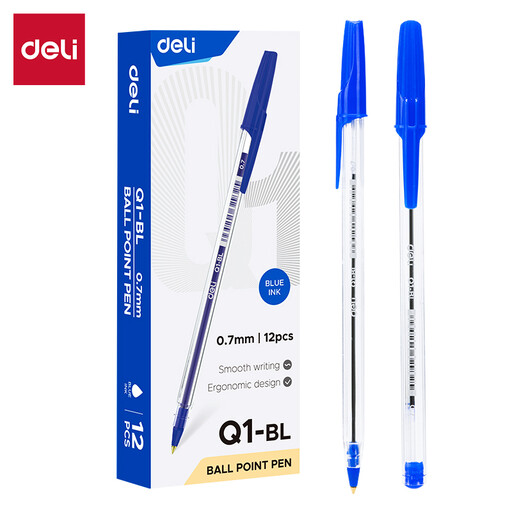
Why it suits this profile: A straightforward set for school, the office, forms and everyday writing, without unnecessary colour variations.
The specifications clearly state that the pack contains 12 pens with blue oil-based ink and a 0,7 mm nib.
12 pens, blue ink and a medium nib for general use.

Why it suits this profile: For illustrators and creative users who want to create both broad areas of colour and fine details.
The set states not only the number of colours, but also includes a 1–5 mm brush tip and a 0,6 mm fineliner tip.
24 colours and two nib options per marker for sketches and details.

Why it suits this profile: For projects on multiple materials, such as canvas, wood, glass or ceramics, when an ordinary fineliner is not enough.
The product information lists the suitable surfaces, two nib sizes of 1 and 3 mm, and an activation procedure.
6 metallic colours, water-based ink and a dual tip for broad and fine markings.
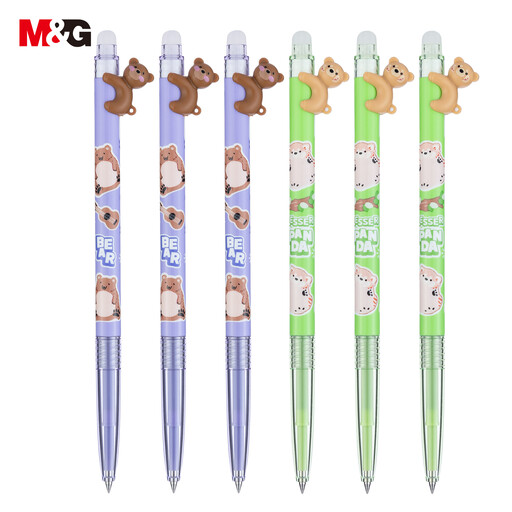
Why it suits this profile: The fine nib and erasable blue ink are ideal for planners, school notes and small writing areas.
The set specifies a 0,4 mm nib, six pens and a rubber eraser. Do note the warning regarding high temperatures.
0,4mm nib, erasable gel ink and six pens with decorative clips.
We have compiled a complete, up-to-date list of products that fully meet these strict selection criteria and the applicable European safety regulations.
Check these points before placing your order:
Ballpoint pens with a nib of around 0,7 mm are practical for everyday writing, forms and notes. Gel pens offer a different writing experience and are useful when you want a smoother ink line. For intensive use, choose a grip that feels comfortable in your hand.
Their lifespan depends on use, paper and storage. Keeping the cap securely closed helps prevent the marker from drying out. With acrylic markers, you should keep the nib clean and capped after use. Alcohol markers may run out more quickly when used for large areas of colour than for small details.
Usually not. The heat-sensitive ink is intended for corrections, planners and practice work. For contracts, forms and documents that need to remain permanent, ordinary ballpoint pens or non-erasable gel pens are a more sensible choice.
