
Vandaag of morgen in huis

Kwaliteit gegarandeerd

Welkomstaanbiedingen ontgrendelen: GRATIS bezorging | Tot 80% korting | Gratis 30 dagen JoyPlus-proefperiode
Download de app
A new set of pens and markers may seem easy to choose. Yet many purchases end up unused in a drawer. The nib is not suited to the paper, the ink smudges or a marker dries out quickly. A large number of colours also means little if the set has no clear purpose.
So do not focus only on colour and packaging. Pay particular attention to the type of ink, nib size, surface and recommended age range.
A set with lots of colours may be appealing for bullet journalling or crafting, but a few reliable colours are often enough for everyday school or office work. Also check whether the pens have caps or retractable tips. A capped pen left open can dry out more quickly, while a retractable pen offers better protection for the tip during transport.
Erasable gel pens use heat-sensitive ink. This means the text can be removed through friction, but it also makes these pens less suitable for documents where the content needs to remain permanent. Use them mainly for planners, notes, homework and other situations where corrections are expected.
A standard highlighter is designed for paper. According to the product description, an acrylic marker can be used on surfaces such as wood, glass, metal, ceramics and canvas. That does not mean it will produce the same result on every surface. Test a marker in an inconspicuous area first and check whether the ink can be removed easily once dry.
For products intended for children, the recommended age, small parts and ventilated caps are also important. A product with a safety statement or compliance standard is no reason to skip supervision. Always follow the warnings on the packaging.
The nib determines how much control you have while writing.
A fine tip is not always more comfortable. If you write quickly or use less smooth paper, you may benefit from a slightly broader tip.
Gel pen ink usually writes smoothly and is suitable for colour-coding, planners and notes. Pay attention to drying time if you are left-handed or often move your hand across the text. The product description for some WRITECH pens states that they use quick-drying ink; this is a product specification, not a guarantee that smudging will be completely avoided on every type of paper.
Rollerball pens use liquid ink. They can produce a fine, flowing line, but thin paper may absorb more ink. A ballpoint pen is often a practical choice for forms and everyday use, while a rollerball pen is well suited to smooth writing and drawing.
Acrylic markers require a different activation process: according to the product instructions, you need to shake the marker and press the tip several times until the ink starts flowing. Do this on scrap paper and protect your work surface.
For children’s craft sets, check at least the following:
The Jar Melo dual-tip markers are described as water-based, alcohol-free and washable from skin and most fabrics. The ‘90% washable’ statement is a product specification provided by the seller, not a promise that every stain will disappear completely. Do not leave stains to soak in unnecessarily.
Close markers securely after use. Keep pens out of direct sunlight and do not leave a marker tip-up for extended periods if the manufacturer recommends a different storage method.
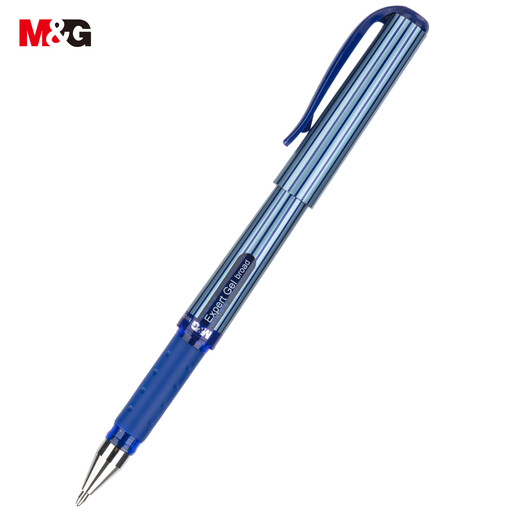
Why it suits this profile: A set of 12 blue gel pens is practical for school, home or the office when you mainly use the same colour. The 1.0 mm tip is designed for clear writing.
The specifications state one clear ink colour and a 1.0 mm medium point. You therefore do not pay for colours you may never use.
12 pens, blue gel ink and an anti-slip grip according to the product listing.

Why it suits this profile: This set is aimed at creative hobbyists who want to work on a range of materials, such as paper, wood, glass, ceramics and canvas.
The product description lists the suitable surfaces and activation steps. This allows you to decide in advance whether the marker is right for your project.
6 metallic colours and two tips of 1 mm and 3 mm per marker.
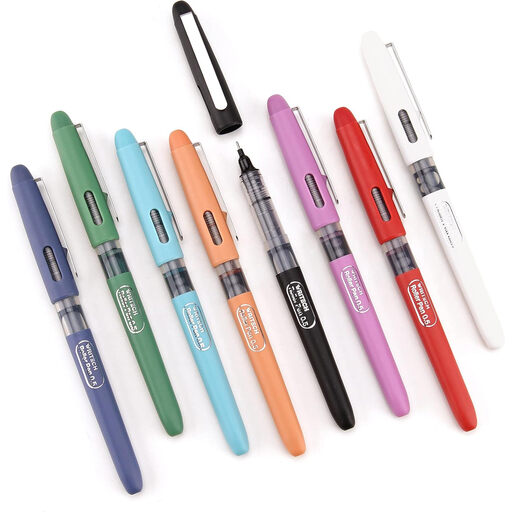
Why it suits this profile: The fine line and eight colours are ideal for journalling, drawing, sketching and precise notes. The transparent barrel lets you see the ink level.
The 0.5 mm line width and liquid ink type are clearly specified. You can weigh this up against the risk of ink showing through thin paper.
8 vintage colours, an extra-fine tip and a transparent ink reservoir.
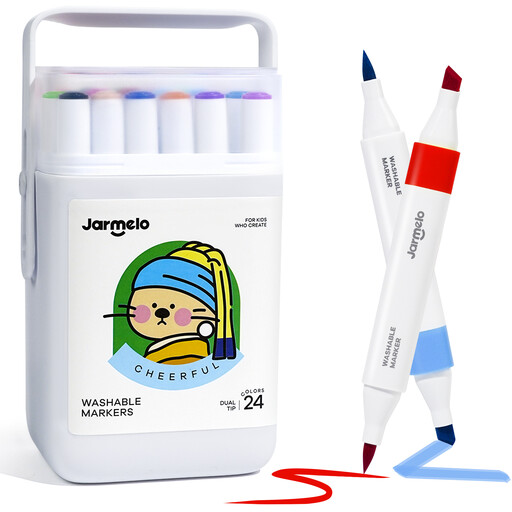
Why it suits this profile: The combination of a brush tip and chisel tip offers variety for colouring, drawing and simple lettering. The storage box is handy at home, school or on the go.
The set specifies the ink type, the two tip shapes and the recommended age. This makes comparison easier than simply going by the number of colours.
24 dual-tip markers, water-based ink and a storage case with handle according to the product information.
We have put together a complete, up-to-date list of products that fully meet these strict selection criteria and the applicable European safety regulations.
It depends on the amount of ink and the pressure used when writing. A ballpoint pen or fine gel pen often offers more control than a liquid rollerball pen. If in doubt, test it first on the same paper you use every day.
Close every marker immediately after use. Store dual-tip markers in their case and check that both caps are fully secured. Store them according to the manufacturer’s instructions and avoid heat and direct sunlight.
This is usually not a sensible choice. Because heat-sensitive ink can fade or change through friction and temperature, ordinary ballpoint pens or non-erasable gel pens are more suitable when text needs to remain legible. Also always check the rules of your school or examination organisation.
