
Vandaag of morgen in huis

Kwaliteit gegarandeerd

Welkomstaanbiedingen ontgrendelen: GRATIS bezorging | Tot 80% korting | Gratis 30 dagen JoyPlus-proefperiode
Download de app
Choosing a new set of pens and markers may seem straightforward, until you have to decide between gel pens, fineliners, felt-tip pens, brush pens and highlighters. A low price tells you little about writing comfort, nib thickness or durability. A large stationery set may also contain colours you will hardly ever use.
That is why it is worth focusing on the features that make a real difference in everyday use. This helps prevent a pen from drying out quickly, a marker from bleeding through the paper or an erasable gel pen from accidentally making important notes disappear.
A set with lots of colours looks appealing, but first check whether the colours suit the way you plan to use them. For school and the office, black, blue and a few accent colours are often more practical than a random mix. For drawing, colouring or journalling, pastel and metallic shades may be particularly useful.
Also check how many pens are actually included. Product titles and images can look similar, while one set may contain 10, 18, 20 or 24 pieces.
A 0.4 mm fineliner is suitable for small notes, drawing lines along a ruler and adding detail. A 0.7 mm gel pen generally produces a fuller line and is comfortable for everyday writing. For colouring, a felt-tip pen with a broader nib is more efficient, while a brush pen is designed to create variation between thin and thick lines.
Choosing the wrong nib size can quickly result in small text becoming difficult to read, ink bleeding through the paper or an uncomfortable writing posture.
With erasable gel pens, the ink is described in the product information as heat-sensitive. Rubbing it with the integrated eraser can make the ink fade. This is practical for planners, homework and temporary notes, but not ideal for documents that need to be kept for a long time. So always check whether you need regular gel ink for permanent notes.
Use this guide as a starting point:
The nib shape is important too. A round or bullet tip produces an even line. A chisel tip offers several writing widths. A flexible brush tip allows you to vary the line, but requires slightly more control.
Water-based ink is common in fineliners, felt-tip pens and highlighters. This ink is generally suitable for paper, but the result depends on the paper’s thickness and absorbency. Test colouring pens on a scrap sheet first if you are working in a planner or notebook.
Gel ink usually feels smooth and is available in black, blue and various colours. When colour-coding, make sure there is enough contrast. Pastel highlighters are gentler on the eye when used on long passages of text, while neon colours stand out more strongly.
A soft or ribbed grip can be comfortable during long writing sessions. A click mechanism prevents you from losing a cap, while a cap on fineliners and felt-tip pens helps prevent them from drying out. Close the pen securely after use and store markers according to the product information: some models are best kept upright, while others should be stored horizontally.
With mechanical pencils, the lead thickness, hardness and refill method are also important. A 0.7 mm HB pencil is a practical choice for writing and sketching. Check how the pencil is refilled before buying it; with some models, you need to unscrew the barrel in the middle.

Why this suits the profile: A set of six pens with black 0.7 mm ink is practical for school, planners and everyday writing.
The nib size and number of pieces are clearly stated. The heat-sensitive ink can be erased with the eraser at the end, but this makes it less suitable for permanent documents.
6 pens, black gel ink, 0.7 mm nib, protective cap and comfortable grip.
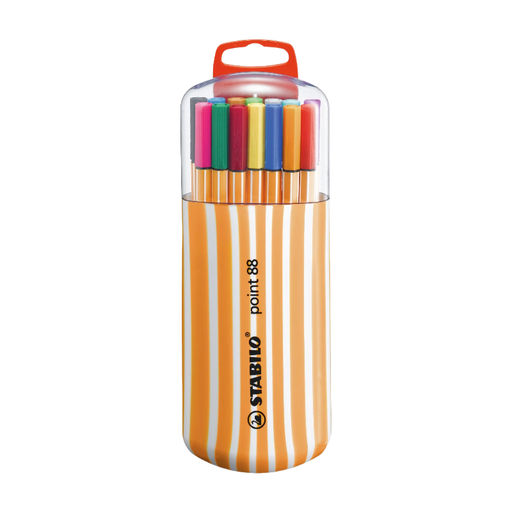
Why this suits the profile: The 0.4 mm metal tip is designed for precise writing, drawing, sketching and working with rulers or templates.
The fine tip helps prevent small lettering and details from becoming clogged or blurred. The set contains 20 assorted colours; check in advance whether you need that variety.
0.4 mm line, water-based ink, ventilated cap and resealable case.
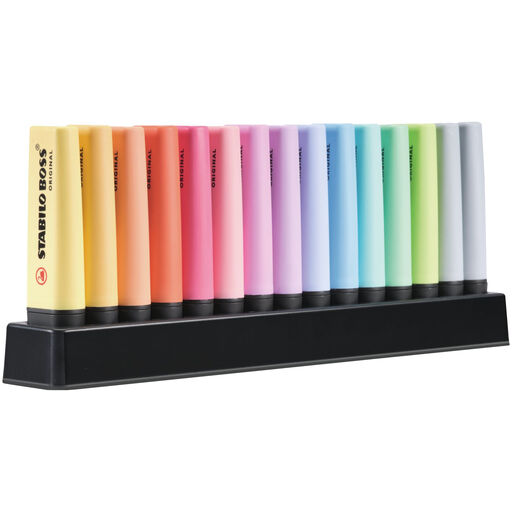
Why this suits the profile: Ideal for students, teachers and office professionals who organise text using soft colours.
According to the product specifications, the chisel tip offers 2 and 5 mm line widths. This means you can underline narrowly or highlight more broadly without buying two types of highlighter.
15 pieces, water-based ink, 14 pastel colours according to the product description and two writing widths.
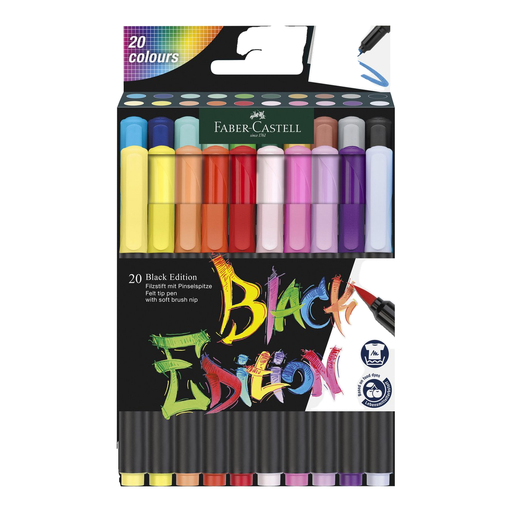
Why this suits the profile: The flexible brush pens are designed for small drawings and lettering with variation between thin and thicker lines.
This set focuses on line variation rather than simply offering lots of separate colours. Close the pens securely after use to help prevent them from drying out.
20 colours, brush tip, suitable for small drawings and lettering, washable ink according to the product information.
We have compiled a complete, up-to-date list of products that fully meet these strict selection criteria and the applicable European safety regulations.
For products intended for children, check the stated age range, warnings and relevant markings. A CE marking is a declaration by the manufacturer that the product meets the applicable European requirements; it is not a ranking of writing quality. For children’s felt-tip pens, a reference such as EN 71 may be relevant. Always follow the packaging and product information.
The biggest running costs are usually not caused by the purchase price, but by pens drying out and being used incorrectly. Replace pen caps immediately after use, store pens away from direct sunlight and choose refills when available. With mechanical pencils, spare HB leads and erasers are more useful than buying an entirely new pencil.
For small lettering and details, 0.4 or 0.5 mm fineliners and gel pens are practical. If you want to add colour, you can combine journalling pens with pastel highlighters or brush pens. Test the ink on a back page first to check for show-through.
Usually not if you want the text to remain visible for a long time. According to the product information, these pens react to heat and the ink is removed or fades through friction. Use them mainly for planners, practice work and temporary notes.
Replace the cap immediately and check that it is fully closed. Store felt-tip pens and fineliners in a dry place, away from direct sunlight and in accordance with the manufacturer’s instructions. With a large stationery set, having a dedicated storage place also helps keep caps and colours together.
