
Vandaag of morgen in huis

Kwaliteit gegarandeerd

Welkomstaanbiedingen ontgrendelen: GRATIS bezorging | Tot 80% korting | Gratis 30 dagen JoyPlus-proefperiode
Download de app
When you’re buying pens and markers, it’s easy to be drawn in by large colour sets, terms like “quick-dry” and all sorts of different nib shapes. But a full pencil case doesn’t automatically mean the set is right for how you’ll use it. A child needs different features from someone who takes notes every day, practises hand lettering or works on canvas.
With this guide, you can compare acrylic markers, brush pens, fineliners, gel pens, felt-tip pens, drawing pens and colouring pens on the features that really make a difference in practice.
A set of 50 colours looks appealing, but it’s less practical if you mainly make precise notes or small illustrations. Always check the nib shape and line width. A 0.4 mm fineliner is ideal for details, while a brush nib can create different line thicknesses. For large areas, a chisel nib is more useful.
Gel ink can dry more slowly on smooth paper than on standard writing or drawing paper. Some markers can also bleed through. According to product information from various brands, quick-drying ink is designed to reduce smudging; it’s no guarantee that there won’t be any bleed-through or marks on every type of paper. Always test a pen on an inconspicuous page first.
Water-based and washable ink are not the same as permanent ink. According to the product information, Faber-Castell brush pens use ink based on food colourings and are washable. An alcohol marker, on the other hand, is designed for permanent marking once the ink is dry. So choose based on the surface, not just the colour.
Pay attention to this practical breakdown:
A thicker nib doesn’t necessarily write more comfortably. If you write small letters, you’ll often have more control with 0.4 or 0.5 mm.
For paper, schoolwork and journaling, water-based ink, gel ink and classic felt-tip pens are usually the most logical choices. For glass, wood, stone, ceramic or canvas, acrylic markers are more interesting. According to the product information from Faber-Castell, the acrylic markers mentioned are suitable for multiple surfaces, including paper, metal, ceramic, plastic, glass, textile, stone, canvas and wood.
Alcohol markers are intended for sketching and colour blending. According to the product information, the Goldfaber set combines alcohol ink with a flexible brush nib of 1 to 5 mm and a fineliner nib of 0.6 mm. Bear in mind the risk of bleed-through and preferably use marker paper or a protective sheet.
A retractable gel pen prevents a loose cap from getting lost. An ergonomic or non-slip grip can be comfortable during long writing sessions. With markers, a well-sealing cap is important to prevent them drying out. Acrylic markers often work with a shake-and-pump system. According to the product information for the Faber-Castell Acrylic Marker, you need to shake the marker 20 to 30 times and press the nib down several times before the ink flows.
Also check:
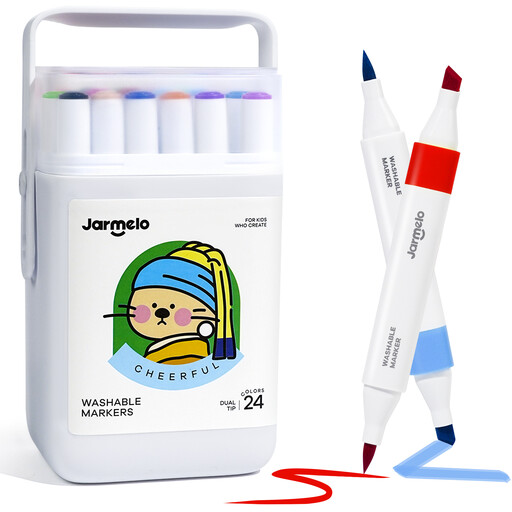
Why this fits the profile: The set offers 24 colours, a brush nib and a chisel nib in one marker. This gives beginners different possibilities without having to buy multiple sets straight away.
The two nib shapes make the colour set much more versatile than a set with only one standard nib. According to the product information, the ink is water-based and largely washable from skin and most fabrics.
24 colours, two nib types, storage case and ventilated caps. Always check the current age information on the product page.

Why this fits the profile: This set is designed for sketching and colour blending. The combination of a brush nib and a fine nib suits illustrations with both broad and detailed lines.
The nib information is specific: brush nib from 1 to 5 mm and fineliner nib of 0.6 mm. This means you don’t have to rely on a vague marketing term like “versatile”.
24 colours, alcohol ink, fast drying time according to the product description and a cardboard storage box. Use protective paper to prevent bleed-through.

Why this fits the profile: For creative projects on surfaces such as wood, glass, ceramic and canvas, an acrylic marker is more practical than a standard felt-tip pen.
The set states both the suitable surfaces and the two nib thicknesses of 1 and 3 mm. Activate the markers according to the shake-and-pump instructions before use.
Six metallic colours, opaque water-based acrylic ink according to the product information and an ink level indicator.
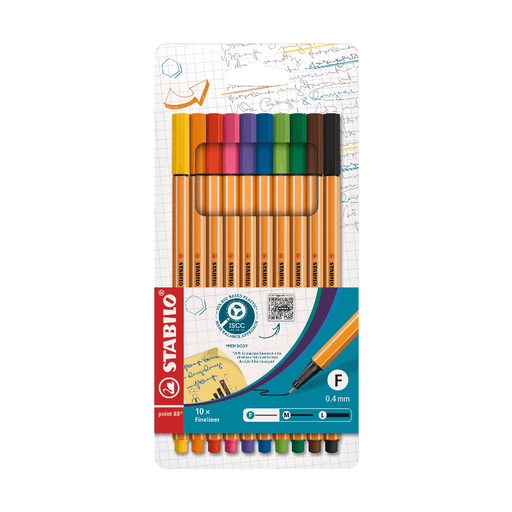
Why this fits the profile: The 0.4 mm nib is ideal for summaries, colour coding, diagrams and precise drawing.
The line width is clearly specified and the set comes in a resealable pack. According to the product information, the water-based ink is odourless.
Fine metal nib, 10 popular colours and suitable for writing, drawing, colouring and sketching.
We’ve put together a full, up-to-date list of products that fully meet these strict selection criteria and current European safety regulations.
For journaling, 0.4 mm fineliners, 0.5 mm gel pens and brush pens are commonly used options. Choose gel ink when you want smooth writing and check that the ink dries quickly. For small letters, a fine nib offers more precision. Always test whether the ink bleeds through on your journal paper.
Put the cap back on immediately after use and press it on firmly. Store pens and markers away from direct sunlight and extreme heat. According to product information, fineliners and markers can sometimes be left uncapped temporarily, but for a longer lifespan, capping them remains the safe choice. Preferably store a set in the supplied case or box.
That depends on the product description. According to the product information, the Faber-Castell acrylic markers in this selection are mentioned for paper, metal, ceramic, plastic, glass, textile, stone, canvas and wood. Make a test mark first and let the ink dry. Also check that the surface is clean and dry, and whether the mark needs to be removable after drying.
