
Vandaag of morgen in huis

Kwaliteit gegarandeerd

Welkomstaanbiedingen ontgrendelen: GRATIS bezorging | Tot 80% korting | Gratis 30 dagen JoyPlus-proefperiode
Download de app
A new set of pens and markers might seem easy to choose, but the options vary widely in nib shape, ink and intended use. A gel pen that works well for notes may not be ideal for journalling, while an acrylic marker behaves differently on paper than it does on glass or wood. A few checks can help you avoid a disappointing purchase and choose only what suits your needs.
Pastel and metallic shades stand out in product photos, but it’s also worth checking the nib size and type of ink. A 0.5 mm nib is suitable for small notes and planners. A 1.0 mm nib makes a broader line and can be easier to use for larger lettering, but it also takes up more space on the page.
For highlighters, the shape of the nib matters. A chisel tip, for example, can offer two line widths. Also check whether the ink bleeds through thin paper.
Erasable gel pens often use heat-sensitive ink. According to the manufacturer’s product description, the writing can be erased with the rubber tip. The description also warns that high temperatures can make the text disappear unintentionally. So use this type of pen for planners, school notes or drafts, rather than for documents that need to be kept for a long time.
According to the product information, Jar Melo markers are water-based, alcohol-free and 90% washable from skin and most fabrics. This is a product specification, not a guarantee for every surface or stain. Children should therefore use them at a protected table, and any ink should be removed as soon as possible.
The nib determines what a pen or marker is practical for:
Also check whether a marker has one or two tips. Dual-tip markers with a brush tip and chisel tip offer more options, but usually take up more room in a pencil case.
Water-based ink is often a good choice for paper, schoolwork and use by children. If buying for children, check the age guidance, whether the cap is ventilated and any potential warnings. According to the product description, the Jar Melo Dual Tip Markers have water-based ink, ventilated caps and a recommended age range of 4 to 12 years.
Acrylic markers are a different category. According to the product information, Faber-Castell Shake & Paint markers use pigmented, opaque water-based acrylic ink. The manufacturer lists paper, metal, ceramic, plastic, glass, fabric, stone, canvas and wood as possible surfaces. Always test the marker on an inconspicuous area first and follow the instructions for use.
Alcohol markers dry quickly and can be suitable for sketching, but it’s worth considering ventilation and your choice of paper. According to the product description, the Goldfaber Sketch Marker Set contains alcohol ink, a 1 to 5 mm brush tip and a 0.6 mm fineliner tip.
Most pens and markers will dry out if the cap doesn’t close properly. So check for:
A large stationery set isn’t always better value if many of the colours go unused. For everyday school or office work, a smaller set with black, blue, red and a few accent colours may be more practical.
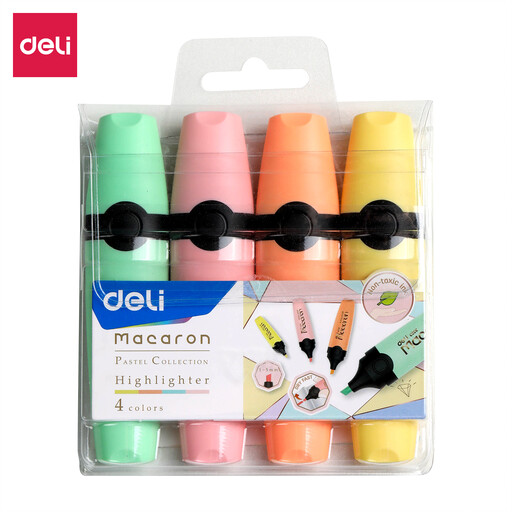
Why it suits this profile: A compact set for school pupils, students and anyone looking to get started with a few soft accent colours.
The chisel tip is designed for highlighting and underlining. With just four colours, it’s a manageable purchase rather than an unnecessarily large set.
Pastel colours and a chisel tip for different highlighting widths.
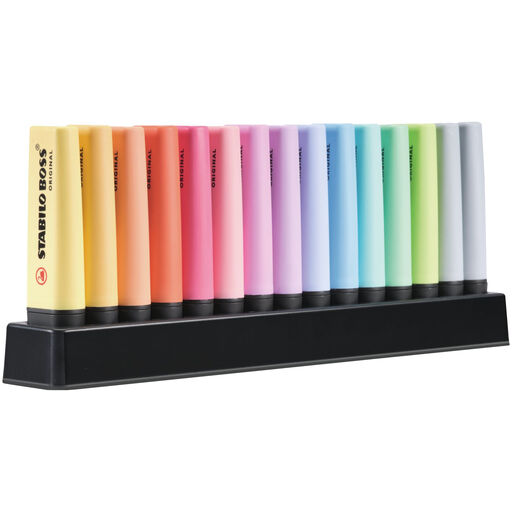
Why it suits this profile: For intensive study, office work and journalling, with plenty of colours to choose from and two line widths.
The product specifications list a 2 and 5 mm chisel tip. That means this set offers more than just a choice of colours.
14 pastel colours, water-based ink and two line widths per highlighter.

Why it suits this profile: For artists and creative hobbyists who want to work on more than just paper.
The product information lists several possible surfaces and an ink level indicator. This makes it easier to plan your work than with a marker that has no clear specifications.
Six colours, 1 and 3 mm tips, and shake-and-pump activation.
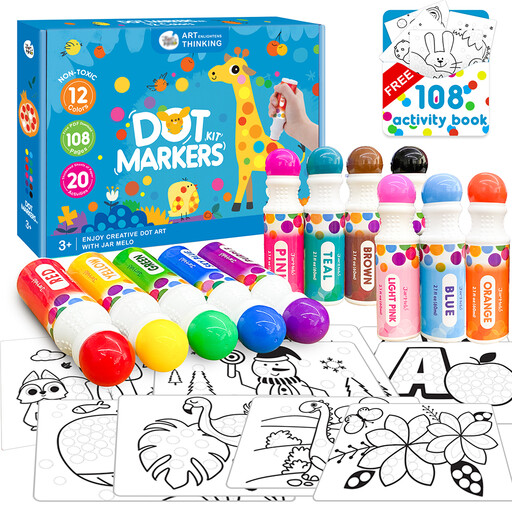
Why it suits this profile: The chunky shape and dot tips are made for simple creative activities with young children.
The product description lists water-based ink and says it is 90% washable from skin and most fabrics. Even so, it’s best to clean up quickly.
12 colours, a sponge-like dot tip and an activity book with extra materials.
We’ve put together a complete, up-to-date list of products that meet these strict selection criteria and the applicable European safety regulations.
For journalling, gel pens with a 0.5 or 0.7 mm nib are a practical choice. A fine tip gives you control in small boxes and when writing small text. If you use colour coding, you could choose a set with several ink colours. Check the drying time if your hand tends to move across the text.
Replace the cap straight after use and check that it’s fully closed. Store markers as directed in the product instructions, usually horizontally or upright in a cool, dry place. Acrylic markers also need to be activated using the specified shake-and-pump method.
That depends on the age guidance, warnings and ingredients. Check whether the manufacturer specifies water-based ink and a recommended age. Even with washable pens, supervision is a good idea, particularly because of the caps and small parts. Use a wipe-clean surface too, and follow the instructions on the packaging.
