
Vandaag of morgen in huis

Kwaliteit gegarandeerd

Welkomstaanbiedingen ontgrendelen: GRATIS bezorging | Tot 80% korting | Gratis 30 dagen JoyPlus-proefperiode
Download de app
Anyone looking to buy pens will quickly come across dozens of options: gel pens, ballpoint pens, mechanical pencils, erasable pens, brush pens and even a stylus pen for tablets. The differences are not limited to colour or design. Tip size, ink type, grip and pack size all determine whether a pen is comfortable to use at school, in the office, for journaling or for drawing.
An attractive set is not automatically practical. With these checks, you can avoid paying for features you are unlikely to use.
A 0.4 mm or 0.5 mm tip is suitable for small handwriting, planners and fine details. For writing longer notes, many people prefer a 0.7 mm tip, as it generally produces clearer, smoother lines on paper. A very fine tip can feel less comfortable when writing quickly, while a broad tip takes up more space on small forms.
Erasable gel pens usually use heat-sensitive ink. According to M&G’s product description, text can be removed through friction from the pen or an eraser. This is useful for diaries, homework and notes, but makes the text less suitable for documents that need to be kept for a long time. Heat can affect this type of ink. Always check whether a pen is intended for official forms or archiving.
A set of 50 brush pens sounds generous, but it is only worthwhile if you actually work with lots of colours. For everyday writing, 8 black gel pens or 12 blue ballpoint pens may be more practical. Check the number of pens, colour distribution and whether they can be refilled. A low price per pen matters less if many of the colours go unused.
A ballpoint pen generally uses oil-based ink. The Deli ballpoint pens in the reference products have a 0.7 mm ball tip and blue ink. A gel pen often writes more smoothly and produces more intense colours, but its performance can vary depending on the type of paper. For artists, drawing pens, acrylic markers and brush pens are generally more suitable than standard office supplies.
For forms, schoolwork and business correspondence, blue pens and black pens are the most practical choices. Colourful pens are useful for highlighting, planning and creating a visual structure. Left-handed writers may benefit from quick-drying ink, but check this as a product feature rather than treating it as a guarantee for every type of paper.
An anti-slip or soft grip can feel comfortable during long writing sessions. A retractable pen protects the tip without a loose cap; with a capped pen, replace the cap after use to help prevent the ink from drying out. According to the product description, gel pens are best stored horizontally or in a cool, dry place. With mechanical pencils, also check the lead thickness and hardness. A 0.5 mm mechanical pencil is suitable for fine writing, while a 0.7 mm version offers a little more strength for sketching and everyday use.
For creative products, the surface you use matters. According to the product description, the Faber-Castell acrylic markers in the selection are suitable for materials including paper, metal, ceramic, glass, textiles, canvas and wood. Always test on a small area first and follow the instructions on the packaging. Claims about coverage or colour intensity come from the brand’s product description and may vary depending on the surface.
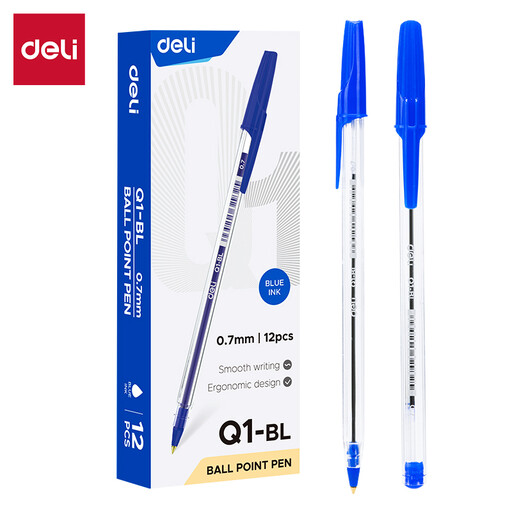
Why it suits this profile: A practical set of blue ballpoint pens for school, home or a shared office drawer. The 0.7 mm tip is suitable for many everyday writing tasks.
The packaging clearly states that it contains 12 pens, with blue oil-based ink and a 0.7 mm ball tip. This makes it easy to assess the contents in advance.
12 pens, blue ink and a versatile 0.7 mm tip for notes, forms and schoolwork.

Why it suits this profile: For creative people who want to work with metallic colours on several materials and value a choice of tip sizes.
The set specifies six colours and two tip sizes of 1 and 3 mm. This allows you to decide in advance whether the markers are suitable for your project.
Six metallic colours, water-based acrylic ink according to the product description, and a shake-and-pump mechanism.
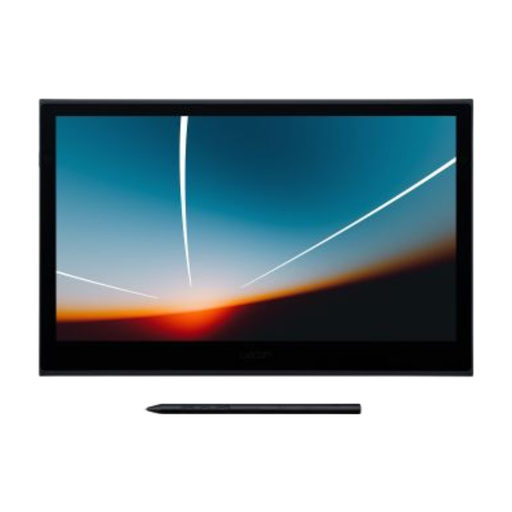
Why it suits this profile: For digital artists and designers who want to combine pen input, touch control and a portable display.
The specifications list the 13.3-inch OLED display, USB-C connection, compatible operating systems and 8192 pressure levels. However, check your device and software beforehand.
Full HD OLED, pen and touch input, and a single USB-C cable for data and power according to the product specifications.
We have put together a complete, up-to-date list of products that fully meet these strict selection criteria and the applicable European safety regulations.
When buying school supplies for young children, look out for warnings about small parts. Some sets are not suitable for children under 3 years old. The Faber-Castell brush pens in the selection list EN 71 as a quality mark; check the current packaging and product information before buying.
Keep pens out of direct sunlight and replace caps after use. Acrylic markers often need to be shaken and activated on paper before first use. A battery-powered stylus pen also requires you to check compatibility, charging and the correct app or driver.
A 0.7 mm ballpoint pen or gel pen is a practical choice for notes, forms and schoolwork. Choose blue for general use and black when documents need a more neutral appearance.
Usually not if long-term archiving is important. Heat-sensitive ink can change through friction or heat. For official documents, use a standard ballpoint pen and follow any instructions provided by the organisation.
Standard ballpoint pens and gel pens generally do not require any installation. The main costs are replacements and any refills. With mechanical pencils, you will need to buy leads and erasers; with a stylus pen, charging accessories or a replacement nib may be relevant. So check not only the purchase price, but also which replacement parts are available.
