
Vandaag of morgen in huis

Kwaliteit gegarandeerd

Welkomstaanbiedingen ontgrendelen: GRATIS bezorging | Tot 80% korting | Gratis 30 dagen JoyPlus-proefperiode
Download de app
Buying a box of pens might seem straightforward, but the wrong type can quickly become frustrating. A gel pen that bleeds through thin paper, a felt-tip that dries out after a few weeks, or a ballpoint that doesn't write comfortably – none of these offer good value. Even marketing terms like "extra smooth" or "quick dry" only mean something when the technical details are clear.
In this guide, you'll discover what to look for when choosing pens, which types suit different uses, and which popular options are available for school, office, journaling and creative projects.
A fine 0.5 mm nib is ideal for small handwriting, diagrams and details. A 0.7 to 1.0 mm nib creates broader lines and can be more comfortable for everyday writing. If you only look at colour or appearance, you might end up with a pen that doesn't match your paper or preferred writing style.
Drying time depends on the type of ink, the amount of ink and the paper. Gel pens and rollerball pens can produce a fuller line, but sometimes need longer to dry than ballpoints. Left-handed writers should pay attention to a fine nib and look for information about quick-drying ink. It's best to test this on a separate sheet first.
A set with lots of colours is useful for colour-coding or drawing, but not everyone will use every colour. Check the contents, the ink type and the storage. A compact set of ballpoints may be enough for an office, whereas journaling pens or brush pens offer more colour variety.
Use this breakdown as a practical starting point:
A mechanical pencil with a 0.5 mm lead isn't a pen, but it's a useful part of your stationery. It's suitable when you need to be able to erase, for example with sketches, maths or technical tasks.
Ballpoint pens typically use oil-based ink. They're practical for forms, schoolwork and documents. A click mechanism protects the nib when you're not using the pen. With pens that have a cap, it's important to replace the cap straight away to prevent drying out.
Gel pens often give a clear, even line. Check whether the pen has a retractable nib, a cap or a soft grip. For intensive writing, an ergonomic grip can make using the pen more comfortable, but the shape is still a matter of personal preference.
Rollerball pens use liquid ink and generally write smoothly. Because of the liquid ink, careful storage is important. A transparent reservoir can help you check how much ink is left.
For writing on transparent film, glass, metal or ceramic, OHP pens are designed for the job. Check whether the version is permanent or erasable. Don't use permanent ink on a surface where you might want to make corrections later.
A metal body, like on some mechanical pencils, can feel different to plastic. Also check the weight, the grip and the length if you write for long periods. Store pens in a dry place, close caps properly and retract any retractable nibs after use.
Many writing materials contain small parts. Keep them out of reach of children under three years old. With felt-tips and brush pens, it's wise to check whether the ink is water-based and what surface the pen is suitable for. The product description may also give information about CE marking, EN 71 or the statutory warranty. Treat such information as a product specification, not a guarantee for every personal experience.
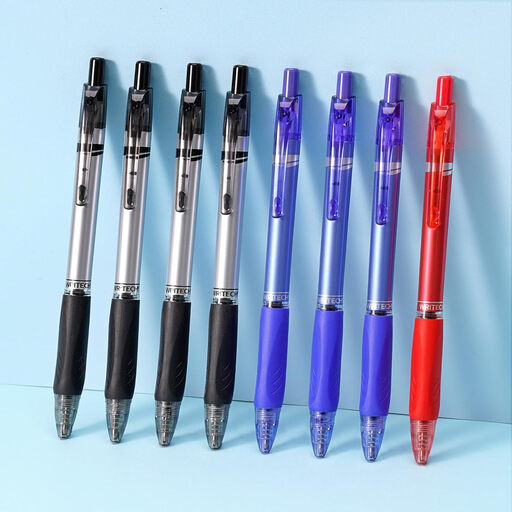
Why this suits the profile: The set contains four black, three blue and one red ballpoint pen for school, office, notes and colour-coding.
The contents and nib size are clearly stated, so you don't have to rely only on the pens' appearance.
1.0 mm nib, retractable design, soft triangular grip and eight pens in three ink colours.
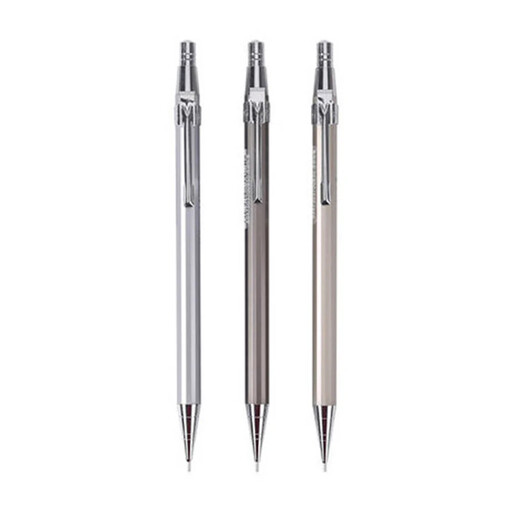
Why this suits the profile: For those who write, draw or sketch with precision and appreciate a metal body with balanced weight.
The 0.5 mm lead size and automatic lead feed are clearly described. You can also use refills according to the manufacturer's instructions.
Metal body, push-button mechanism, black 0.5 mm lead and three colours: black, white and gold.
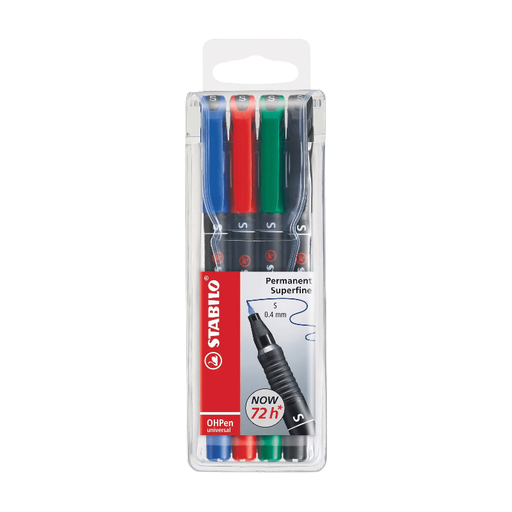
Why this suits the profile: For users who write on smooth surfaces such as transparent film, glass, metal or ceramic.
The product description explicitly mentions the permanent nature and the suitable smooth surfaces. This means the pen is less suitable for temporary marking, but clearer for permanent labelling.
Super-fine nib, four colours, grip zone and clip. According to the product description, the pen can be left uncapped for up to 72 hours without drying out.
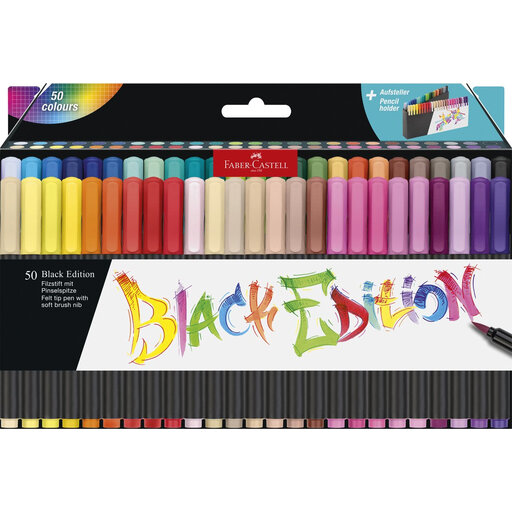
Why this suits the profile: A wide colour selection for hand lettering, small illustrations, cards and creative writing projects.
The set states the number of colours, the brush tip and the limitation to light paper. This means you can check in advance whether it suits your project.
50 colours, water-based, according to the product description washable and suitable for thick and thin lines thanks to the flexible nib.
We've put together a full, up-to-date list of products that fully meet these strict selection criteria and comply with current European safety regulations.
A ballpoint pen with a 0.7 mm nib usually gives a controlled line and often uses less liquid ink than a rollerball. Test the pen on the paper you actually use. For thin school paper, gel pens or rollerball pens can show through more quickly, depending on the ink and writing speed.
Replace caps straight away, retract any retractable nibs and store pens out of direct sunlight and extreme heat. Rollerball pens and gel pens can be stored horizontally according to the product instructions. Brush pens and felt-tips stay usable when the cap fits tightly.
That depends on how you use them. A set is practical for a classroom, office or colour-coding, whereas a single pen makes more sense when you need one specific nib size. So don't just compare the price – also compare the number of pens, the ink colours, the nib thickness and the type of closure.
