
Vandaag of morgen in huis

Kwaliteit gegarandeerd

Welkomstaanbiedingen ontgrendelen: GRATIS bezorging | Tot 80% korting | Gratis 30 dagen JoyPlus-proefperiode
Download de app
A set of pens and markers may look appealing, but attractive packaging tells you little about everyday use. Students often focus on colour and price, while artists tend to look at the ink and nib shape. For office work or journalling, drying time, line width and erasability are more important.
The most common purchasing mistakes come down to three simple oversights:
With the right specifications, you can compare writing supplies, drawing materials and stationery more effectively.
For notes, diaries and schoolbooks, gel pens, erasable gel pens, fineliners and highlighters are generally designed for paper. Water-based ink can provide a comfortable writing experience and is often low odour, but it may bleed through thin paper or be less suitable for damp surfaces.
Acrylic markers and other paint markers are designed for a wider range of applications. According to the product description, the Faber-Castell Shake & Paint sets use pigmented, opaque water-based acrylic ink. The markers are specified for use on paper, metal, ceramics, plastic, glass, textiles, stone, canvas and wood, among other surfaces. Always test on an inconspicuous area first: adhesion and removability can vary depending on the material.
For sketching, alcohol markers are another option. The Faber-Castell Goldfaber Sketch Marker Set contains 24 colours, alcohol-based ink, a flexible brush tip measuring 1 to 5 mm and a 0.6 mm metal fineliner tip. Alcohol ink generally dries quickly, but can bleed through paper. Use marker paper or place a protective sheet beneath your work.
The nib determines how versatile a pen is:
A broad nib is not automatically more useful. In small diaries, the ink can quickly extend beyond the writing space. Conversely, an ultra-fine tip takes more time when you want to colour in large areas.
A marker that is often left uncapped will dry out more quickly. According to the product information, the STABILO point 88 has water-based ink and a 0.4 mm metal tip. The cap can be placed on the back, and the set comes in a resealable case.
For highlighters, a chisel tip with two writing widths is practical. The STABILO BOSS ORIGINAL Pastel desk set contains 15 pens, including 14 pastel colours. The specified line widths are 2 and 5 mm. Pastel highlighters are ideal when you want to highlight text without very bright blocks of colour, but check readability on your paper.
Erasable gel pens require extra consideration. The M&G models use heat-sensitive gel ink and a rubber eraser at the end. According to the product description, you can remove text by rubbing it. However, do not store important documents in a high-temperature environment, such as a hot car or directly next to a radiator.
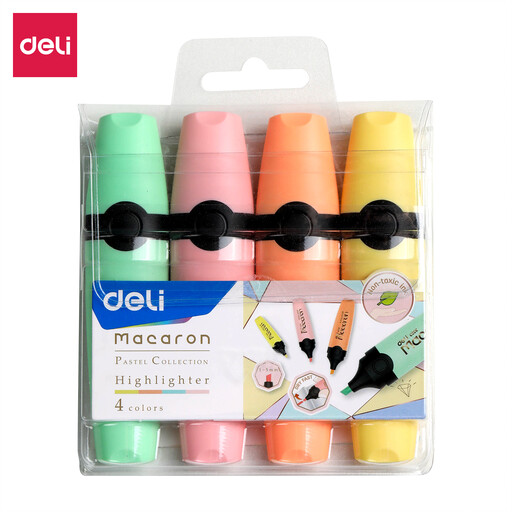
Why it suits this profile: A compact set of pastel highlighters is practical for school notes, planners and first journalling projects.
The chisel tip allows you to create two line widths. Before buying, check the full specifications and test the colour on your paper.
Four pastel colours and a chisel tip for narrow or broad highlighting.

Why it suits this profile: Ideal for illustrators and creative hobbyists who want a range of line widths and colours in one set.
The set specifies both a 1 to 5 mm brush tip and a 0.6 mm fineliner tip. Bear in mind that alcohol ink may bleed through the paper.
24 assorted colours, two nib types and a cardboard storage case.

Why it suits this profile: Suitable for creative projects on a range of materials, such as canvas, wood, ceramics or sturdy paper.
The product description explicitly lists the surfaces and specifies two 1 and 3 mm tips. Activate the marker according to the instructions and test the coverage first.
Six metallic colours, water-based acrylic ink, two tip sizes and an ink-level indicator.
We have put together a complete, up-to-date list of products that fully meet these strict selection criteria and the applicable European safety regulations.
A large stationery set may seem like good value, but unused colours take up space and will eventually dry out. Compare the price per pen, the number of colours and the nib types. For everyday use, a pack containing refills or several identical gel pens may make more sense than an extensive colour set.
Also consider the following:
A fineliner usually has a fine, firm tip and is suitable for precise lines, drawing and organising information. A gel pen uses gel ink and often writes with a fuller, smoother line. Check the tip width: a 0.5 mm gel pen and a 0.4 mm fineliner are close in size, but feel different on paper.
Generally not where a permanent record is required. According to the product description, the heat-sensitive ink can be removed through friction and is sensitive to high temperatures. For contracts, forms and documents that need to be kept, use a non-erasable pen.
This depends on the paper weight and the ink. Water-based highlighters and fineliners generally bleed through less than alcohol markers, but even water-based ink can show through on thin paper. Test the marker on the reverse of a page before highlighting an entire book, planner or notepad.
