
Vandaag of morgen in huis

Kwaliteit gegarandeerd

Welkomstaanbiedingen ontgrendelen: GRATIS bezorging | Tot 80% korting | Gratis 30 dagen JoyPlus-proefperiode
Download de app
Choosing the right pens and markers might seem straightforward – until the ink bleeds through your paper, the tip deforms quickly, or a marker dries out after just a few weeks. For school pupils, students, parents, creatives and professionals, the right choice depends largely on how you plan to use them: writing, highlighting, colouring, sketching, or working on different surfaces.
A set with lots of colours isn't automatically practical. A broad nib is no use for small notes, and an ultra-fine fineliner works slowly for large colour areas. Always check the tip shape and line width:
According to product descriptions from various brands, quick-drying ink can reduce the risk of smudging. That doesn't mean the ink won't bleed or show through on every type of paper. Thin printer paper, recycled paper and smooth notepaper all react differently.
Always test a pen on a similar paper type before colouring an entire page. With alcohol markers in particular, bleed-through is normal, so you'll need marker paper or a protective sheet.
Water-based ink is often described as washable. According to Faber-Castell's product information, certain ink is washable from most fabrics; however, the outcome depends on the material and how quickly you treat a stain. With non-washable ink, such as in some gel pens, stains on textiles or furniture can be permanent. Always check the label and use a protective mat for creative projects.
The ink determines where you can use a pen or marker:
A fine tip is useful for small letters and details, but can be damaged more easily if you press hard. An ergonomic grip can be comfortable during long study sessions or journaling, but it doesn't tell you anything about ink quality. Also consider a click mechanism or cap: a retractable gel pen is practical in a pencil case, while a cap helps prevent markers from drying out.
For children's sets, a ventilated cap, an appropriate age rating and relevant product information are important. Some products mention CE or EN 71. These markings indicate applicable safety conformity, but they don't make a product suitable for every use. Keep pens and caps away from children under three years old when small parts are present.
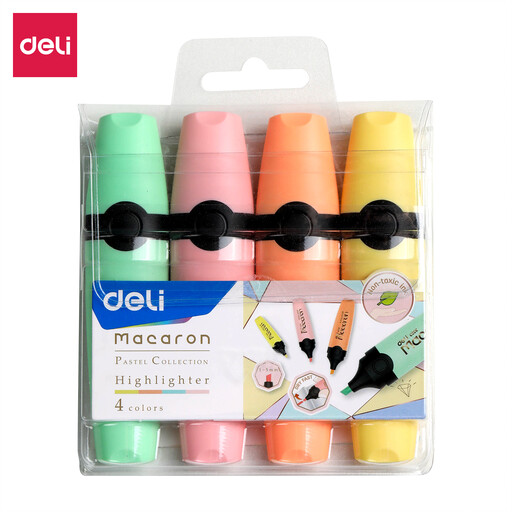
Why this fits the profile: A compact set of pastel highlighters for school, study and simple colour-coding without buying a large writing set straight away.
The chisel tip makes the line width clear from the start. Just check on your own paper first whether the pastel ink provides enough contrast.
Set of 4; pastel colours; chisel tip for broad and narrower highlights according to the product listing.
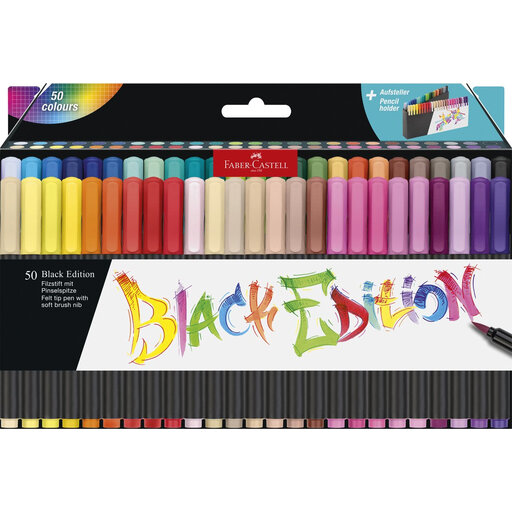
Why this fits the profile: For bullet journal and journaling enthusiasts who want plenty of colour choice for small drawings, headings and decorative text.
The product information explicitly states that the pens are suitable for light paper, not black paper. This prevents incorrect use.
50 colours; flexible brush tip; according to the product description, washable ink based on food colourings.

Why this fits the profile: For makers who don't just work on paper, but also want to mark ceramic, wood, glass, plastic or canvas.
The product information lists the suitable surfaces and the activation method: shake 20 to 30 times and press the tip down on paper.
6 colours; water-based acrylic ink; two tip sizes of 1 and 3 mm; ink level indicator according to the product listing.
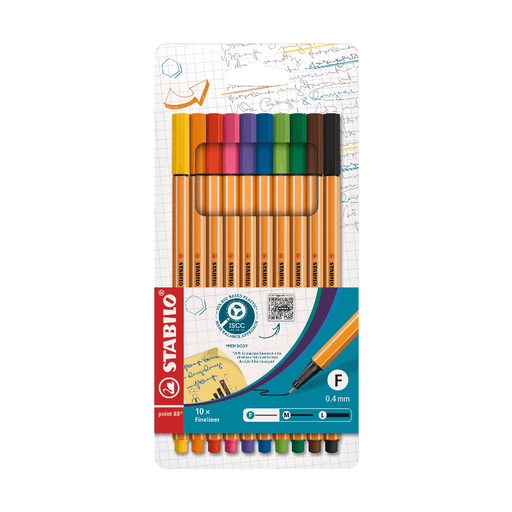
Why this fits the profile: A logical choice for students, office workers and artists who use thin, controlled lines with rulers or stencils.
The line width of 0.4 mm is clearly stated. This means you can match the size to small letters and detailed work.
10 colours; metal tip; water-based ink; suitable for writing, drawing, colouring and sketching according to the product information.
Good storage prevents a lot of waste:
For everyday writing, gel pens, rollerballs and fineliners are usually more practical than artist markers. For a bullet journal, journaling pens, pastel highlighters and brush pens can complement each other. If colouring is your main focus, look at felt-tips, dual-tip markers or alcohol markers with multiple tip shapes.
We've put together a full, up-to-date list of products that fully meet these strict selection criteria and current European safety regulations.
For journaling, gel pens from 0.5 to 0.7 mm, fineliners and brush pens all work well. Choose 0.5 mm for small letters and details, and 0.7 mm for a clearer, smoother line. If you're left-handed, pay particular attention to drying time and test the ink on your paper.
Close the cap immediately after use and store the markers according to the product instructions. With acrylic markers, you need to activate the tip using the shake-and-pump method described. Don't leave a marker uncapped for long periods, even if the manufacturer states a limited anti-drying time.
That depends on the age rating, the presence of small parts and the instructions on the packaging. Washable ink can reduce stains, but it doesn't guarantee every stain will come out of every fabric. Supervise young children and check whether the product mentions relevant safety information, such as CE or EN 71.
