
Vandaag of morgen in huis

Kwaliteit gegarandeerd

Welkomstaanbiedingen ontgrendelen: GRATIS bezorging | Tot 80% korting | Gratis 30 dagen JoyPlus-proefperiode
Download de app
A set of pens and highlighters might seem simple to choose. However, there are clear differences in ink, tip shape, surface suitability and maintenance. A cheap set can therefore be less suitable than expected: the colours may bleed through paper, the tip can dry out quickly, or the ink may not come out of clothing easily.
With this buying guide, you can compare highlighters, pastel highlighters, fluorescent highlighters, felt-tip pens, brush pens, dual tip markers and acrylic markers on their practical features. This way, you can buy a set that suits your needs at home, at school, in the office or for a creative hobby.
A set with 30 or 40 colours might look appealing, but more colours don't automatically mean more uses. You should also consider the tip shape, the type of ink and the surface the pen is intended for. For summaries, for example, you mainly need a reliable highlighter with a chisel tip. For hand lettering, a flexible brush pen tip is more practical.
Washable pens aren't always completely removable from every fabric. According to manufacturers' product information, this usually refers to skin and most fabrics, where quick treatment and possibly pre-washing are needed. So test new colour pens for children on a small, inconspicuous area of clothing first.
An alcohol marker or permanent drawing pen is intended for different uses than a water-based felt-tip pen. Alcohol ink can bleed through paper and is not suitable for young children. Acrylic markers, on the other hand, are suitable for several hard surfaces, but usually need to be activated first by shaking and pumping.
A chisel tip often has two line widths. This allows you to highlight broadly and underline finely. The STABILO BOSS ORIGINAL Pastel, for example, uses a chisel tip of 2 and 5 mm. The STABILO swing cool combines 1 and 4 mm according to the product information.
A brush pen tip moves with the pressure you apply. This lets you create thin and thicker lines for hand lettering and small drawings. A round or fibre tip, on the other hand, gives a more consistent result. Also check whether the tip is pressure-resistant when children are using the pens.
Check before purchase:
The CE marking or EN 71 reference provides information about product conformity, but does not mean that a product is safe under all circumstances. Keep small parts away from young children and do not let children chew on pens or caps.
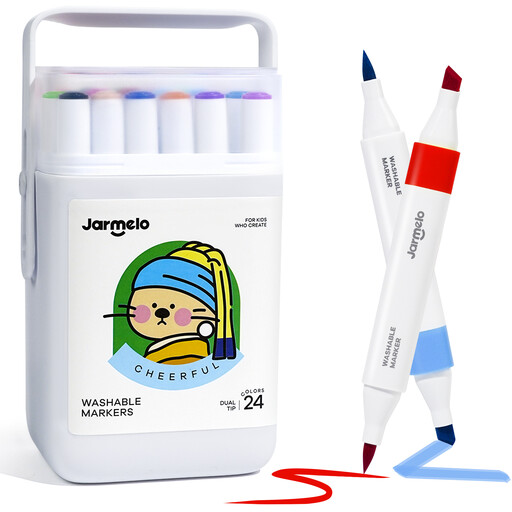
Why this fits the profile: The set combines 24 colours with a brush tip and chisel tip. This gives beginners room to colour, sketch and practise simple lettering.
The two tip shapes mean you don't need two separate sets for broad and fine lines. The water-based ink is alcohol-free and, according to the product information, 90% washable from skin and most fabrics.
24 colours, dual tip, storage case with handle and ventilated caps.

Why this fits the profile: For illustrators and hobbyists who value control over details and colour areas, this set offers two different tips.
The brush tip of 1 to 5 mm and fineliner tip of 0.6 mm make the set suitable for both colour areas and fine work. Be aware of bleed-through on thin paper.
24 alcohol markers, quick-drying ink and a fineliner tip for details.

Why this fits the profile: This set is aimed at decoration and mixed-media projects on surfaces including wood, glass, ceramic, canvas and metal.
The suitable surfaces are clearly described. To activate the ink, shake the marker 20 to 30 times and pump the tip on paper, according to the product instructions.
6 metallic colours, two line widths of 1 and 3 mm and an ink level indicator.
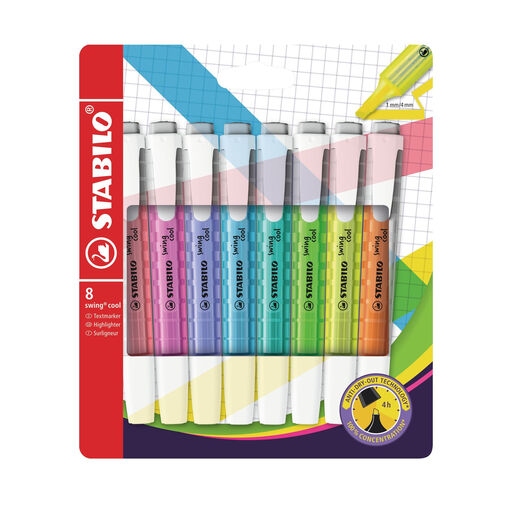
Why this fits the profile: The slim design with a clip fits in a pencil case, bag or desk drawer. The fluorescent colours are suitable for eye-catching highlights in study materials and documents.
The tip has two widths: 1 mm for underlining and 4 mm for highlighting. According to the product information, the pen can be left uncapped for up to four hours without drying out.
8 colours, water-based ink, non-slip grip and practical clip.
We have compiled a full, up-to-date list of products that fully meet these strict selection criteria and current European safety regulations.
A cap that doesn't close properly is one of the most common causes of drying out. Always replace the cap on each pen after use and store sets in a cool, dry place away from direct sunlight. Also pay attention to the following points:
A highlighter with a chisel tip and two line widths is practical. You can highlight broad text and underline narrow lines without switching pens. Fluorescent colours stand out more; pastel highlighters are gentler for planners and notes.
Replace the cap immediately after use and check that it is fully closed. Do not store the set in direct sunlight or near a heat source. With some models, the manufacturer states a limited period during which the pen won't dry out without its cap, but this doesn't replace careful closing.
Felt-tip pens are usually intended for drawing and colouring on paper. Brush pens have a flexible tip for variable line thicknesses and hand lettering. Acrylic markers contain opaque, paint-like ink for multiple surfaces, but often need to be shaken and activated before use. Always check the recommended surface and age rating before buying a set.
