
Vandaag of morgen in huis

Kwaliteit gegarandeerd

Welkomstaanbiedingen ontgrendelen: GRATIS bezorging | Tot 80% korting | Gratis 30 dagen JoyPlus-proefperiode
Download de app
A new set of pens and highlighters might seem simple to choose. Yet many people end up buying a set that doesn’t suit their paper, writing style or daily use. A gel pen can feel nice to write with, but wet ink may cause smudging. A highlighter can look bright in the shop, but may bleed through thin notebook paper. And a large colour set often includes shades you barely use.
This guide helps students, schoolchildren, home workers, office professionals, hobbyists and parents compare products with purpose. The selection below is based on verifiable product details such as tip size, line width, ink type, number of colours and closure mechanism.
A set with lots of colours isn’t automatically practical. For school or the office, a few clear colours are often enough. For journaling, hand lettering or crafting, a wider palette can be useful. So check whether it’s pastel highlighters, fluorescent highlighters or colour markers and whether the shades match your use.
A 0.5 mm gel pen is suitable for compact notes and small handwriting. A 0.7 mm pen generally gives a broader line and can be more comfortable for longer texts. For highlighting, the shape of the tip is especially important: a chisel tip can offer multiple line widths, while a round fibre tip is mainly intended for colouring or drawing.
Brands sometimes state that ink dries quickly, doesn’t smudge or lasts a long time without its cap. Treat such properties carefully: according to the brand’s own product information, certain models may, for example, stay uncapped for several hours without drying out. That doesn’t mean the same result applies to every paper type or under all conditions.
If in doubt, test first on a spare sheet. Thin school paper, diaries and Bible paper can react differently to sturdy drawing paper.
Pay attention to the difference between the stated tip size and the actual line on paper.
A broad tip generally uses more ink per stroke. If you write a lot, it’s better to choose a fine tip and use highlighters only for key words.
Water-based ink is common in highlighters and colour pens. According to STABILO’s product information, the highlighters mentioned use water-based ink. That makes them suitable for many paper applications, but the result depends on the thickness and absorbency of the paper.
When buying, look out for:
For children’s colour markers, a water-based ink that is described by the brand as washable can be handy. With the Jar Melo set, the product information states, for example, that the ink is water-based and can be largely washed from skin and most fabrics. Always check the specific warnings and use the markers on a protected surface.
A click pen without a cap is handy for work or on the go, because you can’t lose a cap. A regular cap, however, protects the tip directly when properly replaced. Store gel pens horizontally if possible and highlighters according to the manufacturer’s instructions. Avoid direct sunlight and extreme temperatures.
For sets intended for young children, ventilation holes in caps and the warning for children under three are important points to check. A CE mark or EN 71 reference indicates certain conformity information, but doesn’t replace careful use.
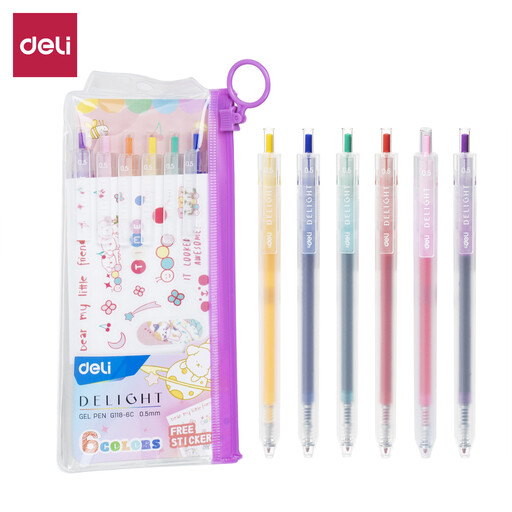
Why this fits the profile: The six gel pens with a 0.5 mm tip offer a straightforward start for school, simple notes and colour coding.
The limited number of colours stops you paying for shades you won’t use. The product name states a fine 0.5 mm tip.
Compact set of six; suitable for fine writing and everyday school or office notes.
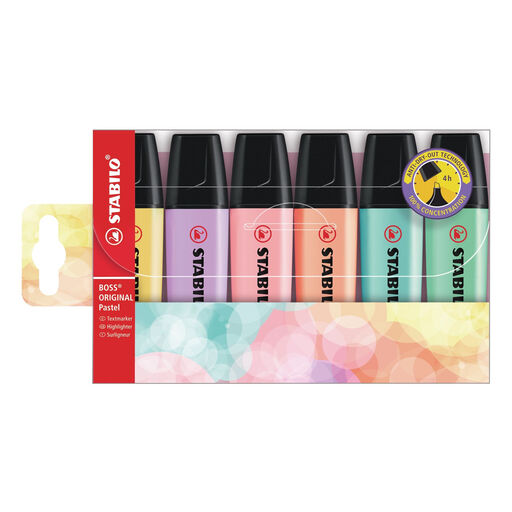
Why this fits the profile: The pastel colours suit planners, diaries, hand lettering and calm colour coding at the office or while studying.
The chisel tip has, according to the product information, two line widths: 2 and 5 mm. So one marker can be used for underlining and broader highlighting.
Six pastel colours; water-based ink; according to STABILO, stays uncapped for up to four hours without drying out.
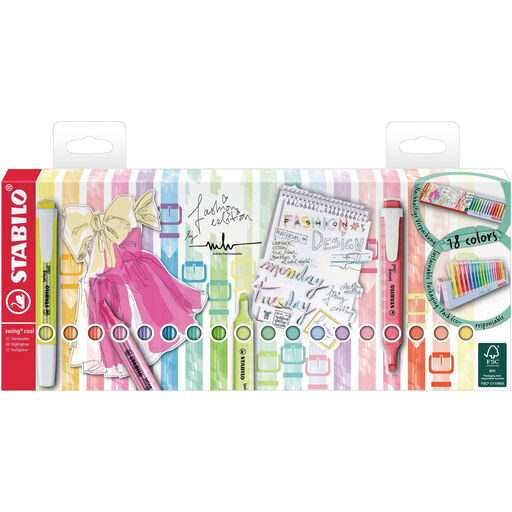
Why this fits the profile: The combination of pastel and standard colours is practical for intensive study planning, multiple projects and colour-coded documents.
The 1 mm and 4 mm sides reduce the need to carry separate fineliners and broad highlighters.
Slim design with clip; 18 colours according to the product name; water-based ink and two line widths.
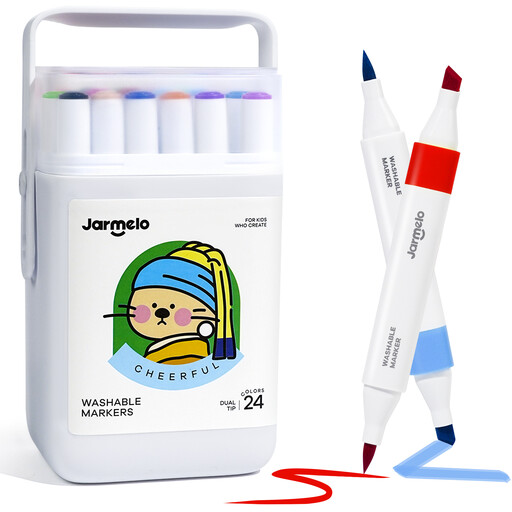
Why this fits the profile: The combination of 24 colours, a brush tip and a chisel tip suits colouring, drawing, lettering and craft projects at home.
The storage case keeps the set together. The dual tip means you don’t need two separate sets for broad and fine lines.
24 dual-tip colour markers; brush and chisel tip; ventilated caps; according to the product description, water-based ink.
We’ve put together a full, up-to-date list of products that fully meet these strict selection criteria and current European safety regulations.
Choose a gel pen or fineliner with a tip of around 0.5 mm. First check that the ink dries quickly enough for your writing style and paper type. For larger letters and everyday writing, 0.7 mm can be more comfortable.
Pastel highlighters give a softer colour contrast and are handy for planners, summaries and journaling. Fluorescent highlighters stand out more and are practical when key information needs to be immediately visible. The choice depends on contrast, paper and personal preference.
Put the cap back on straight away or retract the tip of a click pen. Store sets away from direct sunlight and extreme heat. With highlighters that have a chisel tip, it’s wise not to press too hard on the tip, so the shape and line width remain usable.
