
Vandaag of morgen in huis

Kwaliteit gegarandeerd

Welkomstaanbiedingen ontgrendelen: GRATIS bezorging | Tot 80% korting | Gratis 30 dagen JoyPlus-proefperiode
Download de app
A good pencil sharpener is indispensable, whether you're at school, in the office, or pursuing creative projects. Yet, the search for one is often frustrating. Many sharpeners seem convenient but prove to be a source of annoyance in practice. They break pencil tips, make a mess of your desk, or fail after just a few weeks.
Before you toss another random sharpener into your basket, it's wise to consider a few common pitfalls:
By paying attention to a few key specifications, you can easily avoid these problems and choose a sharpener that will last for years.
Don't focus on marketing claims, but on the specifications that truly matter. These three factors determine whether a pencil sharpener is a good investment.
The blade is the heart of the sharpener. Most simple, manual sharpeners use a straight blade. This is fine for occasional use, but for a consistently sharp result, a helical blade is the superior choice. These blades, often found in a professional pencil sharpener or a high-quality electric model, shave the wood more evenly around the lead. This results in a perfectly symmetrical point and significantly reduces the risk of breakage. Look for blades made of alloy steel, which are known for their durability.
The choice between manual and electric depends on your usage.
Not all pencils have the same thickness. Standard graphite pencils often have a diameter of 7-8 mm, but coloured and carpenter's pencils can be up to 12 mm thick. Check if the sharpener is suitable for the pencils you use. Some models have two holes for different diameters.
For artists and creative professionals, an automatic pencil sharpener with an adjustable point is a game-changer. It allows you to choose between a razor-sharp, medium, or blunt tip, depending on your drawing technique or the desired effect.
Based on these objective criteria, we have selected a few models that suit different users.
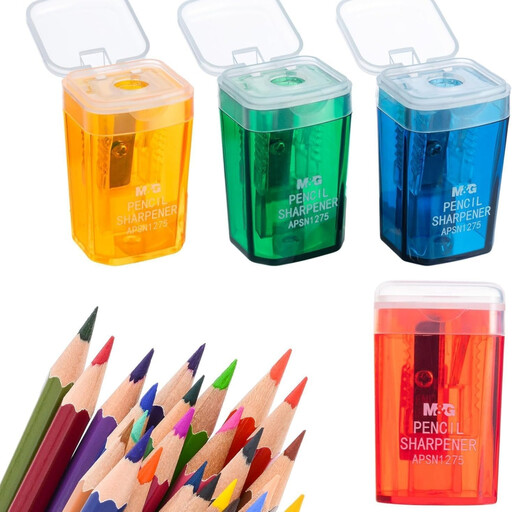
Why This Fits Their Persona: A simple, reliable solution for the pencil case. Compact, lightweight, and designed to neatly contain shavings, keeping the school bag clean.
The secure lid avoids the pitfall of a leaky reservoir. Its simple, sharp metal blade is effective for standard graphite and coloured pencils without causing breakage.
Comes in a pack of four, so there's always a spare available. The dual-hole design accommodates different pencil types.

Why This Fits Their Persona: Designed for heavy-duty use in a fixed location. The powerful motor and AC adapter power supply make this a reliable workhorse for a busy office or classroom.
The durable helical blade prevents the 'dull-blade syndrome'. The auto-stop feature automatically stops when the point is sharp, preventing over-sharpening and broken tips.
Suitable for a wide range of pencil diameters (6-12 mm) and features three adjustable point settings. The large shavings reservoir needs to be emptied less frequently.
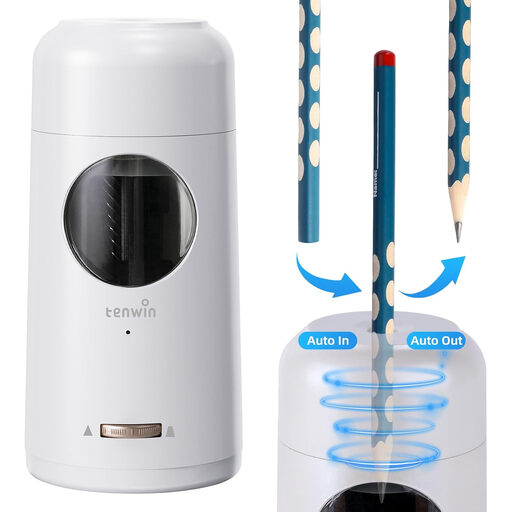
Why This Fits Their Persona: Offers the precision and flexibility required for artistic work. The rechargeable battery makes it portable for use in the studio or outdoors, while the adjustable features provide complete control.
This model bypasses the "one-size-fits-all" myth. It accommodates thick pencils (7-11.5 mm) and has three sharpening settings (sharp, round, flat), preventing damage to the soft cores of coloured pencils.
Fully automatic: the sharpener starts, sharpens, and ejects the pencil. According to the manufacturer, the 2000mAh battery can sharpen over 600 times on a single charge.
We have compiled a complete, real-time list of products that fully satisfy these strict selection criteria and UK safety regulations.
This depends on the blade's quality and how often you use it. With a cheap manual sharpener, you'll notice over time that the point becomes less sharp or the lead breaks more often. That's when it's time for a new one. High-quality electric models with a helical blade can last for thousands of sharpenings. Manufacturers like Faber-Castell recommend replacing a sharpener as soon as its performance declines to prevent pencil breakage.
Not always. The soft, waxy core of coloured pencils can clog sharpeners designed for hard graphite. Opt for a pencil sharpener for coloured pencils that specifically mentions this capability. Models with a sharp helical blade and adjustable point thickness are generally a safer choice, as they put less stress on the core. Always read the product description to check for exceptions, such as wax crayons or charcoal.
Regular cleaning extends the lifespan and improves the performance of your sharpener. Empty the shavings reservoir promptly. Use a soft brush or a can of compressed air to gently remove debris and dust from the blade. Always unplug an electric sharpener from its power source before cleaning. Never use water, as it can cause the metal parts to rust.
