
Vandaag of morgen in huis

Kwaliteit gegarandeerd

Welkomstaanbiedingen ontgrendelen: GRATIS bezorging | Tot 80% korting | Gratis 30 dagen JoyPlus-proefperiode
Download de app
A pen set might seem like a straightforward purchase, but the difference between a useful set and a drawer full of unused pens often comes down to the small details. A nice colour isn't enough. You also need to consider the nib size, the type of ink, the grip and the surface you'll be writing or drawing on.
For school, the office, journaling or a creative hobby, these three pitfalls are particularly important:
The nib size determines how much control you have. For everyday writing, 0.5 to 0.7 mm are practical sizes. A 0.4 mm nib is suitable for compact notes and small handwriting. For drawing, colouring and clear headings, 1 to 3 mm is more common.
Be aware of the difference between the technical nib size and the actual line. Paper, pressure and ink type all affect how wide the line ends up being in practice.
A non-slip or ergonomic grip can be a real help during long writing sessions. A click mechanism is handy for school and the office, as you can't lose a separate cap. Pens with liquid or water-based ink should be stored with the cap firmly closed, according to the product information. For some felt-tip pens, storing them horizontally is recommended.
Also check:
According to STABILO's product information, various Pen 68 sets have a robust nib and water-based ink. The manufacturer also notes that the ink can be blended with water to create a watercolour effect. For this, use thicker paper or card to prevent bleed-through and curling.

Why this fits the profile: A set with multiple colours and a fine nib for notes, planning and simple sketches.
The 0.5 mm nib makes the set more practical for small handwriting than broad markers. The retractable design means there's no loose cap to lose.
Fine bullet tip, ergonomic grip and multiple ink colours in one set.
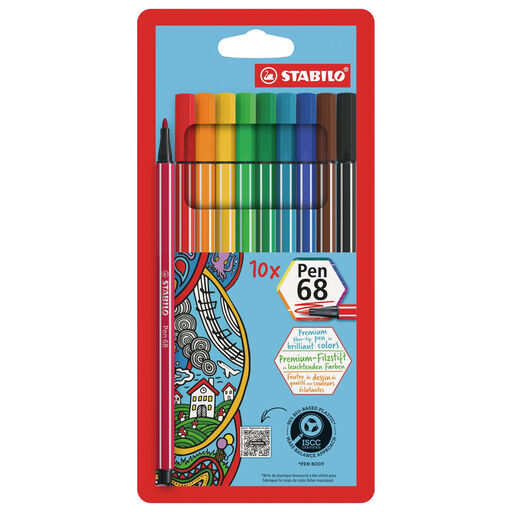
Why this fits the profile: For those who want to combine colouring, drawing and writing with a sturdy fibre tip of approximately 1 mm.
The stated line width and water-based ink make its purpose clearer than a vague "all-rounder" claim.
Pressure-resistant nib, approximately 1 mm line and, according to the product information, suitable for water blending.

Why this fits the profile: Aimed at creative projects where ordinary felt-tip pens aren't enough, such as decorating on wood, glass or ceramic.
The product information clearly states the suitable surfaces and the two nib sizes, so you can match your use beforehand.
Six metallic colours and nibs of 1 and 3 mm. The marker must be shaken and primed according to the instructions before use.
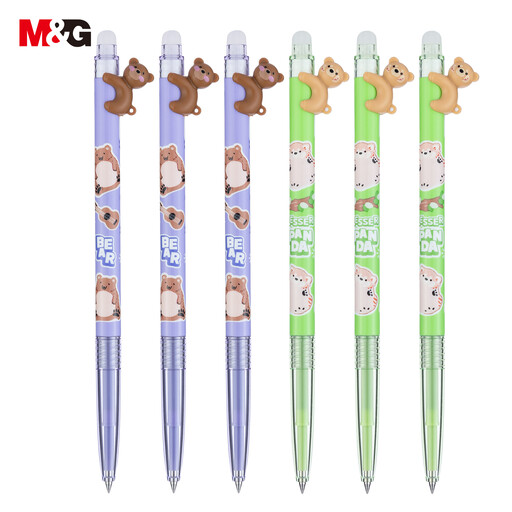
Why this fits the profile: The set combines a 0.4 mm nib with a playful design for school, planners and everyday corrections.
The nib size and the use of heat-sensitive ink are clearly stated. It's best not to use this ink for important documents.
Six blue erasable gel pens, a fine 0.4 mm nib and an animal-shaped clip.
We've put together a full, up-to-date list of products that fully meet these strict selection criteria and current European safety regulations.
Pens usually don't need complicated setup, but storing them properly prevents unnecessary replacements. Close felt-tip pens, brush pens and rollerball pens immediately after use. Store acrylic markers according to the instructions on the packaging and test them on a scrap piece first. With refillable ballpoint pens, you can replace just the refill later. That can be more cost-effective than buying a whole new pen.
For children, sets with small parts are not suitable below the stated minimum age. STABILO states a minimum age for several products; check this information for each set. Themed items, such as Harry Potter pens or Disney pens, are best suited when the design is part of the purchase decision. Always check the product listing and the contents of the set for licensed products.
For school, ballpoint pens, gel pens or erasable pens with a nib of approximately 0.5 to 0.7 mm are practical. Choose a click pen if you don't want to lose a cap. For highlighting and colour-coding, you can add a small set of coloured pens or fineliners.
The lifespan depends on use, storage and the amount of ink. A well-capped felt-tip pen can last longer than one that's regularly left open. Store pens out of direct sunlight and away from extreme temperatures. With a ballpoint pen that has a replaceable refill, you don't always have to throw the whole pen away.
Generally not, if permanent archiving is important. The heat-sensitive ink can fade with high temperatures. For diaries, homework and temporary notes, erasable gel pens are very practical. For contracts, official forms and long-term records, use a suitable ballpoint pen or rollerball.
