
Vandaag of morgen in huis

Kwaliteit gegarandeerd

Welkomstaanbiedingen ontgrendelen: GRATIS bezorging | Tot 80% korting | Gratis 30 dagen JoyPlus-proefperiode
Download de app
A pen set might seem simple to choose: pick the number of colours you want and place your order. Yet differences in ink, tip shape and surface can mean a set is less useful than you expected. A felt-tip pen for school, for example, isn’t automatically suitable for hand lettering, while alcohol markers can bleed through paper.
With these buying tips, you can compare colour pens, brush pens, acrylic markers and other pens based on the features that really matter in practice.
A box of 50 or 100 pens sounds appealing, but check whether the colours are genuinely different from one another. For children, a compact set with recognisable basic colours can be more practical. For illustrations and colour gradients, however, multiple shades within the same colour family are more useful.
Also pay attention to the colour coding on the cap. A cap colour can differ from the ink colour, especially if the pen has been used several times.
A fine tip works well for writing and details, but fills large areas slowly. A brush tip allows you to create thin and thick lines, depending on pressure. A slanted chisel tip is suitable for broad strokes and letters.
If you’re mainly looking for pens for drawing and colouring, it’s a good idea to decide on your preferred drawing style first. For simple colouring pages, ordinary felt-tip pens are often sufficient. For hand lettering, brush pens make more sense. For wood, glass or ceramic, acrylic markers are a different category altogether.
Washable ink helps with cleaning, but the result depends on the fabric, drying time and surface. According to Jar Melo’s product information, the ink in their dual-tip markers and dot markers is 90% washable from skin and most fabrics. That’s a product specification, not a guarantee for every stain or material.
With young children, use a washable surface and clean stains with water as quickly as possible. Also check the recommended age and any safety information on the packaging.
The ink determines where you can use the pen:
Claims about coverage, drying time or colour intensity are based on the brand’s product information. The final result can vary depending on the paper and the pressure you apply.
Don’t just check whether a product mentions “dual-tip pens”; look at exactly which tips are used. A combination of brush and chisel offers more possibilities than two similar fine tips.
Key examples:
For children, an age indication, a well-sealing cap and clear product information are important. According to the product description, Jar Melo dual-tip markers have ventilated caps and an oval, thicker barrel. The set is intended for children from around three years old, with a stated target age of four to twelve years.
The Faber-Castell brush pen set of 20 pieces mentions EN 71 as a quality label and a recommended minimum age of 10 years. That doesn’t mean every user will have the same experience; always check the current packaging and use the pens under supervision where appropriate.
Close pens properly after use. Brush pens, felt-tip pens and alcohol markers in particular can dry out if the cap is left off for a long time. Store them according to the product instructions, for example lying flat or with the tip in a recommended direction.
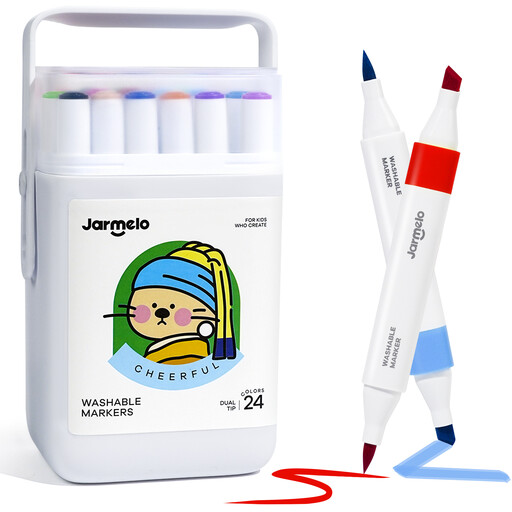
Why this suits the profile: The set combines 24 colours with a brush tip and a chisel tip. This allows children to colour, draw and create simple letters without needing multiple sets straight away.
The two different tips mean you don’t need to buy separate pens for broad and fine lines. According to the product information, the water-based ink is alcohol-free, odourless and 90% washable from skin and most fabrics.
24 colours, dual tip, storage case with handle and ventilated caps.
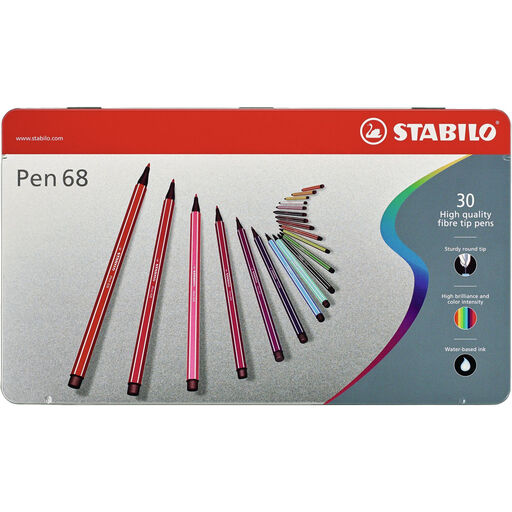
Why this suits the profile: This set is ideal for teenagers, adults and hobby artists looking for a consistent fine line for drawing, colouring and light watercolour effects.
The robust fibre tip is pressure-resistant according to the product information and has a writing width of approximately 1 mm. The water-based ink is odourless; the cap can reportedly be left off for up to 24 hours without the pen drying out.
30 colours, approximately 1 mm tip and the ability to use the ink with water.

Why this suits the profile: These alcohol markers are designed for sketching, illustrations and colour gradients. The combination of a brush tip and fineliner supports both larger areas and fine details.
The product specifications mention a flexible brush tip of 1 to 5 mm and a metal-cased fineliner tip of 0.6 mm. Do use suitable paper, as alcohol ink can bleed through.
24 colours, two tip shapes and quick-drying alcohol ink according to the product information.
We’ve put together a full, up-to-date list of products that fully meet these strict selection criteria and comply with current European safety regulations.
Look for washable pens for children with water-based ink, an appropriate age rating and clear safety information. Jumbo or dot pens are often easier to grip thanks to their thicker barrel. According to the product description, the Jar Melo Washable Dot Markers have a large barrel, a sponge-like tip and 90% washable ink from skin and most fabrics.
Put the cap back on immediately after use and check that it closes fully. Store colour pens away from direct sunlight and extreme temperatures. With a large set, such as 50 brush pens, a dedicated storage box helps keep caps and colours together.
That depends on the age rating and the intended use. Alcohol markers are mainly designed for drawing and illustrating and can bleed through paper. For younger children, water-based or washable felt-tip pens are usually more practical. Always check the product information, ventilation advice and recommended minimum age before buying a set.
