
Vandaag of morgen in huis

Kwaliteit gegarandeerd

Welkomstaanbiedingen ontgrendelen: GRATIS bezorging | Tot 80% korting | Gratis 30 dagen JoyPlus-proefperiode
Download de app
Buying a pen set seems straightforward, until you have to choose between gel pens, fineliners, felt-tip pens, brush pens and erasable gel pens. A cheap set may look appealing, but it won’t always suit your paper, writing style or how often you’ll use it. Students often want several colours for their notes, while office professionals tend to prioritise comfort and reliability. For journalling and drawing, nib size, colour intensity and control matter more.
As a Joybuy Product Recommendation Officer, I filter product information for practical details. Focus on specifications you can check, rather than claims such as “smooth”, “quick-dry” or “premium”.
A set with dozens of colours isn’t automatically useful. For small notes and diaries, a 0.4 or 0.5 mm nib may be easier to write neatly with than a broad felt tip. A thicker nib is more useful for filling in larger areas of colour. Always check the line width and nib type.
Brands may say that their ink dries quickly or is less likely to smudge. Treat this as a product claim: according to the brand’s product description, the ink is designed for this purpose, but the result also depends on the type of paper, your writing speed and the position of your hand. Left-handed writers in particular should test red or black gel ink on their own paper first.
A rubber or ergonomic grip can feel comfortable during long writing sessions, but a thicker grip takes up more room in a pencil case. A retractable pen is practical for school and the office, while a pen with a cap may be better suited to decorative designs. Check for small parts, too: according to product information, several sets aren’t suitable for children under three.
A bullet tip writes differently from a brush tip. A bullet tip keeps the line relatively consistent, while a brush pen can create thin and thick lines depending on how much pressure you apply.
Gel pens generally write smoothly because their ink contains gel. When choosing a set, check the colour, drying time and closure. A cap helps prevent the nib from drying out, while a retractable mechanism is handy in a bag or on a desk.
With erasable gel pens, the ink is erased by heat, according to the product description. This is handy for planners and school notes, but check first whether the pen is suitable for official documents. Erasing text isn’t the same as making a permanent correction.
Water-based ink can be suitable for many creative uses, but always check whether it’s washable. According to STABILO’s product description, the inks in STABILO Pen 68 and STABILO power are water-based; it also states that stains from STABILO power can be treated with water and soap. This isn’t a guarantee for every fabric or surface.
Where possible, store gel pens horizontally and retract click pens after use. Replace the caps on fineliners, felt-tip pens and brush pens securely. Direct sunlight and high temperatures can affect the ink.
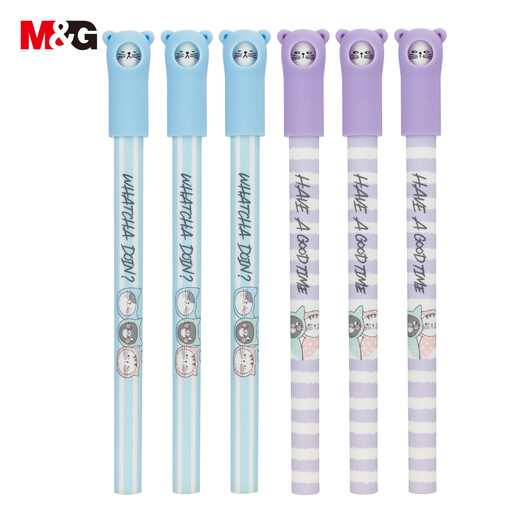
Why it suits this profile: A straightforward set for school, home and everyday writing, with six pens and a distinctive design.
The product details clearly specify blue gel ink, a cap and a 0.7 mm nib. So you know what the set is designed for before you buy.
Six pens, a 0.7 mm bullet tip and a cap. According to the product description, each pen features a spinning cat design.
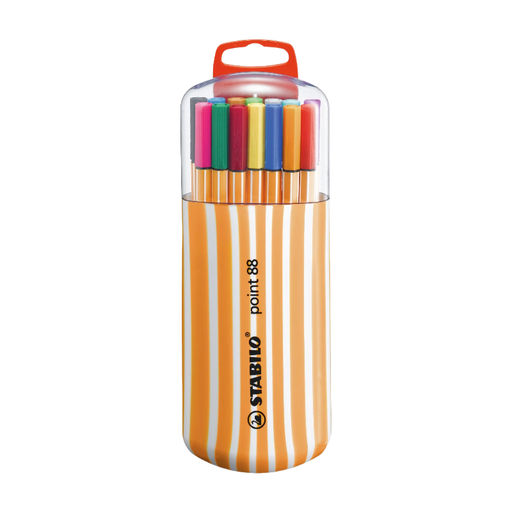
Why it suits this profile: A good choice if you’re looking for one set for precise writing, organising, sketching and colour-coding.
The line width of approximately 0.4 mm is specified, along with water-based ink and a metal tip casing. So you can choose based on specific features.
20 colours, a 0.4 mm nib and a resealable case. According to the product description, the ink is odourless and suitable for writing, drawing and sketching.
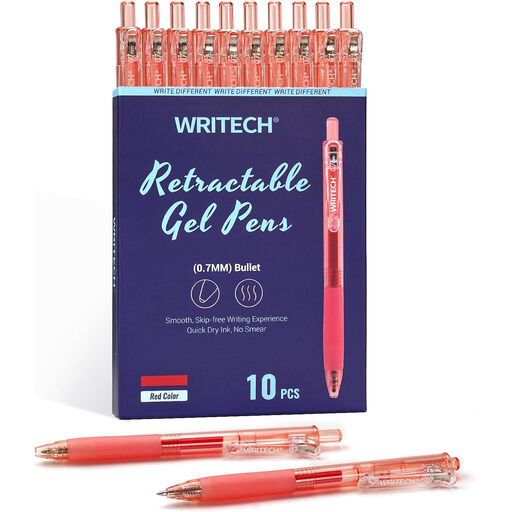
Why it suits this profile: A practical choice for marking work, highlighting, journalling and taking lots of notes, with a handy retractable mechanism.
The set has a retractable tip and an ergonomic grip. The product description states that it uses quick-drying red gel ink; still, test it on your paper first.
Ten red pens, a 0.7 mm nib, an anti-slip grip and a clip. According to the product description, the set is designed for school, the office and left-handed writers.
We’ve put together a complete, up-to-date list of products that meet these strict selection criteria and the applicable European safety regulations.
For general writing, 0.5 mm and 0.7 mm are often practical options. Choose 0.5 mm for compact notes and small spaces in a planner. A 0.7 mm nib creates a more defined line for everyday writing. Also check whether the pen feels comfortable for left- or right-handed use.
How long they last depends on how often you use them, the pressure you apply, the paper and how you store them. Recap pens immediately after use and retract click pens. Keep sets out of direct sunlight and follow the manufacturer’s storage instructions. A pen may still contain ink but write unevenly if the nib is damaged or dried out.
Yes, as long as the nib size suits the page layout. 0.4 mm fineliners are handy for outlines and small labels. 0.5 or 0.7 mm gel pens work well for text and colour-coding. Brush pens offer more variation in line width for headings and decorative lettering. If you’re using paper printed on both sides, check first whether the ink bleeds through.
