
Vandaag of morgen in huis

Kwaliteit gegarandeerd

Welkomstaanbiedingen ontgrendelen: GRATIS bezorging | Tot 80% korting | Gratis 30 dagen JoyPlus-proefperiode
Download de app
Buying a single pen seems simple enough – until the ink skips, the tip turns out too thick, or the pen stops writing after a few weeks. Anyone looking for a pen set should therefore look beyond the number of pieces or an eye-catching pack. The right choice depends on the tip width, ink type, grip and intended use.
This applies to students, schoolchildren, office professionals and home workers, as well as anyone searching for a writing set for journaling, colour-coding or creative projects.
A set of 10 or 12 pieces may seem good value, but check whether all the pens are the same colour and tip size. For everyday writing, a set with only blue ballpoint pens can be handy. For summaries or diaries, coloured pens are often more practical.
Also pay attention to the closure. With capped ballpoint pens, the ink can dry out more quickly if you leave the cap off. Retractable pens are less prone to this drawback because you can retract the tip after use.
The description "fine point" varies from brand to brand. A 0.5 mm pen generally writes more narrowly and precisely than a 0.7 mm pen. A 1.0 mm tip, on the other hand, gives a fuller line. For small notes, tables and planners, 0.5 mm is often clearer. For fast writing at school or in the office, 0.7 mm may feel more comfortable.
Always check the technical specification rather than relying solely on the product name.
According to product information from various brands, quick-drying ink can reduce the risk of smudging. However, the final result also depends on the paper, writing speed and amount of ink. With gel pens and rollerball pens in particular, thin paper can cause bleed-through.
Left-handed writers would do well to choose a pen with a fine tip and quick-drying ink as mentioned in the product description. Where important documents are concerned, it's best to test on the same type of paper first.
Use this practical guide:
A fine tip isn't automatically more comfortable. If you press down hard when writing, a slightly broader tip may allow you to work more smoothly.
Ballpoint pens typically use oil-based ink. This is suitable for everyday notes, forms and documents. Gel pens often write more vividly and evenly, but can release more ink. Rollerball pens use liquid ink and generally offer a light writing feel; a cap is important here to prevent drying out.
For colour-coding, coloured pens are handy. Check whether the set really contains different ink colours and not just coloured barrels.
A soft grip can be pleasant for long writing sessions, but the shape and thickness need to suit your hand. A triangular barrel can provide extra grip. A click mechanism prevents loose caps on your desk. Also look at the material: many budget pens are made of plastic, while some mechanical pencils have a metal body.
A pen set doesn't need to meet an environmental standard to be usable. Always check claims about sustainability against a concrete certification; for the products mentioned here, not all carry an environmental certificate.
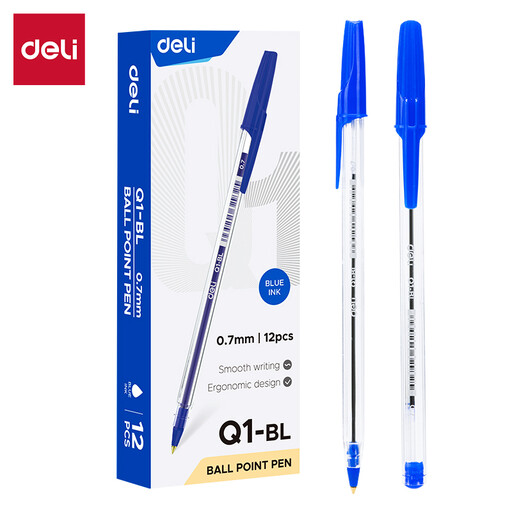
Why this fits the profile: A set of 12 blue ballpoint pens is practical for school, home and a shared office supply.
The tip size and colour are clearly stated: 0.7 mm and blue. So you're not buying an unclear mix.
12 pieces, oil-based ink and a medium 0.7 mm bullet tip for everyday writing.
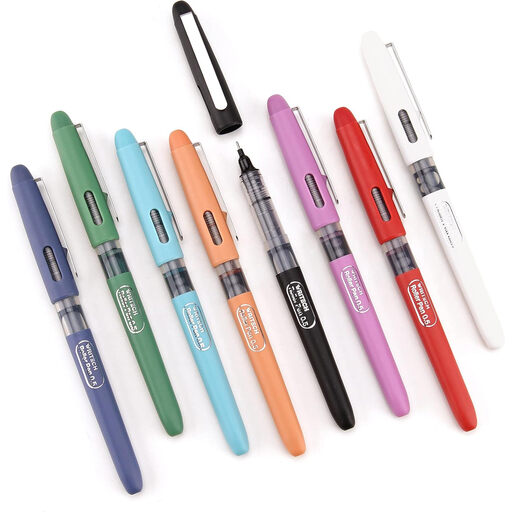
Why this fits the profile: The combination of an extra-fine tip, liquid ink and eight vintage colours suits journaling, illustrations and precise notes.
The transparent ink reservoirs let you see how much ink is left. The cap can be replaced after use.
0.5 mm extra-fine tip, eight colours and a liquid ink system with regulator according to the product description.
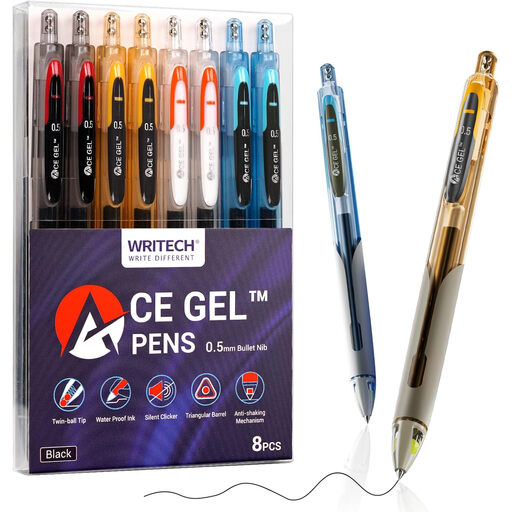
Why this fits the profile: The fine black line, silent click and soft grip are designed for extended note-taking in libraries, meetings and home offices.
The 0.5 mm twin-ball tip is suitable for precise lines. The click mechanism prevents loose caps and protects the tip during storage.
Eight black gel pens, soft silicone grip, silent click and quick-drying ink according to the product information.
We've put together a full, up-to-date list of products that fully meet these strict selection criteria and comply with current European safety regulations.
The lifespan depends on the ink type, storage and frequency of use. These habits will help you avoid unnecessary failures:
A 0.7 mm pen is a practical middle ground for everyday writing. Choose 0.5 mm for small notes and tables, or 1.0 mm if you prefer a broader line.
Yes. Gel pens with coloured ink are useful for headings, colour-coding and decorative notes. However, do check that the ink dries quickly and test on the paper you use to assess bleed-through or smudging.
That varies per pen and usage. A set with multiple pieces will remain usable for longer if you close pens properly or retract the tip. With intensive writing, the number of pens matters more than just the price per pack.
