If you have a compatible laptop and want to write directly in computer programmes, choose a pen display that gets its picture, data and sufficient power from that laptop. If you also want to take notes without a laptop, a standalone digital notebook is a better fit. With either option, check how you can save or share your notes, and which pen and cables are included.
Who are these options for?
Laptop note-taker with no spare socket
Wants to write directly in computer programmes without connecting a separate display adapter. Whether one cable is enough depends on the laptop’s video output and power supply. For the One 14 Display, Wacom specifies DisplayPort Alt Mode or Thunderbolt 3/4 and 7.5 W of power from the computer.
Note-taker without a laptop
Wants to write by hand without a computer and load or share notes later. A standalone device with a battery is better suited to this use; Kobo lists notebooks and annotations in eBooks and PDFs among the features of the Elipsa 2E.
Document annotator
Primarily wants to annotate PDFs or other existing documents. Decide in advance whether you want to work directly in computer programmes or use the document features of a standalone note-taking device.
What should you look for when choosing?
| What to consider |
What should you check? |
Who is this important for? |
| No extra socket |
Check whether your laptop supports USB-C video and supplies enough power for the exact display model. |
If I want to write on my laptop without using another socket, I check both features of my port; around 36% of consumers prioritise avoiding an extra socket. |
| Taking notes without a laptop |
Compare a standalone note-taking device with a pen display connected to a computer. Also check how you can share or export your notes. |
If I want to write when no computer is connected, I look for a device for standalone note-taking; around 29% of consumers give this independence top priority. |
| Where your notes go |
Decide whether you want to write in computer programmes, notebooks or existing PDFs, then check the relevant features. |
If my notes need to fit into a particular computer or document workflow, I first consider where I want to use them; around 21% of consumers choose mainly based on that workflow. |
| Portability and placement |
Compare the dimensions with your bag and workspace, and check whether a stand is included or available separately. |
If I work in different places, I want to know whether the display is easy to carry and fits the available space; around 14% of consumers make portability and set-up their main consideration. |
Buying pitfalls
-
Assuming USB-C guarantees video and enough power
A USB-C port does not automatically mean that video and enough power will be supplied through one cable. For the Wacom One 14, Wacom specifies DisplayPort Alt Mode or Thunderbolt 3/4 and 7.5 W from the computer for full functionality.
Check the specifications of both your laptop port and the exact pen display before choosing a one-cable set-up.
Wacom also specifies a power adapter for the converter connection, so this set-up may still require a power socket.
-
Treating the Kamvas 13 and Kamvas 13 (Gen 3) as having the same power requirements
Huion describes the original Kamvas 13 as drawing power from a laptop, while the connection instructions for the Gen 3 also describe a separate power connection.
Check the full model name, generation, included cables and connection instructions for the version you want to buy.
For the Gen 3, Huion specifies a separate power cable and a USB-C-to-USB-C cable, which is not included.
-
Buying a pen display when you want to take notes without a laptop
A pen display works with a connected computer; a standalone note-taking device is designed for writing without that connection.
First decide whether you want to work directly in computer programmes or take notes independently. Then compare display and pen features.
-
Reading a battery-life claim without considering the conditions
According to reMarkable’s own information, the Paper Pro’s claim of up to two weeks is based on around one hour of reading and note-taking per day, occasional Wi-Fi use and no reading light.
When planning when to charge, take your own usage into account; don’t treat the stated battery life as a guarantee that it will last a full working or study day.
Brands to consider for this choice
Connections and power requirements vary by model, and sometimes by generation. Check the manual for the exact version before assuming you can use it without a power socket.
Wacom
The One 14 and Movink 13 are pen displays for use with a compatible computer; power requirements vary by model.
- Wacom specifies 7.5 W from the computer for the One 14 and at least 15 W for a one-cable USB-C connection to the Movink 13.
- The computer must also provide suitable video output and sufficient power; the stated requirements apply to these models.
Huion
The original Kamvas 13 and the Kamvas 13 (Gen 3) have different connection instructions.
- According to Huion, the original Kamvas 13 can draw power from a laptop, subject to the stated laptop and USB-C requirements.
- Don’t assume the same set-up applies to the Gen 3; its instructions also describe a separate power connection.
XPPen
The Artist 13.3 Pro V2 is a pen display for writing on a computer.
- The manual specifies a USB-C connection to a computer that supports video output.
- This does not mean every laptop can use the display without extra power. For the Android connection described, XPPen specifies a separate power adapter.
Kobo
The Elipsa 2E is a standalone alternative for notebooks and annotations in eBooks and PDFs.
- According to Kobo, the Elipsa 2E comes with a Stylus 2 and supports note-taking and sharing.
- Check whether this document workflow suits your needs if you would otherwise write directly in computer programmes.
reMarkable
The Paper Pro is a standalone, battery-powered note-taking device for writing without a connected laptop.
- According to reMarkable’s own information, battery life can be up to two weeks with around one hour of reading and note-taking per day, occasional Wi-Fi use and no reading light.
- Battery life depends on the stated conditions and is not guaranteed to last a full working or study day.
Products on Joybuy
Here you’ll find pen displays for writing via a compatible computer alongside standalone digital note-taking devices for writing without a connected laptop.
 Image unavailable
Wacom One 14 pen display
Suited to writing and annotating on a connected computer, provided your laptop supplies the required video output and power.
For full functionality via a single USB-C connection, Wacom specifies 7.5 W (5 V/1.5 A) from the computer for the One 14. The computer must support DisplayPort Alt Mode or Thunderbolt 3/4.
View on Joybuy
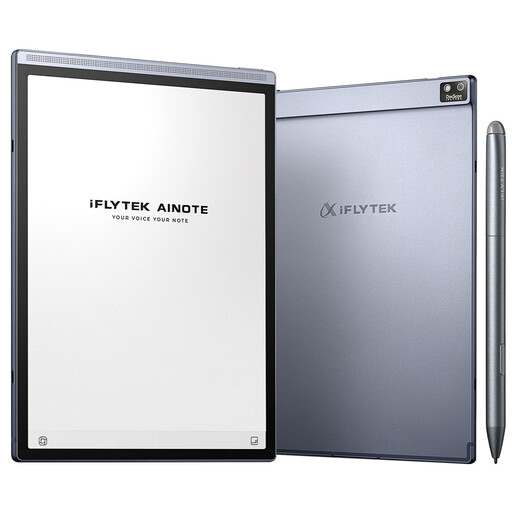 Image unavailable
iFLYTEK AINOTE Air 2, 8.2 inch, with free protective case
A standalone note-taking option for anyone who wants to write with a stylus without connecting a laptop.
The product name specifies an 8.2-inch E Ink display and a stylus.
View on Joybuy
 Image unavailable
iFLYTEK AINOTE 2, 10.65-inch E Ink tablet
A standalone digital note-taking device for anyone who wants to write notes by hand without connecting a laptop.
The product name specifies a 10.65-inch E Ink tablet.
View on Joybuy
Frequently asked questions
Does using one USB-C cable mean I won’t need a power socket?
Only if the computer supplies suitable video output and enough power for the exact model. Wacom specifies 7.5 W (5 V/1.5 A) for the One 14 and at least 15 W for the Movink 13; a USB-C port alone doesn’t confirm that it meets these requirements.
What should I check when connecting and maintaining the device?
Check your computer’s video and power specifications, and follow the connection method for the correct model generation. If the manual specifies a driver, check which version is compatible with your computer; also check that replacement nibs are compatible with your model.
Will I always need an adapter or stand?
No, it depends on your computer and the set-up you want. Wacom says a converter is available separately for the One 14 if your computer doesn’t have suitable USB-C video output, and a stand is also sold separately; a power adapter is also needed when using the converter connection.
What are my rights when buying online in the Netherlands?
For a standard online consumer purchase, you generally have a 14-day statutory cooling-off period, subject to possible legal exceptions. You’re also entitled to a product that meets the terms of the contract. The Dutch government states that there is no fixed statutory guarantee period in the Netherlands; if there’s a fault, contact the seller.


