
Vandaag of morgen in huis

Kwaliteit gegarandeerd

Welkomstaanbiedingen ontgrendelen: GRATIS bezorging | Tot 80% korting | Gratis 30 dagen JoyPlus-proefperiode
Download de app
A large set of pens and art supplies often looks like a bargain, but an extensive range isn’t automatically practical. You might end up using only three colours, a marker could dry out quickly, or the tip might be too thick for your notes. For schoolchildren, students, parents, teachers, artists and journalers, a good purchase is therefore all about the right combination of tip, ink, material and purpose.
Also watch out for marketing claims such as “washable”, “quick-drying” or “for all surfaces”. According to a brand’s own information, a product may meet certain properties, but the result also depends on the paper, pressure, storage method and how quickly stains are treated.
A pen set with 50 colours looks appealing, but for school notes or office work, a few clear colours are often enough. For drawing, colouring and hand lettering, a larger set can be practical. So first consider the application:
A tip of 0.4 or 0.5 mm is suitable for detailed notes and small drawings. A tip of around 1 to 2 mm applies colour more quickly, but is less suitable for small letters. With brush pens, the line width also changes depending on the pressure and the angle at which you write.
So don’t just check the product photo, but also the stated tip size and tip type. A broad marker for a colouring page needs different properties than a fineliner for a diary.
“Washable” doesn’t mean that every stain on every material will disappear completely. With Jar Melo markers, for example, the product information states that the water-based ink is, according to the manufacturer, approximately 90% washable from skin and most fabrics. Still treat stains as quickly as possible and test on an inconspicuous area of clothing first.
Also pay attention to age recommendations, ventilation holes in caps and small parts. For young children, these safety details are more important than just the number of colours.
For everyday writing and journaling, 0.4 to 0.5 mm are practical sizes. They generally provide enough precision for diaries, schoolwork and small illustrations. A 0.7 mm mechanical pencil is a bit more forgiving when writing and sketching; a 0.5 mm pencil gives a finer line instead.
With colouring pens and brush pens, you look more at the shape of the tip. A brush tip is useful for fine and broad strokes, while a chisel tip is suitable for flat highlights and wider lines.
Water-based ink is a common choice for fineliners and colouring pens. On thin paper, however, ink can bleed through, especially when you use multiple layers. For brush pens or watercolour techniques, thicker paper or card is wiser.
Gel pens and rollerball pens can write smoothly, but let the ink dry sufficiently before closing a page. This is especially relevant for left-handed writers and for bullet journals.
Caps must close firmly. Store fineliners and gel pens horizontally if recommended in the product information. Store mechanical pencils with the tip retracted to prevent damage and broken lead. Avoid direct sunlight and extreme temperatures, as these can affect the ink and plastic components.
Also check what is actually included with sets: refills, erasers, a case or just the pens themselves. A slightly smaller set with useful accessories can be better value than a larger set for which you later need to buy extras.
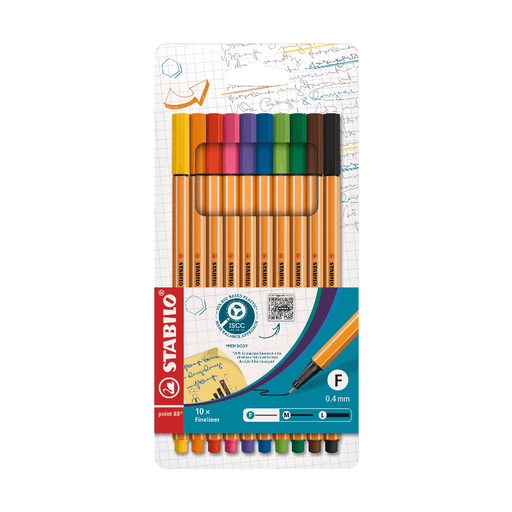
Why this fits the profile: A set of 10 colours offers a manageable start for school, diaries, simple sketches and colour coding without immediately buying a very large stationery set.
The stated writing tip of 0.4 mm makes the purpose clear: fine lines for writing, drawing and sketching rather than broad colouring.
Water-based ink, metal tip, resealable box and 10 different colours.
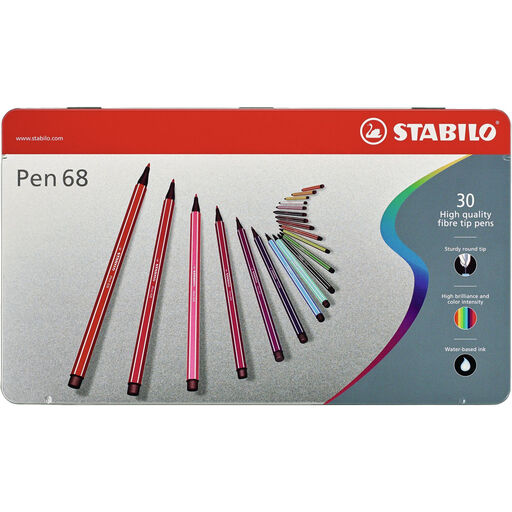
Why this fits the profile: This set is aimed at creative hobbyists and artists who want multiple colours and a more robust fibre tip for illustrations and colouring work.
The product information mentions a writing tip of approximately 1 mm and states that water can be used for watercolour effects. Thicker paper remains important here.
30 colours, water-based ink, pressure-resistant tip and storage tin.
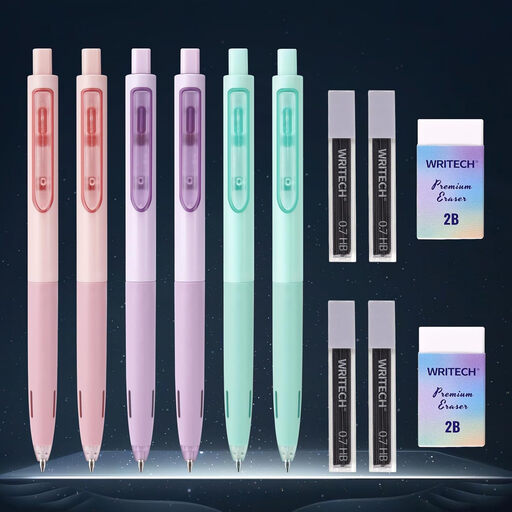
Why this fits the profile: Handy for students, teachers and office professionals who write, sketch or make technical notes daily and want to keep spare leads.
The set states the lead size of 0.7 mm, 48 HB refills and two erasers. This makes it clear what you receive for long-term use.
Six pencils, four tubes of HB leads, soft grip and retractable tip.
We’ve put together a full, up-to-date list of products that fully meet these strict selection criteria and comply with current European safety regulations.
For journaling, fineliners of 0.4 mm, gel pens or rollerball pens of around 0.5 mm are practical choices. Choose a quick-drying ink if you write left-handed or want to turn pages quickly. Always test the pen first on the same paper to check for bleeding and smudging.
Put the cap back on immediately after use and check that it closes fully. Store the set according to the product instructions, usually horizontally or in the supplied box. Direct sunlight and heat can affect the ink. A marker that has been left open for a long time may write less evenly temporarily.
That depends on how many colours and what type of stationery you use. A large set can lower the price per item, but unused colours take up space and can still dry out. So compare the number of usable colours, the tip type, included refills and suitability for your paper. That way you choose writing and drawing supplies that not only look appealing, but also suit school, office or creative projects.
