
Vandaag of morgen in huis

Kwaliteit gegarandeerd

Welkomstaanbiedingen ontgrendelen: GRATIS bezorging | Tot 80% korting | Gratis 30 dagen JoyPlus-proefperiode
Download de app
A pair of PELLIOT trail running shoes can work well across a mix of tarmac, sand, mud and unsurfaced paths. But not every outdoor shoe is automatically suited to every surface. A lightweight shoe for a run around town has different requirements from a model designed for rocky mountain trails.
So don’t focus only on colour, price or claims such as “all-terrain”. Check the outsole, fit, cushioning and upper material. This will help reduce the risk of blisters, poor grip or shoes that feel uncomfortable after just a few walks.
A shoe listing might describe shoes with a non-slip sole, but that doesn’t tell you much by itself. Grip depends on the rubber, tread and surface. A flatter tread often works well on tarmac, while mud and loose stones call for a more open tread and lateral stability.
For PELLIOT models with a ROCKYTEC outsole, the product description mentions grip on wet rocks, mud and loose sand. This is information from the product description, not a guarantee that the shoe will be equally stable on every surface. Always take care on wet rocks and adjust your pace.
Mesh and woven textiles generally let heat and moisture escape more easily. That makes them a good option as breathable running shoes for longer walks or runs in mild weather. However, open mesh offers less protection from rain and puddles than a fully closed, water-resistant upper.
So think about how you plan to use your shoes. A lightweight mesh shoe can be comfortable on dry woodland paths and during summer walks. For prolonged wet weather, you may prefer a water-resistant walking shoe, although it might feel less breathable.
EU sizing isn’t exactly the same across every brand. Measure your feet in millimetres instead, ideally at the end of the day and wearing the socks you plan to run or walk in. Then check the size chart for the specific model.
For example, the PELLIOT size chart matches a foot length of 260 mm with EU 42 across several running models. If you have narrow feet, look for the slim fit. The standard fit is listed for standard or wider feet. You’ll also want some room for your toes when walking downhill, but a heel that’s too loose can slip and cause friction.
A sandwich-mesh and woven upper is designed to improve airflow and help moisture escape. Some versions also feature a TPU film for added abrasion resistance, which can be useful when walking past branches and rocks.
Also consider how the shoe feels around your heel and instep. A soft collar can be comfortable over longer distances, while a firmer construction may offer more support on uneven ground. However, no upper can make up for a poor fit.
The PELLIOT running models mentioned here use a resilient EVA midsole. EVA is often used in lightweight running shoes because it combines cushioning with low weight. According to the product description, this midsole is designed to provide rebound and shock absorption across varied surfaces.
Treat this as a product specification, not a medical claim. Cushioning also feels different for everyone. If you mainly run on tarmac, you may value comfort during repeated foot strikes. On technical trails, fit, torsional stability and grip matter just as much as soft cushioning.
The outsole is an important feature to check on outdoor running shoes. Look at:
Some PELLIOT models mention Vibram Megagrip as well as ROCKYTEC for certain versions. Check the product page to see whether this applies to the version you’ve chosen. A brand name listed for another variant doesn’t automatically mean every pair has the same outsole.
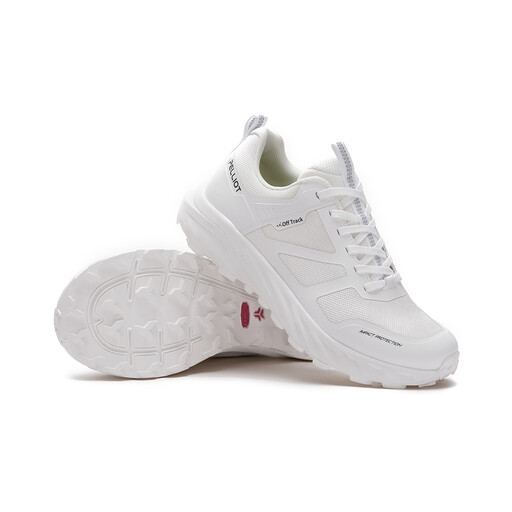
Why it suits this profile: A lightweight option for anyone getting started with running, walking or a mix of tarmac and easy unsurfaced paths. The unisex design makes it easy to compare sizes by foot length.
The product information lists a mesh and woven upper, EVA cushioning and a ROCKYTEC outsole. Check that EU 38 is suitable for a foot length of 240 mm.
Lightweight construction, a breathable upper and an EVA midsole, according to the product specifications.

Why it suits this profile: For runners looking for one pair for commuting, longer runs and paths beyond the city. The product description lists both standard and slim fits.
The specifications go beyond simply saying “all-terrain”: they also mention mesh, EVA and ROCKYTEC. Check the selected version before you order.
Foot lengths from 245 to 275 mm are matched to EU 39 to 45; the outsole is designed for wet and loose surfaces, according to the description.
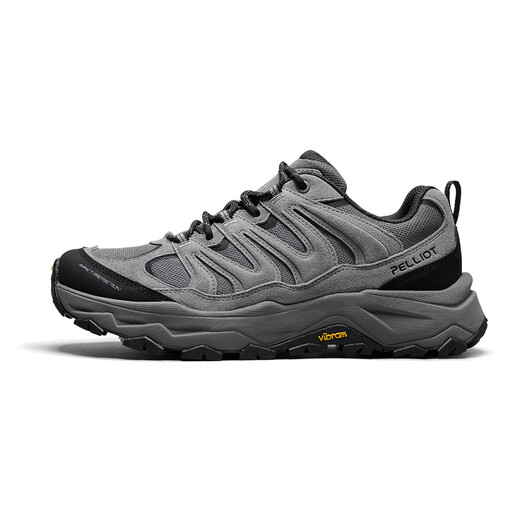
Why it suits this profile: Designed for hikers and anyone looking for more stability and protection on mountain trails and longer outdoor activities than a basic running shoe typically provides.
The product name specifies a Vibram outsole, making the sole construction clearer than listings that only use the term “outdoor”. Check the tread and size on the product page.
Vibram outsole, according to the product name, and a design for hiking and mountaineering.
Lifespan depends on how often you wear your shoes, your body weight, the surfaces you walk or run on and how you store them. Check the tread regularly for wear and look for cracks in the midsole. Reduced grip or a heel that’s wearing unevenly are signs that it may be time to replace your pair.
Hand-wash PELLIOT shoes according to the product information, using mild soap and cold water. Leave them to air-dry away from direct heat. A radiator or tumble dryer can damage the glue, mesh and foam materials. Brush off sand and mud with a soft brush after a walk.
We’ve put together a complete, up-to-date list of products that meet these strict selection criteria and comply with current European safety regulations.
Some models are designed, according to the product description, for the transition from tarmac to trails. The EVA midsole can provide comfort on hard paths, while the ROCKYTEC outsole is designed to offer extra grip on loose or uneven ground. However, a trail tread may feel heavier or less smooth on flat tarmac than a road-running shoe.
Measure both feet in millimetres and use the size chart for your chosen model. For example, PELLIOT running models list EU 42 for a foot length of 260 mm. If available, choose the slim fit for a narrower foot; choose the standard version for a regular or wider foot. Always check the current size availability on the product page.
There’s no fixed lifespan. Someone who often runs on rocks, mud and tarmac will wear down their shoes differently from someone who mainly goes on gentle walks. Check the tread, seams, heel and cushioning regularly. Replace your shoes when the grip has clearly worn down or the fit no longer feels stable.
