
Limited floor space beside the sofa
You want airflow at sitting height, but need to place the base beside the sofa without obstructing the walkway. The Consumentenbond points out that a pedestal fan takes up more space than a tower fan.


Choose a pedestal fan if you want to direct air from floor level towards where you’re sitting and have room for the base and cable beside the sofa. The Consumentenbond notes that this type takes up more space than a tower fan, so measure the available area and compare noise and airflow at the setting and distance you plan to use. A fan makes the air feel cooler, but doesn’t lower the room temperature, according to Milieu Centraal.
You want airflow at sitting height, but need to place the base beside the sofa without obstructing the walkway. The Consumentenbond points out that a pedestal fan takes up more space than a tower fan.
You want to feel the airflow without the noise at your chosen setting drowning out conversation or the television. The Consumentenbond describes measurements of airflow at different speeds and distances.
You want to spread the airflow across several seats and be able to switch off oscillation when you’d prefer a directed breeze.
First, measure the space for the base and decide where you want the air to go. Then assess noise and controls at the settings you’ll actually use.
| Key consideration | What to look for | Who is this important for? |
|---|---|---|
| Directed airflow and positioning | Measure the available space; check the base dimensions and cable length. | If I live in a small flat, I want to fit the base beside the sofa without blocking the walkway and direct the air towards where I’m sitting. Positioning and directed airflow are the top priority for around 36% of consumers. |
| Noise at the setting you use | Compare both noise and airflow at different settings and distances; a single minimum figure doesn’t describe every setting. | When I’m watching TV, I want to feel enough air reaching the sofa without the noise drowning out conversation. Noise at a useful setting is the top priority for around 29% of consumers. |
| Sharing the airflow | Check whether oscillation can be switched off and whether the airflow reaches both seats. | When we’re sitting together on the sofa, I want to spread the airflow across both seats, but be able to switch off oscillation when I’m sitting alone. Sharing the airflow is the top priority for around 21% of consumers. |
| Controls and energy use | Check the controls and timer; use the stated power rating, your hours of use and your electricity tariff to estimate energy consumption. | From the sofa, I want to be able to adjust the settings without getting up, and if I use the fan regularly, I want to factor its power rating into my energy use. Controls and running costs are the top priority for around 14% of consumers. |
A minimum figure doesn’t tell you how much noise you’ll hear at the setting that sends enough air towards the sofa from your chosen spot.
Compare noise and airflow at different settings and distances. Treat a manufacturer’s minimum figure as a model specification, not a noise measurement for every setting.
The Consumentenbond reported safety issues with certain models it tested. Its findings about the older Duux Whisper DXCF03 don’t automatically apply to the DXCF222; the organisation reported that a redesigned DXCF03 passed a retest.
Check the safety information for the exact model and version. Don’t use a fan with a damaged grille.
A fan can make people in its airflow feel cooler, but it doesn’t cool the air, according to Milieu Centraal.
Choose a fan for a breeze beside the sofa. If indoor temperatures are the problem, keep the sun’s heat out and ventilate your home at suitable times.
The Whisper³ DXCF222 is a pedestal model worth comparing if a wide range of speed settings and controls from the sofa are important to you.
The VE-5755 is a pedestal model with on-unit controls, adjustable height and oscillation.
The VSM16 is a metal pedestal model worth comparing for its height, tilt and on-unit controls.
These models are for anyone who wants to circulate air beside the sofa; the features listed can help you decide whether a model suits directed or shared use.
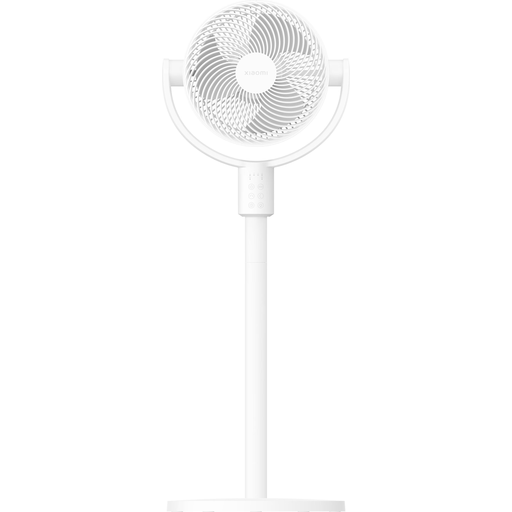 No image available
Suitable if you want to spread the airflow across several seats and adjust the height.
The product name lists 3D automatic oscillation, adjustable height, 2 settings, 100 speeds and a sleep mode.
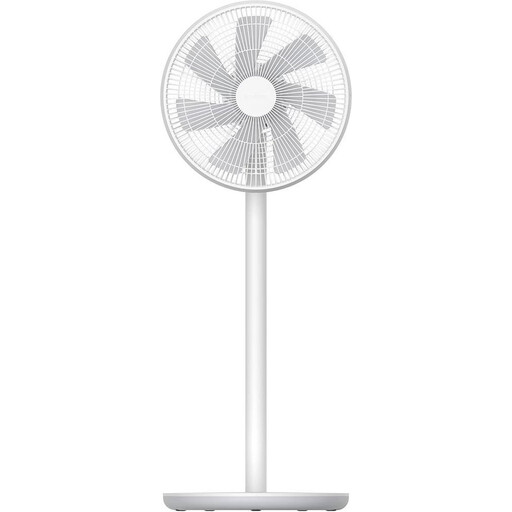 No image available
Suitable if you want to combine app control and adjustable height with automatic oscillation.
The product information lists 100 adjustable speeds and a height setting for floor or table use.
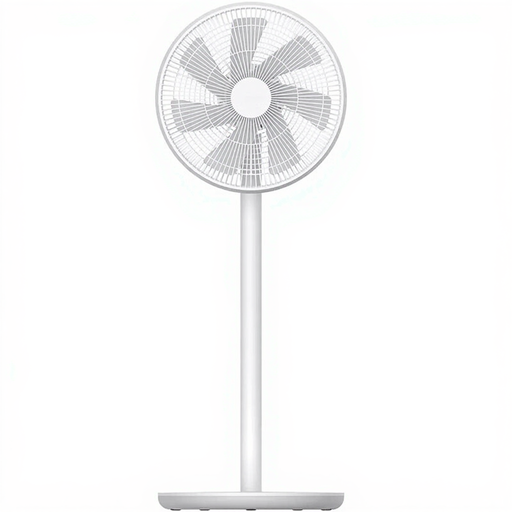 No image available
Suitable if you want adjustable height and oscillation to direct the airflow towards your seat or share it across the sofa.
The product name lists 90° oscillation, adjustable height, app control and 7 blades.
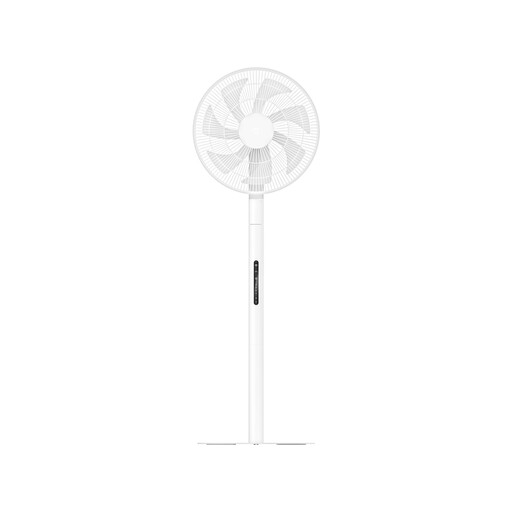 No image available
Suitable if you want to adjust the settings from the sofa and compare different ways of controlling the fan.
The product name lists app, remote and touch controls, a DC inverter motor, Type-C charging and a stated airflow range of 14 m.
No, a fan doesn’t lower the air temperature. Its airflow can make people in its path feel cooler, according to Milieu Centraal.
Place the fan on a stable surface and make sure the base and cable don’t obstruct the walkway. Follow the instructions for your chosen model: for example, the Eurom VSM16 manual says to unplug the fan during assembly or disassembly and not to use it if the grille has been removed or damaged. This model-specific instruction doesn’t automatically apply to every model.
Products covered by the Dutch Commodities Act Decree on Electrical Equipment must carry a CE mark; according to the NVWA, this means the manufacturer declares that the product meets the applicable EU requirements. The NVWA gives a range of 50–1,000 V AC for the low-voltage rules. A CE mark doesn’t tell you how quiet or easy to use a particular model is.
According to ACM ConsuWijzer, online purchases usually come with a 14-day cooling-off period after delivery. If a product breaks during normal use sooner than you could reasonably expect, the seller is responsible under the statutory guarantee for providing an appropriate free remedy; any stated manufacturer’s guarantee doesn’t replace this right.