
Several seating areas
If people are spread out, adjustable height and oscillation help distribute the airflow between seating areas.


For several seating areas, an adjustable pedestal fan with oscillation is a sensible choice; for one fixed spot, a more focused airflow may be better. Compare noise and airflow at the setting and distance you’ll actually use, and check the fan’s stability and where the cable will run. A fan moves air, but it doesn’t provide fresh air or actively cool a room.
If people are spread out, adjustable height and oscillation help distribute the airflow between seating areas.
Whether you’re reading, working or chatting, it’s not just how much air a fan moves that matters, but also how noisy it is at the setting you use. The Dutch Consumers’ Association (Consumentenbond) measures airflow at different speeds and distances.
If the fan will be placed where people walk past, a stable base and a cable kept out of the way are important considerations.
First decide whether the airflow needs to reach one seating area or be spread across several. Then compare noise, placement and energy use.
| What matters when buying | What to look for | Who should consider this? |
|---|---|---|
| Airflow where people are sitting | Check the adjustable height, tilt and oscillation. Assess the airflow at the distance between the fan and the seating areas. | If I want the airflow to reach several seating areas, I’ll look at how it is distributed. Around 40% of consumers prioritise airflow where they sit. |
| Noise while the fan is running | Compare noise and the airflow you can feel at the same usable setting and distance; a minimum decibel rating doesn’t tell you how loud a more powerful setting will be. | If you spend a long time reading, working or talking in the conservatory, you’ll want a useful breeze without distracting noise. Around 30% of consumers prioritise quiet operation. |
| Stability and placement | Check the base, assembly and cable route. If the chosen spot could get damp, also check the model’s manual. | If the fan is near a walkway, I’ll want to place it securely and keep the cable out of the way. Around 20% of consumers say safe placement is their main concern. |
| Energy use | Compare the stated power and hours of use on the same basis: watts × hours ÷ 1,000 = kWh. A lower wattage doesn’t prove that the airflow will be sufficient. | If I use the fan often, I’ll want to weigh its energy use against the airflow I need. Around 10% of consumers prioritise energy use. |
A fan moves air, but it doesn’t cool the conservatory like active cooling or bring in fresh air from outside by itself. The RIVM makes the same distinction between moving air and ventilation.
First decide whether you need a breeze for people in the room, less solar heat or better air circulation. Shading can help keep heat out; to refresh the air, outdoor air needs to be able to come in.
A maximum airflow rating and a minimum noise rating don’t necessarily describe the same operating setting. What matters is the combination of airflow you can feel and noise at the setting and distance you use in the conservatory.
Where possible, compare measurements at different speeds and distances. Don’t assume that the manufacturer’s maximum airflow and minimum noise ratings apply at the same time.
Some models may not be suitable for use in damp areas. Tristar, for example, states this explicitly for the VE-5893.
Check the spot where you plan to put the fan and the manual for the exact model, including guidance on the cable route.
The Whisper 3 range of pedestal fans is for anyone looking for a wide choice of settings and remote control.
The Turbo Silence Extreme+ VU5870F0 is a pedestal model whose stated maximum airflow may be worth considering.
The VE-5893 has physical controls, adjustable height and oscillation.
The Vento 3D Silent Comfort is an alternative if horizontal and vertical airflow distribution are important to you.
Below are models designed to distribute air across several seating areas, as well as one version categorised for directing airflow towards seating further away.
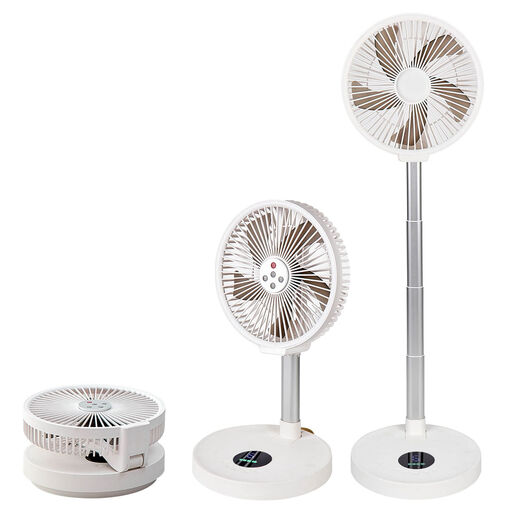 Image unavailable
The stated oscillation and adjustable height give you options for directing airflow towards seating areas.
Foldable design, remote control, six speeds, 90° oscillation and a manually tilting head. The product name lists a timer function and a capacity of 7200 mAh.
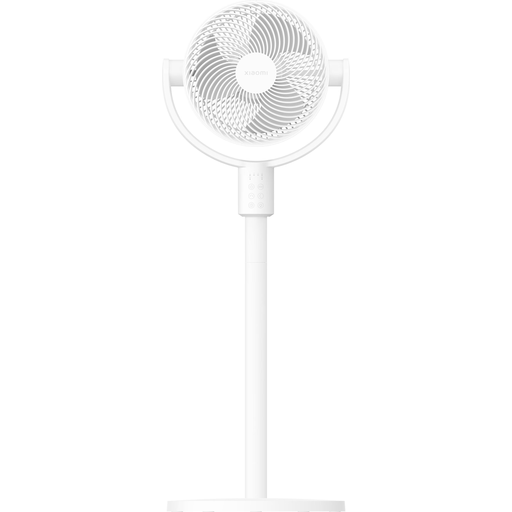 Image unavailable
Its adjustable height and automatic oscillation are designed to distribute airflow around an occupied room.
The product name lists 100 speeds, 3D automatic oscillation, a stated airflow of 1440 m³/h and a stated range of 13 m. It also features a DC inverter motor and app control.
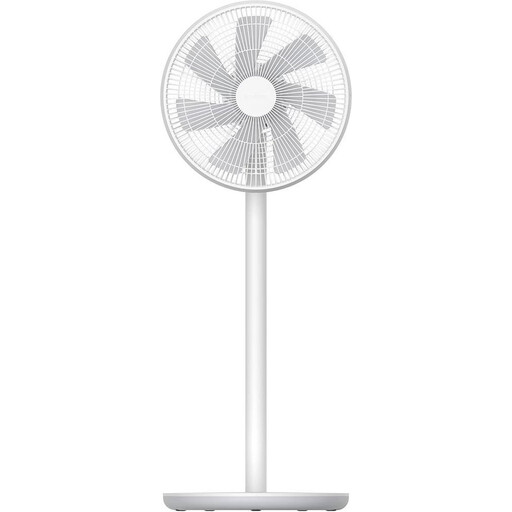 Image unavailable
The product description mentions automatic oscillation and use at table or floor height, so you can adapt the set-up to your space.
App control, a DC inverter motor and 100 adjustable speeds. The description lists natural and direct wind modes, and use at table or floor height.
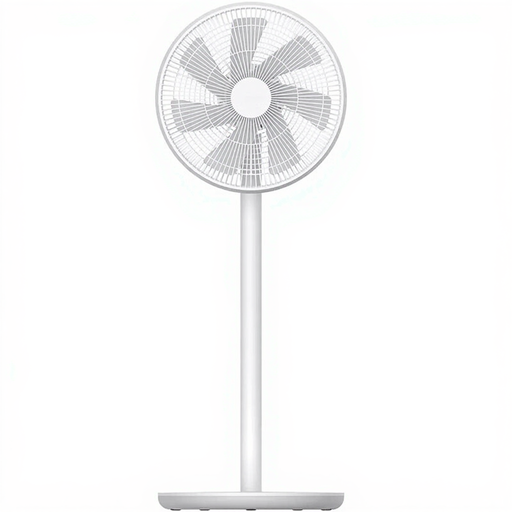 Image unavailable
The stated oscillation and adjustable height give you options for directing airflow towards different seating areas.
App control, seven blades and 90° oscillation. The product name lists a stated airflow range of up to 12 m.
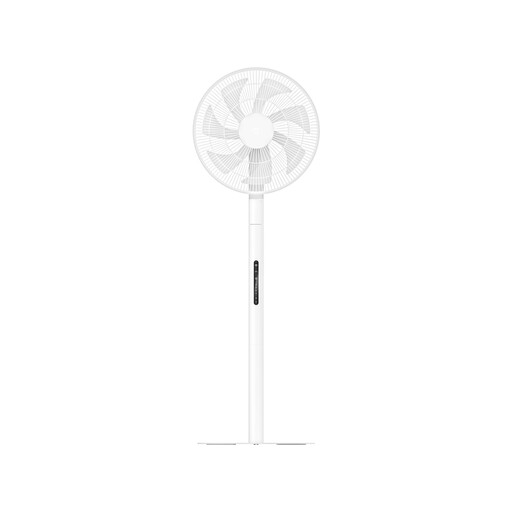 Image unavailable
This version is categorised for directing airflow towards seating further away; check that its placement and airflow suit your conservatory.
The product name lists a stated airflow range of 14 m, a DC inverter motor and control via app, remote control and touch controls. USB Type-C charging is also listed.
A pedestal fan moves air and can create a breeze, but it doesn’t replace active cooling. To refresh the air, fresh outdoor air needs to come in through a window or vent, for example. If sunlight is heating the room, it helps to keep the heat out; letting air in is most useful when it’s cooler outside than inside.
Direct the airflow towards the occupied area and try different heights, settings and oscillation at the actual seating positions. Where possible, avoid blowing air directly from one person towards another. This is advice from the RIVM, not a general legal requirement.
Check the restrictions for the exact model before placing it there. Tristar, for example, says that the VE-5893 isn’t suitable for damp areas; that restriction doesn’t apply to other models.
Follow the instructions for your model and, after assembly, check that the base and grille are secure. Also check the manual to see how to access the blades or grille for cleaning. Assembly and cleaning are assessed separately in the Consumentenbond fan test.
Multiply the power in watts by the number of hours you use the fan, then divide by 1,000 to calculate energy use in kWh. Multiply that figure by your electricity tariff for an estimated cost. Compare models using the same number of hours, and check that the airflow is sufficient at your chosen setting.