
Freshly blended at work
You want to make a pear smoothie at work and are choosing between a corded blender and a rechargeable model. The space available, the cup and the power supply will determine what’s practical.


If you want to blend at work without a plug socket, choose a rechargeable personal blender with a single-serve cup. If you have a suitable place with a power supply, a compact corded blender is another option. With either type, consider the space available, cleaning and noise: the product specifications do not prove that a model is quiet. If blending at work is not an option, you can make your smoothie at home and take it with you chilled.
You want to make a pear smoothie at work and are choosing between a corded blender and a rechargeable model. The space available, the cup and the power supply will determine what’s practical.
You share a workspace and don’t want to disturb your colleagues. A noise assessment of the exact model, or choosing somewhere else to prepare your smoothie, is more useful than an unsubstantiated claim that a blender is quiet. The Consumers’ Association assesses noise as part of its blender tests.
You want to keep cleaning to a minimum after making a smoothie. Check which parts the manufacturer says are dishwasher-safe, and think about where you can clean the cup and blade parts at work.
Start with the practicalities at your workplace: are you allowed to blend there, is there a suitable power supply, and can you clean the parts? Then compare cup capacities and look for a review of the exact model to find out about noise and how smooth it blends.
| What to consider | What should you check? | Who should consider this? |
|---|---|---|
| Portion size and texture | Check the cup capacity and the instructions for adding pieces of fruit and liquid. For the smoothness you want, look for an independent test of the model. | If I’m making one portion, I want it to fit in the cup and have a texture I like. Around 31% of consumers put portion size and texture first. |
| Noise at work | Look for a noise assessment of the exact model, and agree where and when you can blend at work. | If I share a space, I want to avoid disturbing my colleagues when I blend. Around 25% of consumers prioritise keeping disruption to a minimum. |
| Cleaning | Check which parts can be removed and are dishwasher-safe, and whether you can clean them at work. | If I want to get on with my day quickly after a smoothie, I need to know whether I can clean the cup and blade parts at work. Around 25% of consumers prioritise easy cleaning. |
| Power and portability | Check whether the model runs on mains power or needs charging, and whether you can transport it safely. | If I want to blend on the spot without a plug socket, I need a rechargeable model; if there’s a suitable socket, a corded model may work. Around 19% of consumers choose mainly based on being able to use a blender without a plug socket. |
Wattage is a product specification. The Consumers’ Association assesses smoothie results and noise separately, so wattage alone doesn’t tell you how a model performs in either area.
Compare results for the exact model to assess smoothness and noise, rather than looking at power alone.
A rechargeable base doesn’t remove the need to clean the cup and blade parts after use.
Check the cleaning instructions and decide in advance where you can clean the parts at work.
The Netherlands Nutrition Centre advises that it’s better to eat fruit than drink it, and classifies smoothies as sugary drinks.
Choose a blender based on practical considerations, not on the assumption that a pear smoothie is necessarily healthier than eating a pear.
The models listed differ in areas such as power supply and cup capacity. Check whether each model’s features suit your workspace.
The Portable range is a rechargeable option if you want to blend at work without a plug socket. For the NBP003NBL, nutribullet lists a 475 ml cup and USB-C charging.
The 3000 Series Blend & Go HR2670/00 is a compact corded option, with a lidded cup for use in a suitable preparation area or for taking your drink with you.
The VitaPower Serie 2 MMB2111S is a compact blender with a To Go Bottle, designed for anyone with access to a plug socket and a dedicated preparation area.
These products have been selected for making smoothies at work: corded models for places with mains power, and rechargeable blenders for use without a plug socket.
 No image available
An option for a workplace with mains power if you’re looking for a compact jug blender.
The product name lists a capacity of 0.6 l and a power rating of 350 W. The product information also lists two speeds, a pulse function and removable, dishwasher-safe parts.
 No image available
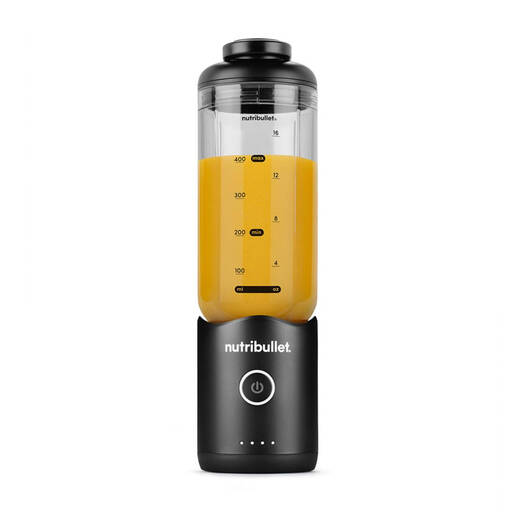
A rechargeable option if you want to blend at work without a plug socket.
The product name lists a capacity of 475 ml and USB-C charging. The product information also mentions a drinking lid and removable parts that can be rinsed under the tap.
 No image available
A rechargeable blender for making smoothies without a plug socket, with a larger cup capacity than 475 ml.
The product name lists a capacity of 590 ml and USB-C charging. The product information also mentions a removable blade unit. Do not use with hot liquids.
 No image available
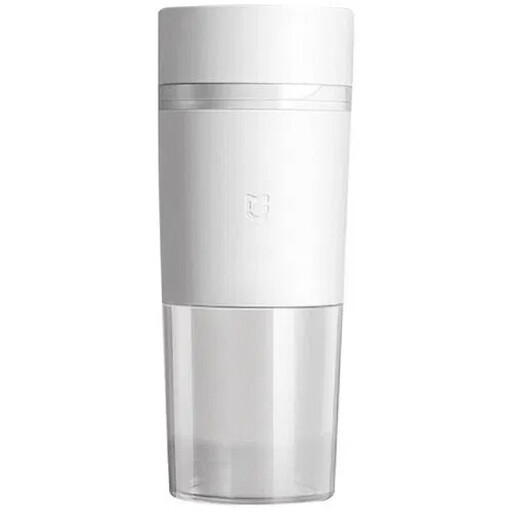
A rechargeable option for making a smoothie somewhere without mains power.
The product information lists a capacity of 400 ml and a USB-C connection. Do not use with hot liquids.
Check the instructions for the exact model before adding frozen fruit or ice. The Consumers’ Association notes that not every blender can crush ice or frozen fruit; for the NBP003NBL, nutribullet only mentions adding a small amount of ice.
Check that there’s a suitable place to plug in, blend and clean your blender. Then check how to assemble and clean the cup, lid and blade parts according to the instructions. Dishwasher-safe parts don’t mean the motor base can go in the dishwasher.
The Netherlands Nutrition Centre advises covering leftovers and refrigerating them within two hours, and gives 4 °C as the ideal fridge temperature. Also follow the storage advice for the ingredients you’ve used. For an opened fruit smoothie, the Storage Guide recommends keeping it in the fridge for 1–2 days; this is not a guarantee for every homemade recipe.
You may do. According to ACM Consumer Information, your statutory rights apply alongside any manufacturer’s or seller’s guarantee. If a product breaks during normal use sooner than you could reasonably expect, the seller is responsible for providing an appropriate remedy free of charge. So a two-year manufacturer’s guarantee is not automatically the end date for your statutory rights.
According to the Netherlands Food and Consumer Product Safety Authority, articles intended to come into contact with food must comply in the Netherlands with the Commodities Act Decree on Packaging and Consumer Articles. This is a requirement for products on the market, not proof that a specific model has been separately approved by the NVWA. Manufacturers and importers are responsible for ensuring that food-contact materials are safe.