
Anyone making several glasses for guests
Wants to make enough pear smoothie in one blending session, so pays attention to the jug’s usable capacity.


If you’re making several glasses of pear smoothie at once, start by checking the usable capacity of a standard jug blender: according to the Consumentenbond, this can be enough for smoothies. A personal blender is better suited to a single serving; extra features are mainly worth considering if you regularly want to blend ice or other tougher ingredients too. Also compare which parts can be cleaned, and check the details for the exact model.
Wants to make enough pear smoothie in one blending session, so pays attention to the jug’s usable capacity.
Looks at how well the blender handles different types of fruit, rather than treating wattage alone as proof of performance.
Weighs up the washing-up and cupboard space needed for smaller portions against the convenience of a larger jug.
First, consider how much smoothie you usually want to make at once. Then decide whether features for tougher ingredients or easier cleaning would make a real difference to the way you use it.
| What to consider | What should you check? | Who should pay more attention to this? |
|---|---|---|
| Enough for guests | Compare the jug’s usable capacity with your ingredients and the number of glasses you need. The Consumentenbond calculates that 1 litre makes five 200 ml smoothies. | If I want to serve several glasses to guests at once, I want to know how much I can make in one blending session. Around 40% of consumers say having enough smoothie for guests is their main buying concern. |
| Blending results | According to the Consumentenbond, a standard blender can be enough for smoothies. Consider whether you mainly blend soft fruit or regularly want to blend ice too; wattage alone doesn’t prove what results a model will deliver. | If I mainly want a smooth pear smoothie, I look at how well the blender handles the ingredients I use. Around 30% of consumers put blending results first. |
| Cleaning | Check which parts are removable and dishwasher-safe on the exact model. Bosch lists dishwasher-safe parts for the MMB6141B; Tefal says the BL871D31 has removable blades and a dishwasher-safe glass jug. | After serving, I want to be able to clean the jug and parts quickly. Around 20% of consumers give ease of cleaning their highest priority. |
| Compactness for occasional use | Compare your portion size with the capacity of the specific cup or jug, and check which parts come with that version and where you can store them. | If I only make a small smoothie occasionally, I don’t want to store an appliance and accessories I hardly use. Around 10% of consumers prioritise a compact option. |
The maximum capacity may be greater than the amount you can actually blend. This means a jug may be suitable for fewer glasses per batch than you’d expect from the largest figure.
Compare the usable capacity of the exact model with your recipe and the number of glasses you want to serve.
A smaller usable capacity could mean extra blending sessions for your guests.
According to the Consumentenbond, a standard blender can be enough for smoothies; regularly blending ice is a different requirement. Wattage alone doesn’t show how smooth a particular pear smoothie will be.
First decide whether you want to blend ice or other tougher ingredients as well as soft fruit. For a clear idea of blending results, look for information about the exact model.
A personal blender is designed for a small blending cup. If you want to serve several glasses, you may need to blend in extra batches.
Choose a small cup mainly if one serving is your usual amount. Otherwise, check whether the model you’re considering also includes a jug with a suitable usable capacity.
Several batches can mean more time and washing-up.
The HR2041/00 is a standard jug blender; Philips lists an effective capacity of 1 litre.
According to Bosch, the VitaPower MMB6141B has a 1.5-litre Tritan jug.
For the PerfectMix+ BL871D31, Tefal lists a usable capacity of 1.5 litres and several programmes, including a smoothie programme.
According to nutribullet, the Combo NBF500MB is designed for use with a large jug and personal cups.
This Joybuy selection includes jug blenders for smoothies; some product titles also mention ice-crushing features.
 No image available
A jug model for making smoothies for guests; the product title also mentions crushing ice.
The product title lists 1300 W, a 1.5 l jug, 4 Black Titanium blades and 2 speeds.
 No image available
A jug blender for making several glasses of smoothie; check that its capacity suits your recipe.
The product title lists 1200 W and a capacity of 1.5 l.
 No image available
A jug model for smoothie servings; check that its capacity suits the number of glasses you want to make.
The product title lists 1000 W, a 1.5 l jug and dishwasher-safe parts.
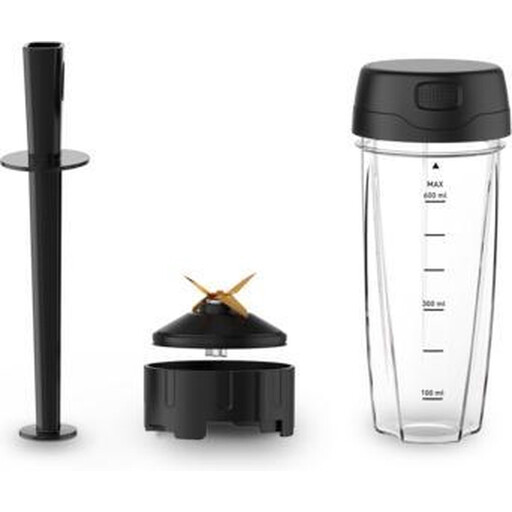 No image available
The product title describes a jug model for smoothies; features for other preparations are mainly useful if you plan to use them too.
The product title lists 1600 W, 35.000 RPM and a capacity of 1.75 l.
 No image available
A blender for smoothies; check the jug capacity for this model to make sure it suits your portions.
Not necessarily. Philips lists a maximum capacity of 1.9 litres and an effective capacity of 1 litre for the HR2041/00; Tefal lists a 2-litre jug and a usable capacity of 1.5 litres for the BL871D31. Compare the usable capacity of the exact model with your recipe.
The Voedingscentrum advises washing pears under running water, even if you’re going to peel them. For opened fruit smoothie, the Voedingscentrum recommends keeping it in the fridge for 1–2 days.
Yes. The Nederlandse Voedsel- en Warenautoriteit says CE marking is mandatory for electrical products and classifies kitchen appliances as electrical appliances. Check the product information for the exact model; a CE mark doesn’t mean the NVWA has tested every individual unit in advance.
If a product breaks during normal use or doesn’t do what you could reasonably expect, the seller is responsible for the statutory guarantee, according to ACM ConsuWijzer. Online purchases generally come with a cooling-off period of up to 14 days after delivery, subject to legal exceptions; check the returns policy for your order too.