If you’re making just one small batch, try the oven or air fryer first using a suitable recipe. For several layers of pear slices, a food dehydrator with adjustable temperature and airflow is a sensible choice. Compare the usable space on each tray, how easy the appliance is to use, and how many batches you can make before the gathering. The number of trays alone won’t tell you how quickly or evenly the fruit will dry.
Who is this for?
Host preparing plenty of pear slices
You want to prepare several batches and are mainly interested in how many slices will fit on the trays without overlapping. Utah State University Extension stresses that air needs to circulate around the food and between the trays.
Cook looking for even drying
You want to arrange the slices with space between them and check the results before storing them. The National Center for Home Food Preservation recommends checking dried fruit for moisture during storage.
Occasional fruit dryer
You may only be making one batch and want to check whether your existing oven or air fryer will do the job. The Netherlands Nutrition Centre describes a method for preparing dried fruit, including pears.
What should you look for?
When preparing pear slices for a gathering, key considerations include how much you can dry in one batch, space for air to circulate and how often you expect to use the appliance. The Netherlands Nutrition Centre recommends thin slices, while Utah State University Extension stresses that air needs to circulate around the food and between the trays.
| What to consider |
What to look for |
Who is this important for? |
| Drying space for the gathering |
Compare both the number and the size of the trays with the number of slices you want to lay out side by side. |
If I want to dry lots of pear slices in one go, I want to know how many will fit without overlapping. Around 31% of consumers say drying space for a gathering is their main concern when buying. |
| Air circulation and checking the results |
Check the temperature settings and guidance on air circulation; a claim about even drying is not the same as a comparative test. |
If I’m mainly looking for an even result, I want space around the slices and will check the fruit after drying. Around 25% of consumers say even drying and being able to check the results are their main concerns when buying. |
| Use and storage space |
Weigh the convenience of multiple layers against the space a separate appliance takes up when you’re not using it. |
If I only dry fruit occasionally, I want to avoid buying an extra appliance that will rarely be used. Around 19% of consumers say cost and storage space for occasional use are their main concerns when buying. |
| Controls and preparation |
Consider whether an adjustable timer suits your plans; it doesn’t replace checking for any remaining moisture. |
If I’m planning the preparation for a gathering, I want to leave enough time to check the fruit, let it cool and pack it. Around 13% of consumers say easy controls and having enough time to prepare are their main concerns when buying. |
| Safety information |
Check the product information for the specific appliance and see whether CE marking is mentioned. |
When choosing an electrical appliance, I want to be able to check the safety information for the model. Around 12% of consumers say safety information is their main concern when buying. |
Common pitfalls
-
Counting trays as though slices can be stacked
If the slices overlap, there’s less room for air to circulate. So the number of trays doesn’t automatically tell you how much pear you can dry in one batch.
Compare the usable dimensions of each tray and arrange the slices in a single layer. Otherwise, you may need an extra drying cycle and more preparation time.
An extra cycle could mean more time spent preparing and drying the fruit before the gathering.
-
Assuming a timer proves the fruit is dry enough
Dried pieces can still contain different amounts of moisture. The National Center for Home Food Preservation says condensation in a storage jar is a reason to dry the fruit again.
Check the results, let the fruit cool and, if you’re storing it for longer, follow guidance on conditioning it and checking for condensation.
-
Applying the storage instructions from an oven recipe
The storage instructions from the Netherlands Nutrition Centre apply to its specific oven and air fryer method, and don’t automatically apply to fruit from a food dehydrator.
Choose storage instructions that match the drying method you used and how dry the fruit is.
Brands to compare
Fritel
The DH 2025 is a stackable model worth comparing if you’re looking for five trays with stated dimensions.
- Fritel says the DH 2025 has five trays measuring 24,5 × 31,5 cm and a temperature setting of 35–70 °C.
- The manufacturer mentions even heat distribution; this isn’t an independent comparative drying result.
Princess
The 112380 is a model with six transparent, stackable layers.
- Princess says the 112380 has a temperature setting of 40–70 °C and a housing measuring 33 × 33 × 20 cm.
- The product specifications alone don’t show how it compares when drying pears.
Rommelsbacher
The DA 650 is designed for anyone comparing stated drying space and an electronic timer.
- Rommelsbacher says the DA 650 has seven trays, 0,5 m² of drying surface and a timer of up to 99 hours.
- The stated surface area doesn’t predict how much pear will fit in one batch or how quickly it will dry.
Steba
The ED 5 offers five drying layers and electronic controls as an alternative among stackable models.
- Steba says each tray measures 32 × 25 cm; the temperature can be set from 40–70 °C and the timer from 1–36 hours.
- These features don’t provide an independent comparative drying result for pears.
Food dehydrators on Joybuy
These products are stackable food dehydrators for anyone wanting to spread pear slices across several layers. The Netherlands Food and Consumer Product Safety Authority says CE marking is required for electrical appliances placed on the market in the Netherlands; check the product information for the specific model.
 No image available
YASHE GGJ-261B food dehydrator
The five adjustable trays provide several layers for spreading out a batch of pear slices.
According to the product description: temperature setting of 35–70 °C, timer of up to 72 hours, 360° air circulation and 240 W.
Joybuy
 No image available
YASHE GGJ-261A food dehydrator
The five adjustable trays provide several layers for preparing fruit.
According to the product description: temperature setting of 35–70 °C and air circulation for drying fruit.
Joybuy
 No image available
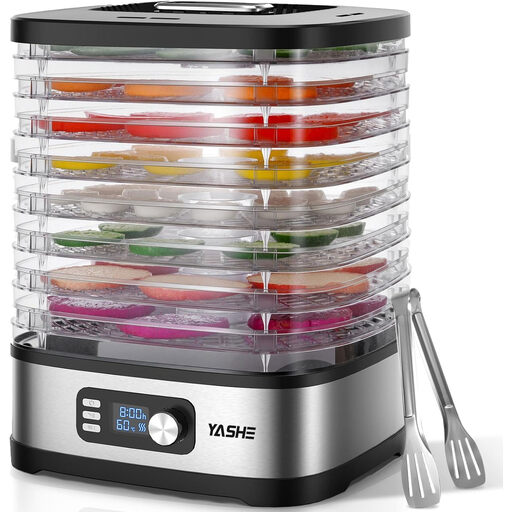
YASHE GGJ-261C food dehydrator, 8 trays
The eight stackable trays can help you spread a larger prepared batch across several layers.
According to the product description: temperature setting of 35–70 °C, timer from 1–72 hours and 360° air circulation. Mesh screens, a fruit leather tray and stainless steel tongs are listed as included accessories.
Joybuy
 No image available
YASHE FD-1019 food dehydrator
The five stackable stainless steel trays provide space to spread fruit across several layers.
According to the product description: temperature setting of 35–70 °C, timer from 1–48 hours, 360° airflow and 400 W.
Joybuy
 No image available
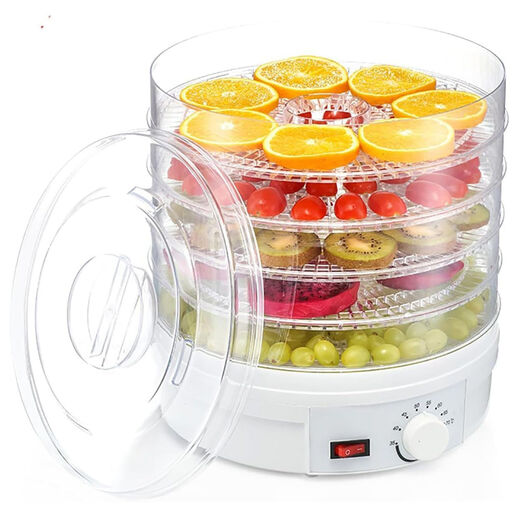
Food dehydrator, 5 layers, 35–70 °C, 350 W
The five trays provide several layers for spreading out pear slices.
According to the product description, the trays are removable and the appliance has a stepless temperature setting of 35–70 °C and vertical airflow.
Joybuy
Frequently asked questions
How should I prepare pears for drying?
Wash the pear and cut it into thin slices; the Netherlands Nutrition Centre uses pear in an oven and air fryer recipe. Arrange the slices in a food dehydrator with space between them so that air can circulate around them, and follow the appliance’s instructions too.
Can I store pear slices in an airtight container for a long time straight after drying?
First let the fruit cool completely and check it before storing it for an extended period. The National Center for Home Food Preservation recommends conditioning dried fruit for 7–10 days and checking it daily for condensation; dry any moist pieces again and discard mouldy fruit. This differs from the storage instructions for the Netherlands Nutrition Centre’s specific oven and air fryer recipe.
What should I check when buying online and making a return?
According to the Dutch government, when you buy online from a business, you’ll often have a 14-day cooling-off period, although there are exceptions. Before buying, check who the seller is and which terms and conditions apply to your order.
Is CE marking required for an electric food dehydrator in the Netherlands?
Yes. The Netherlands Food and Consumer Product Safety Authority says CE marking is required for electrical products. A mention on a sales page doesn’t, by itself, prove that a specific appliance has been independently tested or meets all applicable requirements.


