
Pear juicers
You want to know whether your chosen model can process pears and how much preparation they need. Philips says pears are suitable for the HR1889/70; this information doesn’t automatically apply to other models.


For pear juice in a shared office, a centrifugal juicer is a good choice if speed matters most; a slow juicer may be more suitable if keeping noise down is a priority and you have time for preparation and cleaning. The Consumentenbond describes centrifugal juicers as fast, but often noisier than slow juicers. Check whether pears are suitable for the exact model you’re considering, and which parts can be cleaned: neither juicing method on its own guarantees more juice or nutrients.
You want to know whether your chosen model can process pears and how much preparation they need. Philips says pears are suitable for the HR1889/70; this information doesn’t automatically apply to other models.
You’re looking for parts that are easy to clean after use, and for ways to handle fruit and kitchen utensils hygienically. The Voedingscentrum recommends washing fruit; Philips and Bosch provide information on dishwasher-safe parts for specific models.
You want to keep noise disruption to a minimum during working hours, while weighing this against speed and cleaning. The Consumentenbond describes centrifugal juicers as often noisier than slow juicers.
| What to consider | What should you check? | Who is this most important for? |
|---|---|---|
| Pears and preparation | Check the instructions for the exact model to see whether it’s suitable for pears and whether you need to cut them up. Philips lists pears as suitable for the HR1889/70; a wide feed chute alone doesn’t prove that whole pears will fit. | If I mainly want to juice pears, I want to know in advance whether my chosen model is suitable and how much preparation is needed. Around 29% of consumers put suitability for pears and preparation top of their list. |
| Cleaning and hygiene | Check which parts are removable and dishwasher-safe, and agree on who will clean the appliance after use. The Voedingscentrum recommends washing fruit and keeping kitchen utensils clean. | In a shared kitchen, I want to know whether it’s practical to clean the appliance after every use. Around 29% of consumers give cleaning and hygiene top priority. |
| Noise during working hours | If keeping noise down is essential, compare noise measurements for the exact models under the same conditions. Don’t judge the noise level by the type of juicer alone. | When colleagues are working in the same room, I want to weigh noise against speed. Around 24% of consumers put noise at work top of their list. |
| Amount per juicing session | Tell the difference between an ingredient hopper, a juice container and measured juice yield. Bosch lists a 1250 ml juice container for the MES3500; Kuvings lists a 1700 ml ingredient hopper for the AUTO6. | If I’m making juice for several colleagues in a row, I want to know how often I’ll need to refill or empty the appliance. Around 18% of consumers make the amount per juicing session their top priority. |
The Consumentenbond describes no automatic advantage: in the comparison it tested, the juice didn’t contain more nutrients than juice from a centrifugal juicer.
Compare appliances for their suitability for pears, noise and ease of cleaning rather than assuming they offer a general health benefit.
The 1700 ml figure for the Kuvings AUTO6 is the capacity of its ingredient hopper. The Bosch MES3500’s 1250 ml figure refers to its juice container; these are different specifications.
Compare like-for-like measurements, and look for juice-yield tests using the same type of fruit under similar conditions.
According to Ondernemersplein, consumer law generally doesn’t apply to sales to businesses; business buyers are subject to different warranty rules and don’t have a statutory cooling-off period.
Before ordering, establish who the buyer is and check the applicable terms and conditions from the seller and manufacturer.
The Viva HR1889/70 is worth considering if confirmed suitability for pears and easy cleaning of removable parts are important to you.
The MES3500 is a centrifugal juicer with a specified juice-container capacity, making it an option if you want to collect several glasses in a row.
The AUTO6 is a slow juicer with a large ingredient hopper, designed for loading ingredients all at once.
This selection includes electric slow juicers and a manual fruit press. Check the instructions for each model to see whether pears are suitable and how much preparation is needed.
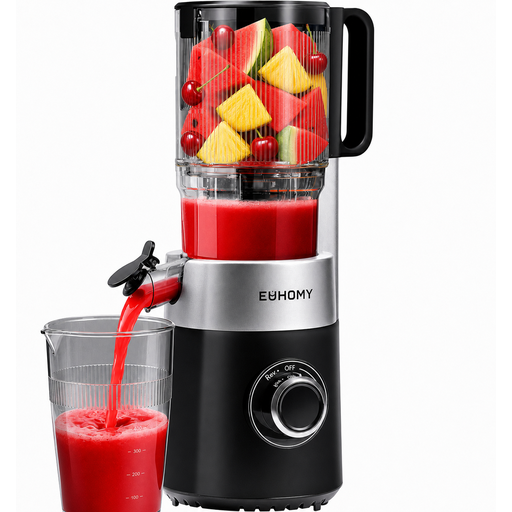 Image unavailable
Could be a good fit if you’re looking for an electric slow juicer; check the instructions to see whether and how pears need to be prepared.
The product description lists twin augers, a 135 mm feed chute and easy cleaning. Check which parts are removable.
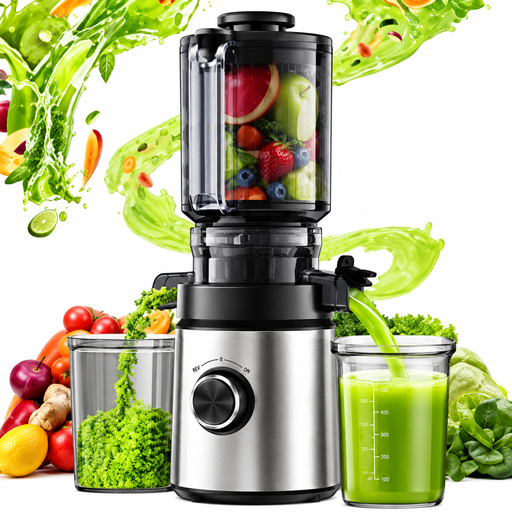 Image unavailable
An option if you’re looking for an electric slow juicer with a wide feed chute; check the instructions for processing pears.
The product title lists a 130 mm XL feed chute, 2 l and 2 glasses. Check what the 2 l measurement refers to.
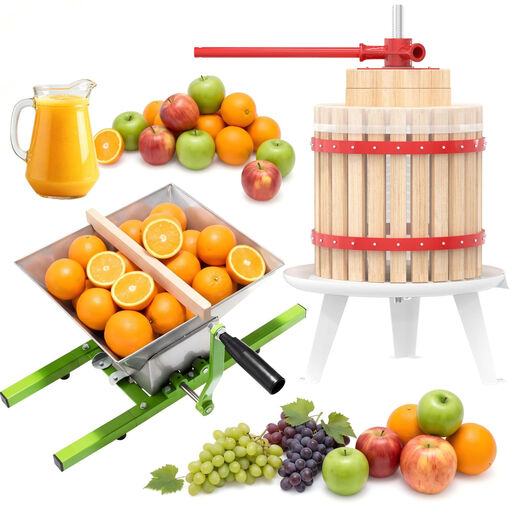 Image unavailable
This manual press could be suitable if hand-pressing fits your needs; check specifically whether the instructions cover pears.
The product title lists a 12 L press and a 7 L fruit crusher, and names apples, grapes and berries as suitable fruit.
No. A wide feed chute doesn’t automatically mean that whole pears are suitable. Philips lists pears as suitable for the HR1889/70; for any other model, check the instructions for fruit size and preparation.
Wash your hands and the fruit, and use clean kitchen utensils. Clean the parts according to the instructions; Philips says the removable parts of the HR1889/70 are dishwasher-safe.
Not necessarily. The Voedingscentrum says opened pear juice can be kept in the fridge for 3–7 days, but this advice applies to an opened product and doesn’t give the same storage period for freshly pressed juice. It’s best to press only as much as you’ll drink straight away. If you want to store fresh juice, look for specific advice.
Not automatically. According to Ondernemersplein, consumer law generally doesn’t apply to business sales; different warranty rules apply, and business buyers don’t have a statutory cooling-off period. Before buying, establish who is purchasing under the contract and check the terms that apply to the purchase.
The NVWA states that electrical products placed on the market must carry a CE mark. The stated requirement for a food safety plan or hygiene code applies, among others, to businesses that sell food or drink to consumers; this doesn’t mean that an office making juice solely for its own staff automatically falls under that sales-related requirement.