
Holidaymaker with limited kitchen space
You want to juice pears without bringing a large appliance or leaving one on the worktop. So compare the dimensions and ease of cleaning of the specific model.


For pear juice, a centrifugal juicer or slow juicer is a better choice than a citrus press. Choose a compact model if quick juicing and easy storage are your priorities. A slow juicer may suit you if you also want to process other, softer ingredients, but it usually involves more preparation and cleaning. If you’d rather keep the whole pear and more of its fibre in your drink, choose a blender and bear in mind that you’ll be making a smoothie rather than separated juice.
You want to juice pears without bringing a large appliance or leaving one on the worktop. So compare the dimensions and ease of cleaning of the specific model.
You process softer ingredients as well as pears, and weigh up the differences between a centrifugal juicer and a slow juicer against the preparation and cleaning involved. The Consumers’ Association outlines these differences in use.
You’re looking for a drink made from the whole pear rather than clear juice. A blender is a relevant alternative to a juicer; the Consumers’ Association explains that blending retains more fibre than juicing.
A good fit if: you mainly want to make juice from pears and other fruit quickly, and have limited storage space.
Bear in mind: the Consumers’ Association generally describes this type as noisier and less suitable for soft ingredients than a slow juicer.
A good fit if: you also want to process soft ingredients or leafy greens regularly, as well as pears.
Bear in mind: according to the Consumers’ Association, this type generally involves more chopping and cleaning, and works more slowly than a centrifugal juicer.
A good fit if: you want to use the whole pear and value fibre more than clear juice.
Bear in mind: you’ll make a smoothie rather than juice with the pulp separated out.
| What to consider | What should you check? | Who is this important to? |
|---|---|---|
| Suitable for pears and other ingredients | Check the appliance type, permitted ingredients and preparation instructions in the manual. | If I mainly want to juice pears at the holiday cottage, I want to be sure the appliance is designed for that. Around 33% of consumers prioritise suitability for fruit and ingredients. |
| Worktop space and transport | Compare the height, width and depth of the exact model, allowing room for assembly and cleaning. | If the kitchen has little worktop or storage space, I want to know in advance whether the appliance will fit. Around 27% of consumers give storage space top priority. |
| Cleaning after use | Check which parts are removable and dishwasher-safe according to the instructions for that specific model. | If I don’t want to spend ages washing up after a glass of juice, I pay attention to the parts that need cleaning. Cleaning time is the main concern for around 20% of consumers. |
| Clear juice or more fibre | Decide whether you want juice with the pulp separated out or a smoothie made from the whole pear. | If you want a drink made from the whole pear, you could compare blenders rather than only juicers. Fibre is a priority for around 20% of consumers. |
The Consumers’ Association reports that the comparison cited found no higher levels of vitamin C, iron, calcium or magnesium in juice from slow juicers.
Choose a juicing method based on the ingredients, speed, texture you want and cleaning involved. Don’t assume it offers a general health benefit.
According to the Consumers’ Association, a slow juicer generally involves more chopping beforehand and more cleaning afterwards.
Dimensions vary from model to model, and you’ll also need space to operate the appliance and remove its parts.
Measure the space available and compare it with the dimensions of the exact model.
Kenwood lists juicers and citrus presses as different types of appliance; a product title alone doesn’t prove that an appliance can process pears.
Check the appliance type and manual before choosing a model.
A commercial guarantee period doesn’t replace your statutory right to a product that is fit for purpose. ACM ConsuWijzer explains that, under the applicable conditions, the seller must offer a free solution if a product breaks too soon during normal use.
Keep your proof of purchase and contact the seller if a fault occurs unexpectedly.
The Philips HR1832/30 is a centrifugal juicer that may be worth considering if compact design and easy storage are important to you.
The Bosch models mentioned use two different juicing methods: the MES3500 is a centrifugal juicer, while the MESM731M is a slow juicer.
The Kenwood PureJuice XL JMP85.000SI is a juicer worth comparing if you regularly want to process larger quantities.
The products below include electric juicers and manual fruit presses. Check whether pears are among the permitted ingredients for each specific model.
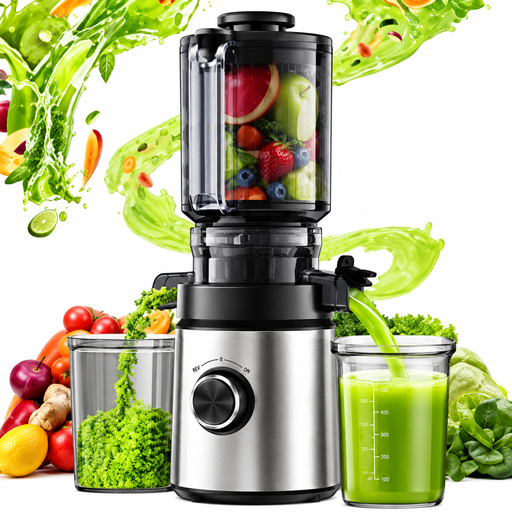 No image available
May suit you if you want to juice fruit and vegetables; check the manual to see whether pears are suitable.
The title lists a 130 mm feed chute and two glasses.
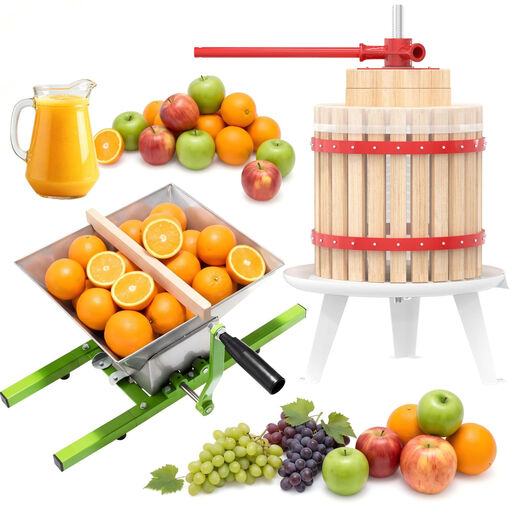 No image available
A manual option for fruit juice; check whether the manual lists pears as suitable fruit.
The title lists a 12 l fruit press, a 7 l fruit crusher and pressing mesh.
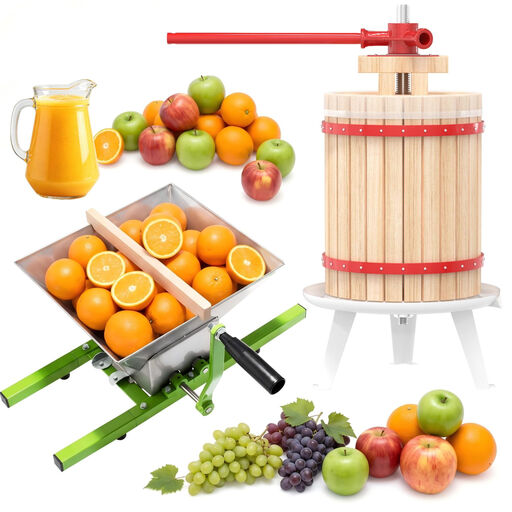 No image available
A manual option for fruit juice; check whether the manual lists pears as suitable fruit.
The title lists an 18 l fruit press, a 7 l fruit crusher and pressing mesh.
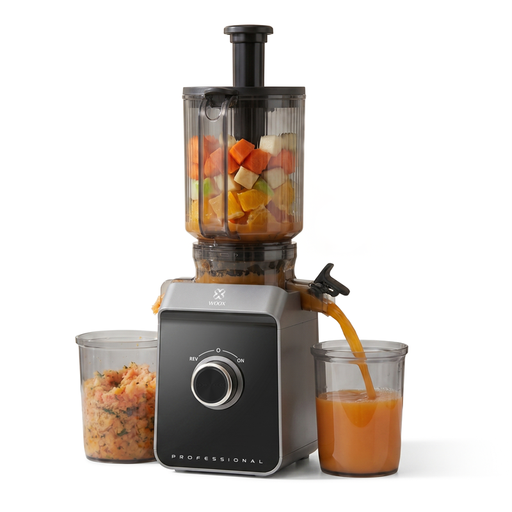 No image available
May suit you if you’re looking for a slow juicer for fruit and vegetables; check the manual to see whether it can process pears.
The title lists 150 W, a 600 ml juice cup and an 836 ml pulp container.
 No image available
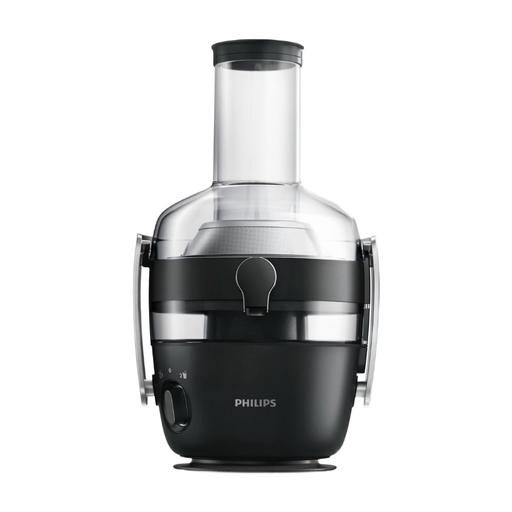
A juicer worth comparing if you want to make fruit and vegetable juice; check the instructions for this specific model to see whether it can process pears.
The title lists QuickClean, an XXL feed chute and 1000 W. The product description mentions FiberBoost for clear juice or juice with more fibre.
For pears, choose an appliance that turns fruit into juice, such as a centrifugal juicer or slow juicer. Kenwood distinguishes juicers from citrus presses, so check the actual appliance type when looking at an offer.
Yes. The Netherlands Nutrition Centre recommends washing fruit and vegetables under running water, even if you’re going to peel them afterwards. Don’t use soap or cleaning products.
No, don’t assume this unless the instructions for the specific model say so. Bosch lists dishwasher-safe parts for the MES3500; check the manual to see which parts of your chosen appliance can go in the dishwasher.
No. ACM ConsuWijzer explains that you also have statutory rights: if a product breaks too soon during normal use, the seller must offer a free solution under the applicable conditions.
For a standard online purchase, ACM ConsuWijzer says you generally have a statutory cooling-off period of up to 14 days after delivery; exceptions and conditions may apply. Check these before using the juicer, and don’t confuse the cooling-off period with your statutory rights if the product is faulty.
For electrical equipment with a rated AC voltage of 50 to 1000 V, the applicable EU directive sets out, among other things, safety and CE requirements for placing products on the market. This does not confirm that a particular model on offer meets those requirements; check the electrical specifications and product information for that model.