
Families in a hurry at breakfast
If you want to process pears one after another, the feed tube and collection jug may matter more than a general claim about juice yield. Bosch lists a large feed tube and a 1.500 ml juice container for the MES4000.


For a busy family breakfast, a juicer is a sensible choice if speed, minimal chopping and a jug for several servings are your priorities. The Consumentenbond notes that juicers are often noisier. A slow juicer may suit you better if you also want to process other, softer ingredients and don’t mind a slower process. Neither is a substitute for whole pears: most of the fibre is left in the pulp when you juice.
If you want to process pears one after another, the feed tube and collection jug may matter more than a general claim about juice yield. Bosch lists a large feed tube and a 1.500 ml juice container for the MES4000.
If you use it regularly, it’s also worth considering how easy the sieve, pulp container and other parts are to clean. Bosch lists dishwasher-safe parts for the MESM731M; Hurom says the H310A has three parts to wash.
If you’re weighing up texture and fibre retention, first consider whether juicing is right for breakfast. The Consumentenbond explains that most of the fibre is left in the pulp when juicing; the Voedingscentrum recommends eating fruit rather than drinking it.
First decide whether you want juice or would rather eat the fruit whole. Then choose between the speed of a juicer and the option of using a slow juicer to process other ingredients too.
| What to consider | What should you check? | Who should consider this most? |
|---|---|---|
| Speed and multiple servings | Check the feed tube, the capacity of the collection jug and whether the instructions allow you to use your pears. The jug capacity doesn’t tell you how much juice you’ll get from a given quantity of pears. | If I’m making juice for several family members, I want to do as little chopping as possible and avoid having to empty the jug repeatedly. Around 31% of consumers prioritise speed and family-sized capacity. |
| Cleaning up after breakfast | Check how many parts you need to remove, which parts the model information says are dishwasher-safe and how to clean the sieve. | If I use it regularly, I want to know how much work is involved in cleaning up after juicing. Around 25% of consumers prioritise ease of cleaning. |
| Juice texture and fibre | Decide whether you want clear juice, juice with some pulp or the whole fruit. Philips lists adjustable juice texture for the HR1922/21; according to the Consumentenbond, most of the fibre is left in the pulp when juicing. | If my main aim is to keep fibre in breakfast, I wonder whether juicing is the right choice; juice isn’t the same as a whole pear. Around 19% of consumers prioritise texture or fibre retention. |
| Other ingredients and noise | Check which ingredients the model’s instructions allow. If noise matters, compare measurements taken in the same way. | If I want to process other ingredients too or need to consider family members who are still asleep, I weigh this against a slower process. Around 13% of consumers prioritise versatility or quieter operation. |
| Features and warranty | Consider which features suit the way you’ll use it and what any additional warranty terms cover, on top of your statutory rights. | I want to choose a model and cover that suit the way I’ll use it, without paying for features I don’t need. Around 12% of consumers prioritise this consideration. |
A claim about how a juicer works doesn’t tell you how much pear juice a specific machine will produce. The Consumentenbond says there’s no general basis for assuming that a slow juicer will always produce more juice.
Choose based on the ingredients, preparation time and parts of the model. Assess claims about yield only by comparing measurements taken with the same fruit and method.
A slow juicer may involve more preparation and cleaning, so bear that in mind if you plan to use it often.
The jug capacity tells you how much juice it can hold, not how much juice you’ll get from a given quantity of pears. Bosch lists a 1.500 ml juice container for the MES4000.
Compare jug capacity and yield as separate features, and don’t treat the jug size as a guarantee of how much juice you’ll get.
Most of the fibre is left in the pulp when you juice. The Voedingscentrum recommends eating fruit rather than drinking it.
Choose whole pears if retaining fibre is your main goal. Consider a blender if you want a thicker drink containing more of the fruit you use.
A manufacturer’s warranty is in addition to your statutory rights. According to the Rijksoverheid, if a product is faulty, the retailer is your point of contact.
Read the warranty terms and check what they add to your statutory rights before choosing additional cover.
Bosch makes both juicers and slow juicers. Compare each model’s collection capacity and cleaning requirements.
The Philips HR1922/21 is worth considering if you’re looking for a juicer with adjustable juice texture.
The Braun J 500 BK is a juicer to compare if a large feed tube is important to you.
The H310A is a compact slow juicer to compare if you’re considering the parts and the space available on your worktop.
The REVO830 is a slow juicer to compare for its feed tubes and the differences between versions.
This Joybuy selection includes juicers for making pear juice at a family breakfast, including a juicer and a slow juicer. Compare the collection capacity and how each model works with the portions you want to make.
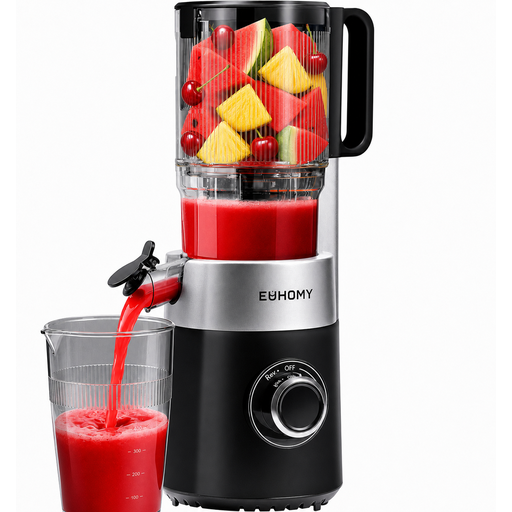 No image available
A juicer to compare if you want to process fruit for several family members.
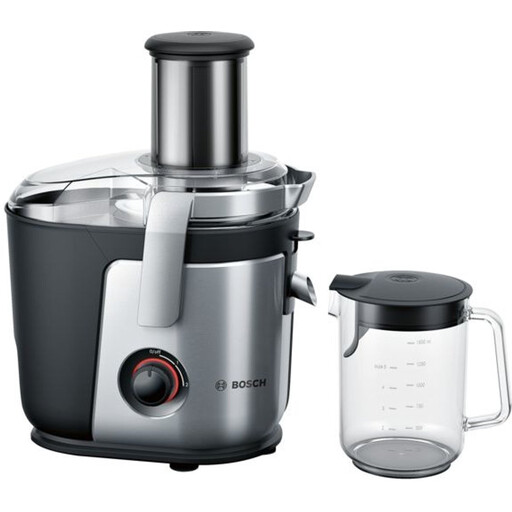 No image available
A juicer to compare if you want to process pears and collect enough juice for several servings.
The product name lists a power rating of 1000 W, a ceramic blade and a capacity of 1,5 l. Bosch lists a large feed tube and a 1.500 ml juice container for the MES4000; this isn’t a measured pear juice yield. The ceramic blade is sharp, so take care when assembling and cleaning the juicer.
 No image available
A slow juicer to compare if you’re happy with a slower preparation process and want to collect the juice as you go.
The product name lists 150 W and a 600 ml juice cup; it also specifies an 836 ml pulp container. The instructions limit continuous use to 10 minutes, followed by a 20-minute rest for the motor.
For a quick family breakfast, a juicer is an obvious choice. A slow juicer may suit you if you also want to process other, softer ingredients and don’t mind taking more time. It hasn’t been established that slow juicers generally produce more pear juice, so compare the models and the ingredients allowed in their instructions.
Yes, wash pears under running water before processing them. The Voedingscentrum recommends washing fruit even if you’re going to peel or cut it afterwards. Cut the pears to fit the feed tube if necessary, and follow the appliance instructions.
It’s best to juice pears just before breakfast. If you prepare the juice earlier, refrigerate it straight away in a clean, sealed container. Don’t automatically apply storage guidance for packaged or other fruit juice to freshly made pear juice.
No. Much of the fibre is left in the pulp when you juice. The Voedingscentrum recommends eating fruit rather than drinking it, and classifies fruit juice, including freshly squeezed juice, as a sugary drink.
A manufacturer’s warranty is in addition to your statutory rights. According to the Rijksoverheid, there is no fixed statutory warranty period in the Netherlands, and if a product is faulty, the retailer is your point of contact. Read the terms before choosing additional cover.