What should you look for when making pear juice for guests?
Centrifugal juicer
A good fit if: you want to juice quickly just before guests arrive and the pears aren’t very soft.
Bear in mind: the Consumers’ Association says centrifugal juicers are generally faster, but often noisier and less suited to soft ingredients than slow juicers.
Slow juicer
A good fit if: you have time to juice in batches and are happy with a different juice texture.
Bear in mind: according to the Consumers’ Association, juicing generally takes longer; follow the instructions for the exact model when using very soft ingredients.
Blender
A good fit if: you’d rather serve a drink with pulp than clear, extracted juice.
Bear in mind: you’ll make a smoothie, not clear juice; the Consumers’ Association points out that much of the fibre is left in the pulp when juicing.
First decide whether you want clear juice or a drink with pulp. Then compare the collection capacity, preparation and cleaning requirements of models that suit your choice.
| What to consider |
What should you check? |
Who should consider this? |
| Serving several glasses quickly |
Check the capacity of the juice jug and pulp container separately, as well as the feed chute and any limits on how long the appliance can be used. |
If my friends are nearly at the table, I want to serve the juice quickly and know in advance how much the jug will hold. Around 36% of consumers put speed and making several glasses at the top of their list. |
| Pears and the texture you want |
Check that the manual allows for your fruit and its ripeness, and that the juicing method gives you the texture you want. |
If I’m using pears at a particular stage of ripeness, I want to know whether my model can handle them and whether the juice will have the amount of pulp I prefer. Around 29% of consumers prioritise how the appliance handles fruit and the resulting texture. |
| Cleaning after juicing |
Check which parts need to be removed, how to clean the filter or juicing chamber, and which parts the manual says are dishwasher-safe. |
After having guests over, I want to know how much dismantling and cleaning the appliance involves. Around 21% of consumers put cleaning at the top of their list. |
| Cost and storage space |
Measure the space available and compare the dimensions and collection or juicing chamber capacity of the exact model. |
If I only use the juicer occasionally, I want to know whether I can store it at home and whether it suits the way I’ll use it. Around 14% of consumers prioritise the purchase cost and storage. |
Juicers on Joybuy for serving pear juice to guests
This selection includes juicers for serving pear juice to guests, from centrifugal juicers for those who value speed to slow juicers for anyone considering a slower juicing method.
 No image available
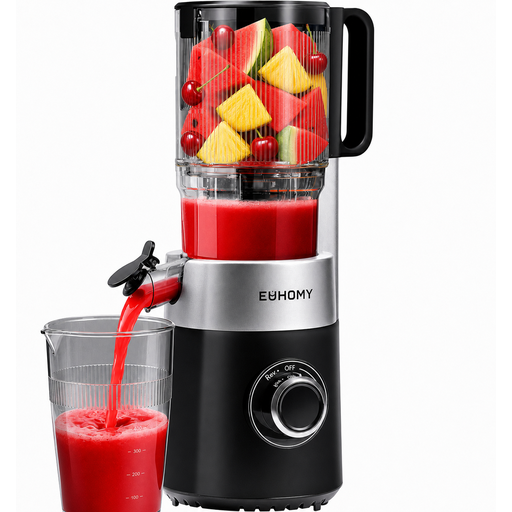
EUHOMY Juicer
A juicer to consider when choosing one for serving pear juice to guests.
Check the ingredients it can handle, collection capacity and cleaning instructions for the exact model.
Joybuy
 No image available
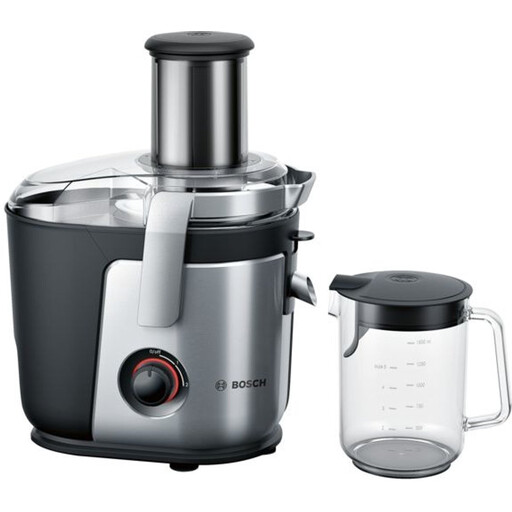
Bosch MES4000 Centrifugal Juicer, 1,000 W, 1.5 l
A centrifugal juicer to consider if you want to juice quickly for guests and collect the juice in a jug.
Bosch lists a 1,500 ml juice jug and two speeds for the MES4000. The jug capacity is how much it can hold, not a measure of pear juice yield.
Joybuy
 No image available
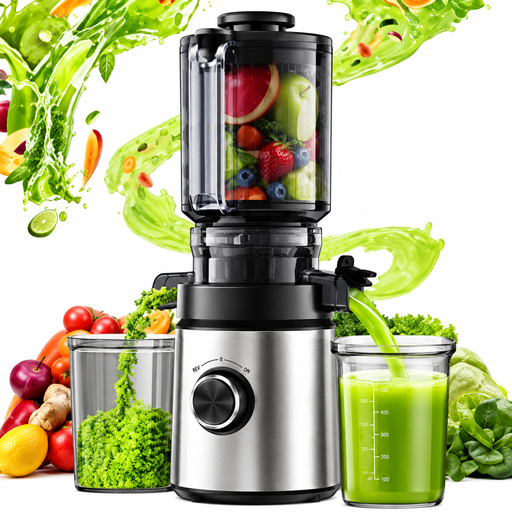
Slow Juicer with 130 mm XL Feed Chute and 2 Glasses
A slow juicer to compare if you prefer this juicing method and want to use two glasses while preparing your juice.
The product title lists a 130 mm XL feed chute and 2 glasses. According to the Consumers’ Association, slow juicing generally takes longer than using a centrifugal juicer.
Joybuy
 No image available
WOOX MX0289 Slow Juicer, 150 W
A slow juicer to consider if a wide feed chute matters to you and the slower juicing method fits your schedule.
The product title lists a 600 ml juice jug, an 836 ml pulp container and a 130 mm feed chute.
Joybuy
Frequently asked questions about making pear juice
Should I wash or peel pears before juicing them?
Wash pears thoroughly under running water before preparing them, as the Netherlands Nutrition Centre advises for fruit and vegetables. Whether you need to peel, core or cut them first depends on your appliance’s manual; a wide feed chute doesn’t replace washing.
Can I make pear juice before guests arrive and keep it for several days?
It’s best to make the juice shortly before serving. The Netherlands Nutrition Centre gives a guideline of 3–7 days in the fridge for opened pear juice, but this isn’t a separately validated recommendation for freshly made, unpasteurised juice at home. So don’t assume that timeframe guarantees how long fresh juice can be stored.
Does a slow juicer automatically make healthier pear juice?
No, a slow juicer doesn’t guarantee extra nutritional benefits. The Consumers’ Association doesn’t confirm that juice from a slow juicer generally contains more nutrients than juice from a centrifugal juicer; much of the fibre-rich pulp is also left behind when juicing.
Who can help if a juicer I bought online is faulty?
For a consumer purchase in the Netherlands, you should contact the seller about your statutory guarantee. According to the Dutch government, there is no fixed two-year period under Dutch law; what you can reasonably expect from the product and the cause of the fault are taken into account.
Do I have a cooling-off period if I buy a juicer online?
For distance purchases from a business, the Dutch government says you have a 14-day cooling-off period in many cases. Check the applicable terms; according to this guidance, an online purchase from a private individual isn’t classed as a distance purchase.


