
Cook with limited worktop space
You want to make pear juice regularly, but need to use or store the appliance in a small space. The dimensions Hurom lists for the H310A show why both its footprint and height matter.


For clear pear juice in a small kitchen, compare a compact slow juicer with a centrifugal juicer in terms of size, suitability for soft pears and cleaning. The Consumers’ Association describes slow juicers as generally slower and often more expensive, while centrifugal juicers make juice faster but are less suitable for soft ingredients. If you want to blend the whole pear into a drink rather than separate the pulp, a blender is better suited to the job.
You want to make pear juice regularly, but need to use or store the appliance in a small space. The dimensions Hurom lists for the H310A show why both its footprint and height matter.
You want to process pears and possibly other soft ingredients, and suitability matters more to you than sheer speed. Check the instructions for your chosen model to see whether it can handle soft pears.
You want a glass of relatively clear juice without much preparation, and also take noise, pulp and cleaning into account when choosing. The Consumers’ Association notes that centrifugal juicers are often noisier and less suitable for soft ingredients.
Best for: anyone who mainly wants to process soft pears and is happy with a slower juicing process. Hurom lists the H310A’s dimensions as 16 × 17,2 × 39,5 cm.
Trade-off: according to the Consumers’ Association, slow juicers are generally slower and often more expensive; the H310A’s dimensions and features don’t necessarily apply to other models.
Best for: anyone who wants juice quickly, with a relatively clear texture. Braun says pears don’t need to be peeled before using a centrifugal juicer.
Trade-off: the Consumers’ Association says centrifugal juicers are less suitable for soft ingredients and often noisier. Check the dimensions of the specific model too.
Best for: anyone who wants to blend the whole pear into a drink rather than separate the juice from the pulp.
Trade-off: a blender produces a different texture from clear juice; the Netherlands Nutrition Centre recommends eating fruit rather than drinking it.
| What to consider | What should you check? | Who should consider this? |
|---|---|---|
| Dimensions and storage | Measure the width, depth and clearance beneath your kitchen cupboards, then compare these with the dimensions of the exact model. | If you have limited worktop space, you’ll want to know in advance whether the appliance will fit and where you can store it. Around 36% of consumers put space at the top of their list when buying. |
| Pears and soft ingredients | Check the instructions to see whether the model is suitable for soft pears and what preparation is required. | If soft pears are your main ingredient, suitability for that texture matters more than simply having a wide feeding chute. Around 29% of consumers prioritise processing soft fruit. |
| Cleaning after use | Check how many parts need cleaning and how to remove the sieve, juicing screw and pulp container. | If you want to clean up after every glass, the number of parts to wash can affect how practical the appliance is for you. Around 21% of consumers put ease of cleaning first. |
| Speed and desired texture | Decide whether you want clear juice or a blended drink with fruit pulp, then compare the models’ instructions. | If you want to make a glass quickly, weigh up speed against the amount of pulp you want and the appliance’s suitability for soft pears. Around 14% of consumers say speed is their top priority when buying. |
A product listing may use that term even though the appliance has citrus cones. That mechanism isn’t the same as a machine that processes pears.
Check the pressing mechanism and instructions; don’t rely on the product title alone.
The Consumers’ Association says that a slow juicer doesn’t automatically produce more juice, and that the supposed extra nutrients aren’t a proven general benefit.
Choose based on your ingredients, available space, cleaning requirements and preferred texture. Don’t let general nutritional claims sway your decision unless they’re backed up for the specific model.
An appliance may fit widthways but be too tall for the space beneath a kitchen cupboard. Hurom lists the H310A’s height as 39,5 cm; Bosch gives the MES4000’s external dimensions as 425 × 322 × 221 mm.
Measure the available width, depth and clearance, and allow room to add fruit.
The H310A is a compact model worth considering if you want to juice soft pears and have enough clearance for its height in your kitchen.
The Viva HR1832/30 is a centrifugal juicer worth comparing if making juice quickly is your priority.
The MES4000 is a centrifugal juicer worth comparing if you’re looking for a wide feeding chute and quick processing.
The J 500 BK is a centrifugal juicer worth considering if you want to process larger pieces of fruit and make a clear drink.
The PureJuice JMP601SI is a slow juicer to consider if you’d also like to use the sorbet function or an extra sieve.
This selection includes slow juicers, a manual fruit press and blenders. A blender makes a blended drink and doesn’t separate juice from pulp; check whether the fruit press instructions say it can process pears.
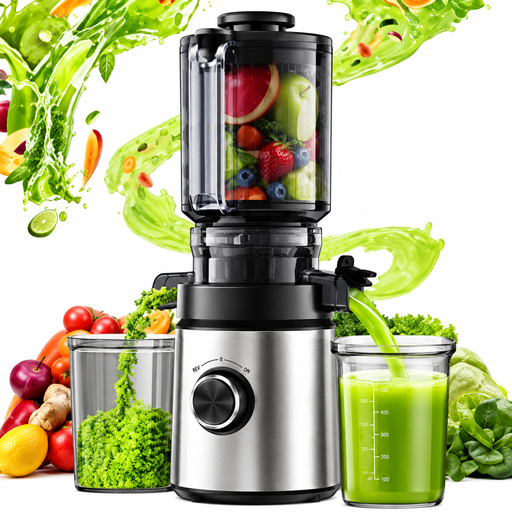 No image available
The product name describes a slow juicer for fruit and vegetables; check the instructions to see whether this model is suitable for soft pears.
The product name lists 2 l, a 130 mm feeding chute and 2 glasses.
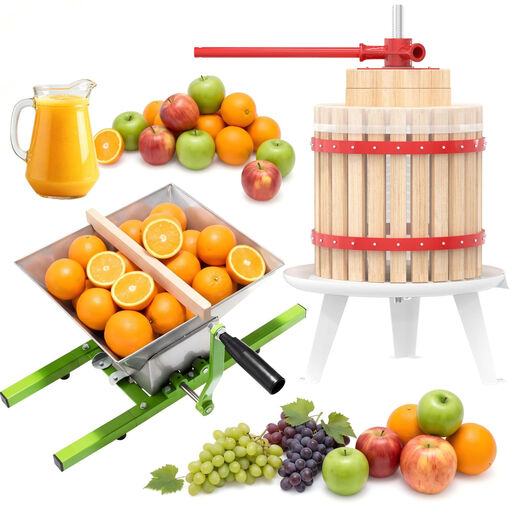 No image available
The product name describes a fruit press for apples, grapes and berries, among other fruits; before buying, check whether the instructions list pears as suitable fruit.
Listed combination: 12 L fruit press and 7 L fruit crusher.
 No image available
This slow juicer is one to compare if you’re looking for a model for fruit and vegetables; check the instructions for guidance on soft pears.
The listed dimensions are 189 × 170 × 395 mm and the feeding chute is 130 mm. The product name lists a 600 ml juice cup and an 836 ml pulp container. According to the instructions, the maximum continuous operating time is 10 minutes, followed by 20 minutes of rest.
 No image available
A blender is a good fit if you want a blended drink made from the whole fruit rather than juice separated from the pulp.
The product name lists a 600 ml travel bottle, 1.500 ml blending jug and 300 ml chopping bowl.
 No image available
This blender is an alternative if you want to blend fruit and don’t need juice separated from the pulp.
The product name lists a 1,5 l capacity and three speeds.
Braun’s guidance says you don’t need to peel pears. Check the instructions and feeding chute of your chosen model too; this advice doesn’t tell you how much juice every variety of pear will produce.
A slow juicer may leave more pulp in the juice than a centrifugal juicer, but both leave behind a lot of fibre-rich pulp. If you want to blend the whole pear into your drink, a blender is a better fit; the Netherlands Nutrition Centre recommends eating fruit rather than drinking it.
Compare the appliance’s full dimensions with your worktop and the clearance beneath your kitchen cupboards. Also check how to remove and clean the sieve or juicing screw and pulp container. Hurom says the H310A has three parts to wash, but this doesn’t necessarily apply to other models.
When you buy from a business at a distance, you generally have 14 days to change your mind, according to the Dutch Government. You’re also entitled to a remedy from the seller if a product is faulty. The Netherlands doesn’t have a fixed statutory two-year guarantee period for all products.
CE marking is compulsory for electrical products where the applicable rules require it. The Netherlands Food and Consumer Product Safety Authority points out that CE marking isn’t the same as an independent inspection; also check the usage restrictions and electrical specifications of the specific appliance.