
Home baker who loves cake
You’re baking pear cake for a picnic and want to choose a setting that suits your recipe. You’ll need to consider whether to use the fan setting or conventional heat from above and below.


Don’t choose based on capacity in litres alone: measure your baking tin first, then choose an oven with the setting your recipe calls for. A freestanding model suits a kitchen without a suitable built-in space; some built-in models offer several shelf positions, which can be useful if you want to bake with more than one tin. For a picnic, how you transport the cake depends on how you package it once it has cooled, and whether any filling or topping needs to be kept chilled.
You’re baking pear cake for a picnic and want to choose a setting that suits your recipe. You’ll need to consider whether to use the fan setting or conventional heat from above and below.
You need to decide whether an oven will fit on your worktop or whether a model that fits an existing recess is a better option. The external dimensions of your baking tin matter too.
You want to use larger tins or bake several batches, so you’re looking at usable interior space, baking trays and shelf positions.
Choose this if: you don’t have a suitable built-in space and your baking tin fits in the oven.
Consider: you’ll need to check the available worktop space and the installation instructions; the capacity in litres doesn’t prove that your tin will fit.
Choose this if: you have a suitable recess and want a model with several shelf positions. Bosch lists up to three shelf positions for the HBA514BB3; AEG says the OU5AB2W0CK can bake on two levels.
Consider: you’ll need to check the recess dimensions, baking tin and connection. The shelf positions listed are model specifications, not a guarantee of the same baking results with every recipe.
Choose this if: you also want a microwave function, and the specific oven has a suitable baking setting and enough room for your tin.
Consider: the Consumers’ Association warns that combination microwaves often lack bottom heat and have fewer, or no, different shelf positions.
| What to consider | What to look for when buying | Who should pay particular attention? |
|---|---|---|
| Cake setting | Follow the setting in your recipe. The Consumers’ Association recommends conventional heat from above and below for cake; with a fan oven, it often suggests setting the temperature about 20 °C lower. | If you want to follow the method in your recipe, check which settings the oven offers. Around 36% of consumers prioritise the baking setting. |
| Baking tin and space | Measure the outside of your tin and check the usable internal dimensions. For a built-in model, also measure the recess and check the connection. | If you have limited space or want to use a tin you already own, check the dimensions first. Around 29% of consumers prioritise tin fit or kitchen space. |
| Quantity per batch | Check that your tins and trays will fit, and see how many shelf positions the model’s manual lists. | If you want to bake several portions for a picnic, look for suitable tins and usable shelf positions. Around 21% of consumers prioritise the quantity they can bake per batch. |
| Use and maintenance | Compare energy use only for models and oven settings where the same type of information is available; also check the cleaning method. | If you’ll use the oven regularly after this picnic, consider cleaning and ongoing use. Around 14% of consumers prioritise running costs or maintenance. |
The stated capacity doesn’t necessarily tell you how much usable space there’ll be for your baking tin.
Measure your largest cake tin and compare its width and depth, as well as the available height, with the oven’s internal dimensions.
Your tin may still not fit, leaving you needing a different tin or oven.
A fan doesn’t automatically replace conventional heat from above and below. The Consumers’ Association says combination microwaves often lack bottom heat and may offer fewer shelf positions.
Check the specific settings and where you can position your tin; don’t just look for a fan setting.
According to the Dutch Government, there is no fixed statutory guarantee period in the Netherlands. What you can reasonably expect from a product affects your rights; if there’s a fault, contact the seller.
Check what any paid-for guarantee offers before you pay for it.
A sealed container won’t keep chilled cake cold by itself.
Check whether your recipe contains a filling or topping that needs to be kept chilled. Take it in a cool bag and follow the storage advice.
The freestanding OV457B is an option to consider if you don’t want a built-in model. Inventum lists a 45-litre capacity for this model, along with both fan and conventional heat from above and below.
The freestanding TEO3000S is a more compact oven option. Tomado lists a 30-litre capacity, a fan setting and conventional heat from above and below.
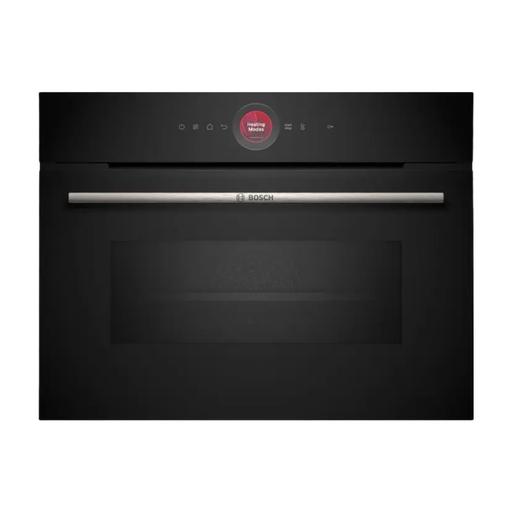
The HBA514BB3 built-in oven is one to consider if you have a suitable recess. Bosch lists conventional heat from above and below, as well as 3D HotAir.
The OU5AB2W0CK is a built-in model for which AEG lists a fan setting, conventional heat and a 65-litre capacity.
This selection includes freestanding ovens, built-in ovens and a combination microwave with oven function for anyone looking for an oven to bake with. Always check that the setting, tin size and installation suit your needs.
 No image available
A freestanding oven for anyone looking for a model to place on the worktop.
The product name lists a 35-litre capacity, a thermometer and a four-level baking rack.
 No image available
A freestanding model that lists baking as one of its cooking functions.
The product name lists a 65-litre capacity and 2000 W.
 No image available
For anyone who wants to combine microwave and oven functions in one built-in appliance; the product description mentions convection cooking.
The product name lists a 45-litre capacity and a microwave power of 900 W. Check the recess and follow the installation instructions.
 No image available
A built-in oven for anyone looking for a fan setting and several shelf positions; the product description mentions 3D fan cooking on up to three levels.
The product name lists 60 cm, 71 litres, 3D HotAir, EcoClean Direct and energy class A+. Check that the recess and connection are suitable.
 No image available
The product description lists cake as a possible recipe and mentions both conventional heat from above and below and a fan setting.
The product information lists a 30-litre capacity, a temperature range of 100–230 °C and a power rating of 1200 W.
No. The Consumers’ Association recommends conventional heat from above and below for cakes, among other things. Follow the setting in your recipe and check your oven’s instructions; if you switch to a fan setting, the Consumers’ Association often suggests setting the temperature about 20 °C lower.
Measure the recess carefully and compare the dimensions with the exact installation dimensions for the model. The Consumers’ Association also recommends checking the connection; consult the manual to see whether a particular plug or connection is required.
Once it has cooled, wrap plain cake to stop it drying out. If your recipe includes a filling or topping that needs to be kept chilled, take it in a cool bag. The Netherlands Nutrition Centre advises throwing away food that normally needs to be chilled if it has been left unrefrigerated for more than two hours.
You can’t tell just from the fact that it has a fan setting. The Consumers’ Association says combination microwaves often lack bottom heat and have fewer, or no, different shelf positions. So check the specific baking settings and whether your tin will fit at the right height.
Not necessarily. The European Commission lists small ovens as a category outside the scope of the oven rules described here. So only compare energy use per cycle or energy labels when the information is available and applicable to the specific model and the same cooking setting.