
Baking for a celebration with a large cake tin
You want to bake one cake for several guests and need enough room for your tin, as well as a suitable shelf position. A recipe from Albert Heijn Allerhande uses a Ø 24 cm springform tin.


Start with your cake tin: an apple and pear cake recipe from Albert Heijn Allerhande uses a Ø 24 cm springform tin and places it in the centre of the oven. Then choose between a built-in and a freestanding oven based on the space in your kitchen. For the model you select, check the cooking functions, usable internal dimensions, connection requirements and energy use per baking cycle. Capacity in litres alone won’t tell you whether your tin will fit.
You want to bake one cake for several guests and need enough room for your tin, as well as a suitable shelf position. A recipe from Albert Heijn Allerhande uses a Ø 24 cm springform tin.
You want to bake at home, but the space available in your kitchen will determine whether a freestanding oven or a compact model is more practical.
You’ll use the oven after the celebration too, so you’ll want to consider energy use, cleaning and installation as well as its baking functions. Milieu Centraal recommends comparing ovens by their electricity use per use or per year.
First, check that your cake tin will fit, then decide which type of oven will work in your kitchen. If you’ll use the oven regularly, factor in energy use and cleaning too.
A good fit if: you have a suitable space and don’t want an oven on your worktop.
Things to consider: the space dimensions, model instructions and electrical connection must all be suitable for your kitchen.
A good fit if: you don’t want a built-in oven and have a suitable spot on your worktop.
Things to consider: the appliance will take up worktop space; also check that heat can escape sufficiently.
A good fit if: worktop space is a priority and you’ve confirmed that your cake tin will fit inside.
Things to consider: a smaller capacity may limit your choice of cake tins; extra hotplates aren’t necessary if you only want to bake.
| What to consider | What to look for | Who should pay extra attention? |
|---|---|---|
| Cake tin and shelf position | Compare the internal dimensions and shelf width with your own tin. Check the recommended shelf position and follow the instructions in your chosen recipe. | For my celebration cake, I want to be sure my tin will fit and that I can use a suitable shelf position. Around 36% of consumers say tin size and shelf position are their main buying concerns. |
| Space and placement | For a built-in oven, measure the space according to the model instructions. For every model, check the connection requirements and the space needed for heat to escape. | If I don’t have a suitable built-in space, the oven needs to fit in an appropriate spot without making the work area impractical. Around 29% of consumers prioritise the space available in their kitchen. |
| Energy use | For ovens covered by the EU oven energy label, compare energy use per cycle in kWh and check which cooking function the figure refers to. Don’t automatically apply this comparison to small or portable ovens. | If I bake regularly after the celebration too, I’ll want to factor in energy use across those repeated baking sessions. Around 21% of consumers focus mainly on energy use. |
| Cleaning | Check the cleaning method, removable accessories and cleaning instructions for the exact model. | If I use the oven often, I’ll want to know which cleaning steps and products are recommended for that model. Around 14% of consumers say maintenance is their main buying concern. |
The stated capacity doesn’t tell you whether your springform tin will fit on the shelf or have enough room to sit in the centre of the oven.
Before choosing a compact model, compare its usable internal dimensions and shelf width with your own tin. The Albert Heijn Allerhande recipe mentioned above uses a Ø 24 cm tin.
The space, installation requirements and connection requirements all determine whether a particular model can be installed in your kitchen.
Measure the space according to the model instructions and check the connection and installation requirements in advance. The wrong dimensions or connection could mean extra installation or modification work.
According to the European Commission, small and portable ovens are outside the scope of EU oven energy labelling. This means you can’t compare labels directly for every oven.
Where the oven energy label applies, compare energy use per cycle in kWh. For compact ovens, also assess the information available for the specific model.
A built-in option for anyone looking for conventional heat and fan cooking; the features listed apply to model HBA534BS3.
A freestanding option for a kitchen without a suitable built-in space; the model information listed is for the OV607B.
A built-in option to consider if you’d like pyrolytic cleaning as well as baking functions; the model information listed is for the NBUP4DCK.
A compact freestanding alternative with hotplates; the model information listed is for the TO 2074.
The Joybuy products below are built-in ovens. Compare their dimensions, cooking functions and connection requirements with your kitchen and cake tin. This selection doesn’t include the freestanding and compact options covered in this guide.
 No image available
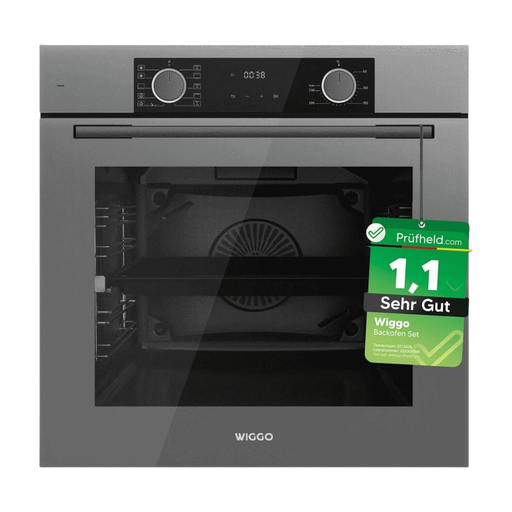
Could suit anyone looking for a built-in oven with fan convection; check the space and connection requirements before choosing a model.
The product name lists 70 L, 60 cm and 3 kW. The product information mentions multi-level baking, a grill, a pizza function, AquaClean steam cleaning, a timer and an ECO mode.
 No image available
Could suit anyone looking for a built-in oven with conventional heat; check whether it can be installed in your kitchen.
The product information lists conventional heat, convection and four included accessories, including baking trays and a wire rack.
 No image available
Could suit anyone looking for a built-in oven with circulating heat; check the model’s space and connection requirements.
The product name lists 71 L. The product information mentions 3D Hot Air, baking on up to three levels at once and a cleaning aid for light soiling.
 No image available
Could suit anyone looking for an integrated microwave as well as oven functions; check that this combination meets your needs.
The product name lists 71 L and pyrolytic cleaning. The product information mentions an integrated microwave and 4D Hot Air.
 No image available
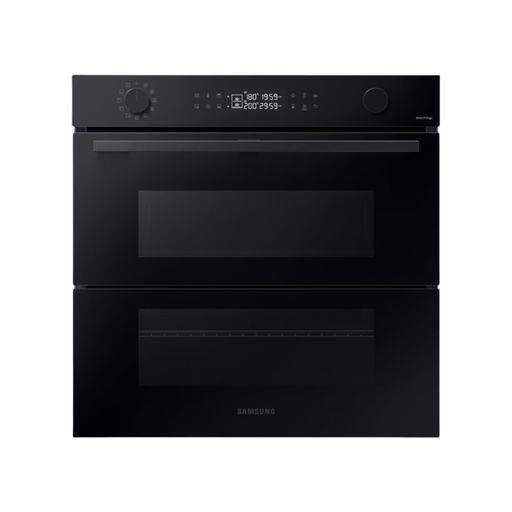
Could suit anyone looking for a built-in oven with a larger stated capacity and separately controllable oven zones; check the built-in dimensions.
The product name lists 76 L. The product information mentions Dual Cook Flex, pyrolytic and catalytic cleaning, and an A+ energy rating.
Follow the setting and instructions in your chosen recipe, and check your oven manual. The Consumentenbond recommends conventional heat for cakes and tarts. An apple and pear cake recipe from Albert Heijn Allerhande uses 180 °C and places the tin in the centre of a preheated oven; these instructions apply to that specific recipe.
Measure the space and check the manual and electrical connection requirements for the exact model. Make sure there’s also room for heat to escape. Brandweer Nederland highlights ventilation as something to consider with built-in appliances; the precise positioning will depend on your kitchen and appliance.
No. According to the European Commission, small and portable ovens are among those outside the scope of oven energy labelling. So if a compact model doesn’t have an oven energy label, that alone doesn’t prove that the product fails to meet the regulations.
Contact the seller. According to the Rijksoverheid, the seller must provide a product that works properly and is your first point of contact if it turns out to be faulty.
If you’re buying a new, similar appliance as a private consumer, the shop must take back your old appliance under the old-for-new scheme, according to the Rijksoverheid. This also applies to online purchases. Check in advance how collection will be arranged when your new oven is delivered.