
Study snackers keeping an eye on portions
You want to eat peanuts while studying and know how much energy your portion contains. Weigh out the amount and use the kcal per 100 g on the label to calculate the energy in your portion.


Don’t choose peanuts based on the brand alone: compare the kcal per 100 g and weigh out the amount you want to eat while studying. The varieties reviewed are not low in calories. According to the Netherlands Nutrition Centre, unsalted peanuts can be part of the Wheel of Five, but that’s a separate consideration from the energy in each portion.
You want to eat peanuts while studying and know how much energy your portion contains. Weigh out the amount and use the kcal per 100 g on the label to calculate the energy in your portion.
You want to compare varieties at the same weight. Being unsalted or having a favourable Nutri-Score doesn’t automatically mean a product is low in calories.
You’re looking for an unsalted snack to enjoy during several study sessions, and you pay attention to the packaging and storage instructions. A bag contains several portions, so it doesn’t automatically count as one snack portion.
Start with the amount you want to eat, then compare the energy for the same weight and assess salt and packaging separately.
| What to consider | What to look for | Who is this important for? |
|---|---|---|
| Calories in your portion | Check the kcal per 100 g, weigh your portion and calculate its energy using the information on the label. | If you want to decide for yourself how many peanuts to eat while studying, weighing them helps you know the portion size. Around 42% of consumers prioritise calories per portion. |
| Energy for the same weight | Compare the exact varieties per 100 g and, if you like, work out the figures for the same snack weight. | If you’re choosing between varieties based on energy, don’t compare manufacturer portions of different weights. Around 25% of consumers prioritise kcal for the same weight. |
| Unsalted options and salt | Read the ingredients and check the salt and energy values separately. | If you prefer unsalted peanuts while studying, you can consider that preference alongside the calories. Around 17% of consumers prioritise choosing unsalted peanuts. |
| Packaging for several occasions | Check the pack size, any portion information and the storage instructions. | If you want to keep peanuts at home for different study sessions, portioning them out and sealing the pack properly are practical considerations. Around 16% of consumers prioritise convenient packaging. |
Portion sizes on labels aren’t always the same: Albert Heijn lists a 25 g portion for its unsalted peanuts, while Jumbo also shows nutritional values per 30 g for a different variety.
Weigh the amount you choose and compare products using the same weight.
According to the Netherlands Nutrition Centre, unsalted peanuts can be part of the Wheel of Five, but their energy per 100 g still needs to be assessed separately.
Check kcal separately from salt and Nutri-Score. A smaller portion doesn’t make the product itself low in calories.
Label values apply to the specific variety and pack they appear on; a similar product name doesn’t guarantee the same ingredients or nutritional composition.
Check the current label on the exact bag or pack you’re buying, including the ingredients and allergen information.
The 235 g unsalted variety is a standard peanut snack; salted and differently prepared varieties are also available.
AH Unsalted Peanuts is a supermarket own-brand variety in a 250 g pack.
Jumbo Unsalted Peanuts 250 g is an own-brand variety whose nutritional values can be compared per 100 g.
The Dutch product information describes 285 g of unsalted peanuts, marked as available in store only.
Aldi lists TRADER JOE'S Roasted and Unsalted Peanuts in a 250 g pack.
PLUS Unsalted Peanuts, 250 g, is an own-brand variety in a bag containing several portions.
The products below include peanuts in their shells, unsalted varieties, and seasoned or salted options. Compare the nutritional values for the exact variety per 100 g and weigh your portion.
 No image available
Peanuts in their shells are an option if you want to decide how much to have for each snack break.
The pack contains 500 g. The product information lists 2515 kJ per 100 g and 0.12 g salt per 100 g; check the label to confirm the basis for the nutritional value of this variety.
Contains peanuts; the product information also warns that it may contain traces of nuts.
 No image available
This unsalted roasted variety is an option if you want to compare the energy in peanuts for the same weight.
The product information lists 626 kcal per 100 g and 100% peanuts.
Contains peanuts.
 No image available
This unsalted variety may suit you if you also consider the ingredients when choosing.
The product information lists 99% peanuts, sunflower oil and 2690 kJ per 100 g.
Contains peanuts; the product information warns that it may contain traces of cashew nuts.
 No image available
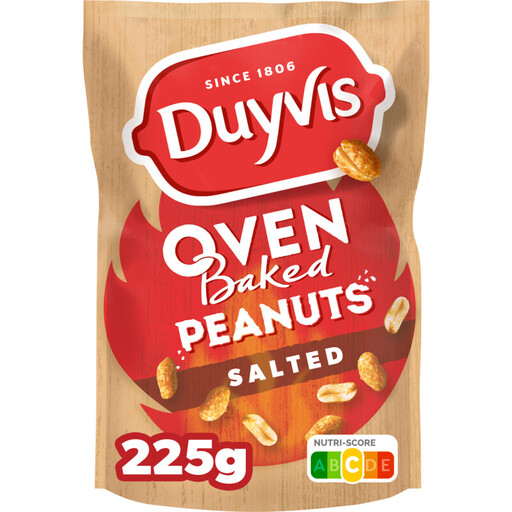
This seasoned variety is an option if you want a ready-to-eat snack and would like to factor in the salt separately.
The product information lists 606 kcal per 100 g, 93% peanuts, seasoning and salt. The salt content is 1.4 g per 100 g.
Contains peanuts; the product information warns that it may contain traces of other nuts.
 No image available
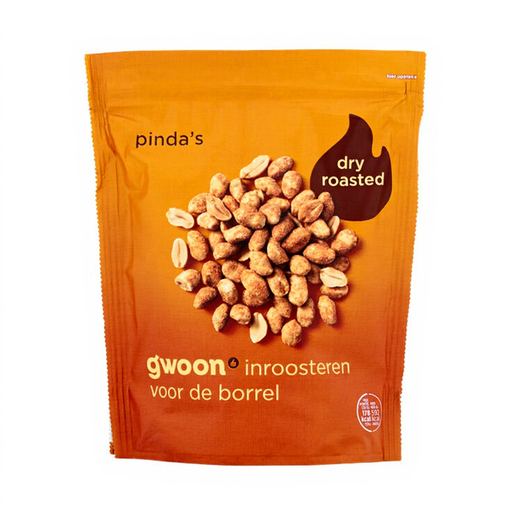
This seasoned variety is an option if you want to compare nutritional values and salt content for the same weight.
The product information lists 590 kcal per 100 g, 93% peanuts, seasoning and salt. The salt content is 1.5 g per 100 g.
Contains peanuts; the product information warns that it may contain traces of nuts.
Multiply the kcal per 100 g on the label by the weight of your portion in grams, then divide by 100. AH Unsalted Peanuts lists 620 kcal per 100 g, so a weighed 15 g portion contains 93 kcal. This is a calculation example, not personal dietary advice.
No, not simply because the pack is small. According to the European Commission, the ‘low energy’ claim for solid foods is limited to a maximum of 40 kcal (170 kJ) per 100 g. A smaller portion doesn’t change the basis on which the product is assessed.
Follow the instructions on the packaging. Albert Heijn advises storing its unsalted peanuts in a cool, dark, dry place and sealing the pack tightly after use. The Netherlands Nutrition Centre also advises keeping nuts dry and in a well-sealed container.
Check the ingredients list and warnings on the exact pack. The Netherlands Food and Consumer Product Safety Authority (NVWA) says that allergens which must be declared should be clearly distinguished from other ingredients; peanuts are themselves an ingredient in peanut products. Warnings about possible traces of other nuts can vary by variety.
Do not eat peanuts from the affected batch. In its warning dated 20 May 2026, Albert Heijn says that AH Extra Large Salted Peanuts in a tub with a best-before date of 04-11-2026 may contain metal particles. AH says customers can return the affected pack for a full refund; the warning does not apply to the 250 g bag of unsalted peanuts.