Who are these choices relevant to?

Less fat per snack portion

You want to keep eating peanuts and distinguish between a product containing less fat and eating less fat because you take a smaller portion. The Netherlands Nutrition Centre lists the fat in a portion of unsalted peanuts, so unsalted does not in itself mean that a product is low in fat.

Vegan label checkers

You check the ingredients of the exact peanut product, rather than relying on the brand name or preparation method alone. The Dutch Association for Veganism lists milk, whey, lactose, eggs and honey among the ingredients to look out for.

Snackers avoiding extra roasting oil

You’re looking for whole roasted peanuts that have no oil or fat added during roasting. Duyvis describes this preparation method for Oven Baked Peanuts Original, but it does not prove that the product has less total fat.

What should you look for when choosing?

What to consider What should you check? Who is this important to?
Less fat in the same amount Compare the fat per 100 grams for the same type of product and check the evidence supporting any comparative claim. I want to eat the same amount of peanut snacks with less fat in the product; around 36% of consumers say proven fat reduction is their top priority.
Vegan ingredients Read the ingredients of the exact product and look out for animal-derived ingredients such as milk, eggs or honey. If I want to avoid animal-derived ingredients, I check the whole label of the flavour I’ve chosen; around 27% of consumers prioritise vegan ingredients.
Weighing your portion Weigh the amount you eat and use the nutrition information for your product. I mainly want to eat less fat during one snacking occasion, without necessarily choosing a different type of peanut; around 19% of consumers prioritise portion control.
Preparation method and snack type Check whether they are whole roasted peanuts and whether oil or fat was added during roasting; also check the total fat. If I’m looking for whole peanuts roasted without extra oil, I check both the preparation method and the label; around 18% of consumers prioritise this.

Common mistakes

  • Assuming oven-roasted means lower total fat

    Duyvis describes Oven Baked Peanuts Original as roasted without added oil or fat. Peanuts naturally contain fat, so the preparation method does not prove that the total fat content is lower.

    Check the nutrition table and the evidence supporting any comparative claim before choosing a product labelled reduced fat.

  • Assuming unsalted means low in fat

    Unsalted describes the salt content, not the fat content. PLUS lists 51.3 grams of fat per 100 grams for its unsalted peanuts.

    Assess salt and fat as separate properties in the nutrition table.

  • Assuming a vegan label applies to every product in the range

    The vegan label for Duyvis Unsalted Peanuts 235 g applies to that specific product listing. Other flavours or products may have different ingredients.

    Check the ingredients list for each product, paying particular attention to milk ingredients, eggs and honey.

  • Judging a product warning by brand name alone

    Albert Heijn is recalling AH Extra Large Salted Peanuts in a tub with a best-before date of 4 November 2026 because they may contain metal fragments.

    Albert Heijn advises consumers not to eat the specified product with that date. Check the product name, packaging type and best-before date; the warning does not automatically apply to all AH peanuts.

Brands and ranges to consider

Duyvis

Worth considering if you’re looking at roasted peanuts or a specific unsalted product.

  • Duyvis describes Oven Baked Peanuts Original as roasted without added oil or fat. PLUS lists Duyvis Unsalted Peanuts 235 g as vegan.
  • These are features of different products; neither proves, on its own, that the total fat content is lower.

Albert Heijn

The product listing for AH Unsalted Peanuts is relevant if you’re looking for a standard unsalted peanut snack.

  • The product name makes it easy to identify the unsalted option.
  • Unsalted says nothing about fat reduction; check the ingredients and nutrition information for the exact product.

Jumbo

Jumbo lists Unsalted Peanuts 250 g as a standard unsalted peanut snack.

  • The product listing identifies the unsalted option and pack size.
  • Unsalted does not indicate a lower fat content; check whether the exact product is suitable for a vegan diet.

Lidl

Lidl lists 285 g of unsalted peanuts in its supermarket range.

  • The product listing gives the pack size and confirms that the peanuts are unsalted.
  • The listing does not prove a reduced-fat claim; it states that the product is only available in store.

ALDI

ALDI lists 250 g of Trader Joe’s roasted, unsalted peanuts; Trader Joe’s is the product name shown in the listing.

  • Roasted and unsalted are easy-to-recognise features of this product.
  • These features do not show that it has less fat than comparable peanuts.

PLUS

The listing for PLUS Unsalted Peanuts 300 g includes nutrition information you can use to compare this product.

  • For this product, PLUS lists 51.3 grams of fat, 25 grams of protein and 0 grams of salt per 100 grams.
  • These figures apply to the product listed and should not be assumed to apply to other PLUS products.

Peanut snacks at Joybuy

This selection includes plain, seasoned and roasted peanut snacks. Compare the fat per 100 grams and check the ingredients of the exact product; a product name or preparation method alone does not confirm a reduced-fat claim or vegan ingredients.
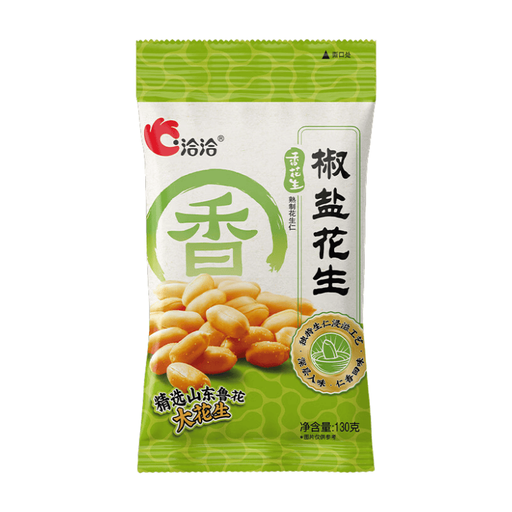
ChaCha Salted Peanuts 130g

ChaCha Salted Peanuts 130g

A good choice if you’re looking for a seasoned, crunchy peanut snack and want to compare the ingredients and nutrition information for yourself.

The nutrition table lists 38.3 g of fat per 100 g and 70% peanuts. The ingredients list includes rice and wheat flour, soya, palm oil and spices.

View at Joybuy
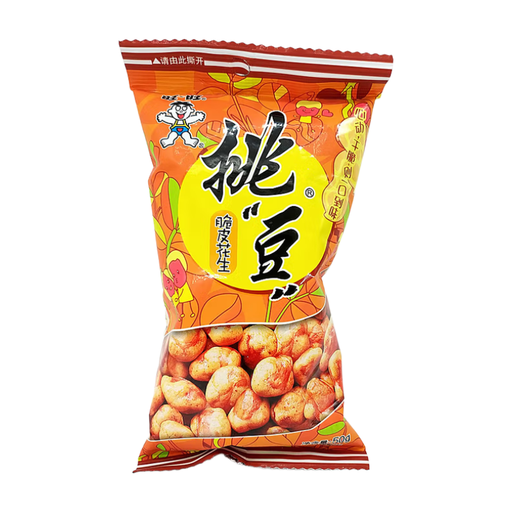
WANT WANT Tiaodou Crispy Peanuts 50G

WANT WANT Tiaodou Crispy Peanuts 50G

A good choice if you’re looking for a ready-to-eat, crunchy peanut snack and want to compare the salt and fat content.

The nutrition table lists 38.3 g of fat and 0.80 g of salt per 100 g. The ingredients list includes 70% peanuts and rice and wheat flour; the description mentions soya sauce and chilli powder.

View at Joybuy

g'woon Unsalted Peanuts 250g

g’woon Unsalted Peanuts 250g

A good choice if you’re looking for a standard unsalted peanut snack and want to weigh out your own portion.

The nutrition table lists 50 g of fat and 0.02 g of salt per 100 g. The ingredients list includes 99% peanuts and sunflower oil.

View at Joybuy
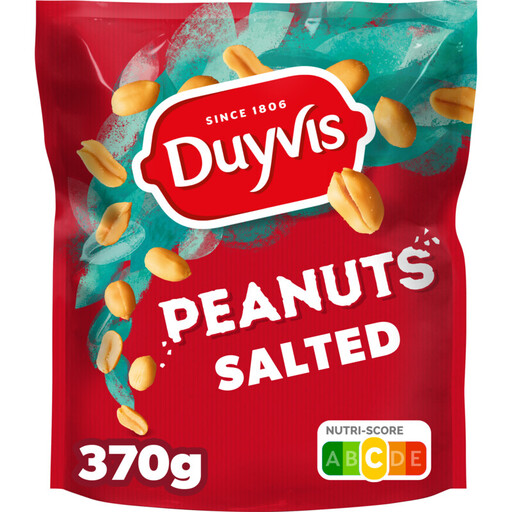
Duyvis Salted Peanuts 370 g

Duyvis Salted Peanuts 370 g

A good choice if you’re looking for a salted peanut snack and want to check whether a vegan label applies to this specific product.

The nutrition table lists 52 g of fat and 0.73 g of salt per 100 g. The product description displays a vegan label and lists peanuts, sunflower oil and salt as ingredients. The product information warns that the product poses a choking hazard for children under 5.

View at Joybuy

Fresh Extra Large Roasted Peanuts 210 g

Fresh Extra Large Roasted Peanuts 210 g

A good choice if you’re looking for a simple roasted peanut snack; the product description also suggests using them in cooking and baking.

The nutrition table lists 50 g of fat and 0.02 g of salt per 100 g. The ingredients list states 100% peanuts.

View at Joybuy

Frequently asked questions

Are all peanuts from a well-known brand automatically vegan?

No. Check the ingredients of the exact product. The Dutch Association for Veganism lists milk, whey, lactose, eggs and honey among the animal-derived ingredients to look out for.

Are unsalted peanuts also low in fat?

No. Unsalted says nothing about the fat content. PLUS lists 51.3 grams of fat per 100 grams for its 300 g pack of unsalted peanuts.

Does oven-roasted mean that peanuts contain less fat?

Not necessarily. Duyvis describes Oven Baked Peanuts Original as roasted without added oil or fat, but this preparation method does not prove that the total fat content is lower. Compare the nutrition table for the exact product.

When can a peanut snack use a comparative nutrition claim?

A nutrition claim must meet the applicable official definition and conditions. EU guidance on nutrition claims makes clear that a claim must not be misleading. Check the exact claim and product rather than relying on phrases such as “oven roasted”.

Should I also check allergen information when shopping for vegan products?

Yes. Ingredients and allergen information are separate checks. Since 1 January 2026, the Netherlands Food and Consumer Product Safety Authority (NVWA) has also been checking that labels on prepacked products correctly warn about cross-contamination; a vegan label does not mean that a product is allergen-free.
