
Households buying in bulk
You regularly buy peanuts for your household and want to choose a quantity that suits how much you use and the space you have to store an opened pack properly.


Choose a large bag if your household uses peanuts regularly and you can store them properly once opened; if you use them less often, a smaller pack may be a better fit. Unsalted peanuts can work well for regular snacks, but before taking them to school, check the school’s policy, the allergen information and whether they’re suitable for the person who’ll be eating them.
You regularly buy peanuts for your household and want to choose a quantity that suits how much you use and the space you have to store an opened pack properly.
You want to know whether peanuts are allowed at school and suitable for your child; pack size comes second.
You’re after an unsalted snack and are weighing up a smaller bag against portioning out a larger pack yourself.
First check whether peanuts are suitable for the school and the person who’ll be eating them. Then compare the type, quantity and storage options.
| What to consider | What should you look for? | Who should give this more thought? |
|---|---|---|
| How much you’ll use | Choose a bag size that suits how much your household uses; a larger pack is only practical if you’ll use the contents and store them properly. | If I buy peanuts regularly, I want a quantity that suits how much we use. Around 33% of consumers prioritise value for the amount they actually use. |
| School and intended eater | Check the school’s policy, the allergen information and the form the peanuts come in. The Netherlands Nutrition Centre warns that whole peanuts can pose a choking risk. | If peanuts might go to school, I want to check first whether they’re allowed and suitable for the person eating them. Around 27% of consumers prioritise suitability for the school and the person eating them. |
| Unsalted or salted | Check the type and ingredients list; unsalted doesn’t automatically mean no oil has been used. | If I want to have peanuts as a regular snack, I first look for the unsalted variety and check the ingredients. Around 20% of consumers prioritise this everyday choice. |
| Storing them once opened | Choose a quantity you can use up, and store the opened pack tightly sealed in a cool, dark and dry place. Follow the label too. | If we only eat peanuts occasionally, I want to avoid leaving a large opened pack unused. Around 20% of consumers prioritise using smaller quantities and managing their food stocks. |
A bulk pack for home isn’t automatically suitable for a school bag: policies can vary between schools and classes.
Check the current policy at the school in question, and treat eating peanuts at home and taking them as a school snack as separate decisions.
The quantity alone doesn’t tell you whether you’ll actually use the contents; the type and how much you use matter too.
Compare the same type and choose a pack size that suits how much your household gets through.
Food you don’t use offers no practical value.
Duyvis Unsalted lists peanuts and sunflower oil as ingredients and may contain traces of nuts.
Read the ingredients and allergen information on the pack; don’t assume what they say based on the word ‘unsalted’.
General storage advice doesn’t replace the instructions on the pack of the particular peanuts you’ve bought.
Store them tightly sealed in a cool, dark and dry place, and follow the label.
Duyvis offers unsalted and salted peanuts in a range of pack sizes.
Albert Heijn has its own salted peanut product; check the latest product information on the pack.
Jumbo lists unsalted peanuts in both a smaller pack and a 500 g value pack.
Lidl lists unsalted peanuts in a 285 g pack.
ALDI lists TRADER JOE’S roasted and salted peanuts in a 500 g pack.
PLUS lists unsalted peanuts in a 500 g pack.
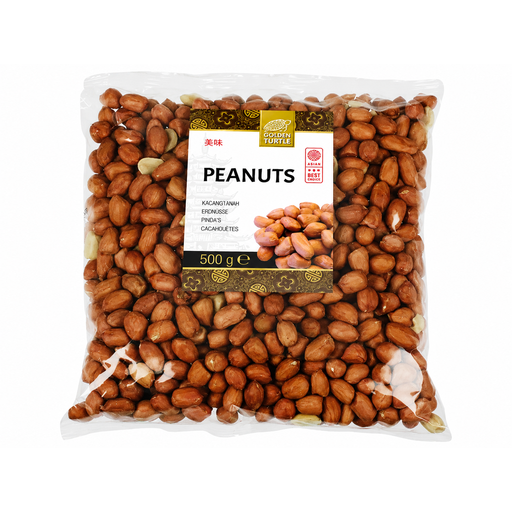
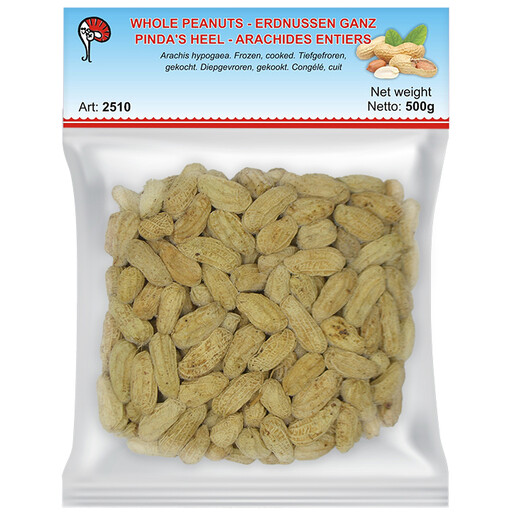
These Joybuy options are 500 g packs of peanuts for home use. They’re prepared in different ways, so they aren’t necessarily interchangeable as ready-to-eat school snacks.
 No image available
This 500 g pack is intended for home use. The peanuts are raw and need to be prepared to make a crunchy roasted snack.
The product name specifies raw peanuts with skins, 500 g.
Check the allergen information and the school’s policy before using peanuts as a school snack.
 No image available
This 500 g pack is intended for home use; bear in mind that the peanuts need to be shelled first.
The product name specifies peanuts in shell, 500 g. The product description mentions snacking and using them in dishes.
Check the allergen information and the school’s policy before using peanuts as a school snack.
 No image available
These 500 g boiled peanuts are an option for home use, but they need to be stored differently from a standard pack of peanuts.
Keep frozen; once defrosted, store in the fridge and do not refreeze.
Check the allergen information and the school’s policy before using peanuts as a school snack.
Only if peanuts are allowed under the policy of the school or class in question and are suitable for the person who’ll be eating them. School policies can vary, so check even if peanuts are eaten at home.
No. The NVWA lists peanuts and nuts as separate allergen categories. Check the allergen information on the pack; a peanut product may also list other nuts as ingredients or warn that it may contain traces of them.
No, the form they come in needs separate consideration. The Netherlands Nutrition Centre warns that whole peanuts can pose a choking risk, so don’t base your decision solely on the packaging or school policy.
Choose 500 g if your household uses that quantity regularly and you can store the opened pack properly. If you use peanuts less often, a smaller pack may be a better fit. Compare the same variety and consider how much you’ll actually use.
Store the peanuts tightly sealed in a cool, dark and dry place, and follow the instructions on the specific pack. The Netherlands Nutrition Centre’s general storage advice doesn’t give a fixed shelf life for every type of peanut.