
Regular lunch portioners
You take peanuts to university regularly and want to measure out portions at home from one larger bag. In that case, the pack size, price per kilo and storage all matter, alongside the price of the bag.


A larger bag of unsalted peanuts is a good choice if you regularly take portions with you and can store the rest properly. A smaller pack is more convenient if you eat peanuts less often or prefer to keep less in stock. Compare the price per kilo and ingredients of the same variety, and don’t treat a value pack as a single lunch portion. If you’re serving peanuts to canteen customers, make sure allergen information is available too.
You take peanuts to university regularly and want to measure out portions at home from one larger bag. In that case, the pack size, price per kilo and storage all matter, alongside the price of the bag.
You’re looking for an unsalted addition to your lunch and want to choose the amount yourself. Compare the ingredients and portion size: a value pack doesn’t automatically equal one serving.
You’re buying peanuts to offer to customers. As well as considering stock and packaging, you need to be able to provide information about the allergens present.
| What to consider | What to look for | Who is this most important for? |
|---|---|---|
| Value for the amount you’ll use | Compare the price per kilo of the same variety and choose a pack size that matches how much you expect to use. | If you regularly take portions with you, you’ll want to know whether you’ll use up the larger bag too; around 31% of consumers prioritise cost per amount used. |
| Unsalted ingredients | Check the ingredients and nutritional information for the exact variety. | If you want to choose the amount yourself and are looking for unsalted peanuts, focus on the ingredients; around 25% of consumers put this need first. |
| Portioning and storage | Think about how many lunches you’ll need them for, the storage instructions and a container that seals securely. | If you want to prepare portions for several days without keeping more in stock than you need, storage is part of your decision; around 19% of consumers consider convenient storage the most important factor. |
| Flavour variety | Check the full variety name, ingredients and salt content. | If you’re looking for a particular savoury flavour, check exactly what has been added to the peanuts; around 13% of consumers say flavour is the deciding factor. |
| Allergen information | Check the label. If serving peanuts in a canteen, make sure customers can get information about the allergens present. | If you’re buying for customers, you’ll want to communicate allergen information clearly; around 12% of consumers name this as their top buying priority. |
For unsalted peanuts, the Voedingscentrum lists the unsalted variety as a suitable choice within the Schijf van Vijf (Dutch dietary guidelines). That doesn’t mean you can overlook portion size or the ingredients: check the label of the product you’re buying.
Unsalted peanuts still contain peanuts. The NVWA lists peanuts as an allergen that must be declared; Stichting Voedselallergie warns that even a small amount can cause severe reactions in some people.
Check the label of the exact variety. If you’re serving peanuts in a canteen, make sure customers can get information about the allergens present before buying.
A low price for the bag doesn’t tell you on its own how much you’re paying for each amount. A larger pack also needs to be stored carefully once opened.
Compare similar varieties by price per kilo and choose an amount that suits your planned lunches.
A bulk pack is not the same as a measured amount for one meal.
Weigh out the amount you want to take with you at home. Use the pack weight to plan your stock, not as a serving suggestion.
The range includes unsalted, salted and seasoned peanuts.
AH has a product listing for unsalted peanuts.
Jumbo lists unsalted peanuts in 250 g and 500 g packs.
Lidl Netherlands’ product listing is for 285 g of unsalted peanuts.
The Dutch product listing is for 250 g of roasted, unsalted Trader Joe’s peanuts.
PLUS lists a 500 g pack of its own-brand unsalted peanuts.
This selection includes larger packs to portion at home, a smaller unsalted variety, and salted or flavoured peanuts. For the latter varieties, check that the flavour and ingredients suit what you’re looking for.
 No image available
Suited to anyone looking to buy a larger amount and measure out portions at home; bear in mind that you’ll need to remove the shells.
The pack contains 500 g of peanuts in shell.
 No image available
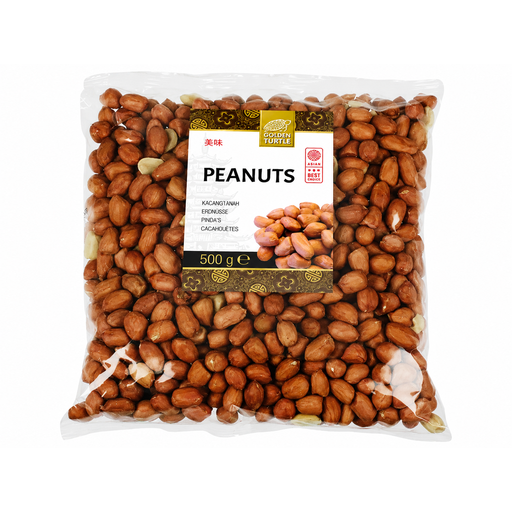
Suited to anyone looking to keep 500 g in stock; the peanuts need to be roasted first if you want them as a roasted snack.
The product information describes raw peanuts with skin.
 No image available
Suited to anyone looking for a smaller pack of unsalted peanuts.
The product description lists 99% peanuts and sunflower oil.
 No image available
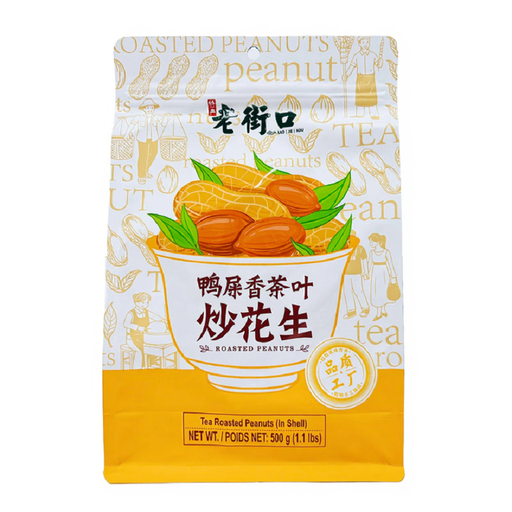
For anyone looking for a flavoured variety to enjoy on several occasions.
The description lists roasted peanuts, 96% peanuts, salt and tea. This is not an unsalted variety.
 No image available
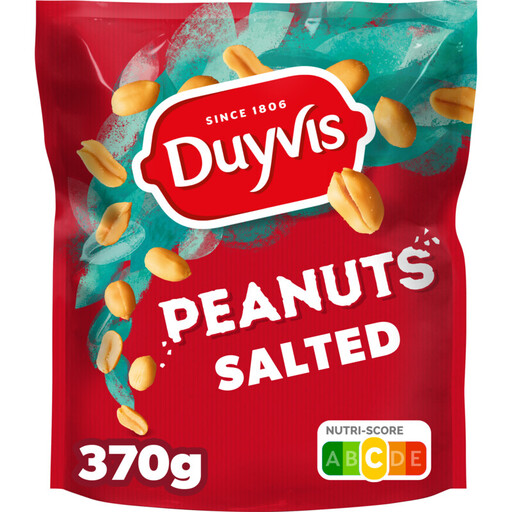
Suited to anyone looking for a salted peanut snack in a pack for several occasions.
The product description lists peanuts, sunflower oil and salt.
At 25 g per portion, you’ll get twenty portions from 500 g and ten from 250 g. The Voedingscentrum uses 25 g as a quantity for nutritional information; here, it’s a guide for planning how much to buy, not a personal serving recommendation.
Store peanuts in a cool, dark, dry place in a tightly sealed container. The Voedingscentrum says unsalted peanuts will keep for six months in a kitchen cupboard; after that, their quality may deteriorate. Follow the product instructions too, and check for a rancid smell or taste, a chewy texture or mould.
Yes. According to the NVWA, a canteen that offers food must provide information about any allergens that must be declared, including peanuts. For non-prepacked products, this information can be given in writing or verbally. If it’s given verbally, customers must be clearly told that they can ask for it, and the information must be available before they buy.
No. Unsalted peanuts are not suitable for someone with a peanut allergy: the allergen is in the peanut itself. Stichting Voedselallergie warns that even a small amount can cause severe reactions in some people. Don’t choose peanuts as a lunch add-on for that person.
Albert Heijn has issued a warning about AH Pinda’s extra groot gezouten in a tub with a best-before date of 04-11-2026, due to possible metal fragments: do not eat this specific variety. The warning does not automatically apply to other AH peanuts or to unsalted varieties.