What should you look for when buying?
First, compare the fat per 100 g and any claims on the label. Then calculate the energy and fat for your own portion; consider salt and packaging separately.
| What to consider |
What should you check? |
Who should pay extra attention? |
| Fat per 100 g |
Read the nutrition table and check exactly what any comparative claim is comparing. For solid foods, the European Commission defines a ‘low fat’ claim as no more than 3 g of fat per 100 g. |
If I’m mainly looking for a peanut snack with demonstrably less fat, I check the value per 100 g and what the claim means. Consumers who prioritise fat content make up around 36% of the group considering this train-snack choice. |
| Your portion |
First compare products per 100 g, then calculate the values for the same quantity in grams. A smaller portion reduces the amount you eat, not the fat content of the product. |
If you want to limit the amount and energy in your own travel portion, you can calculate the values for that portion. Around 29% of consumers prioritise portion size. |
| Salt |
Check the salt per 100 g and whether the variety is labelled unsalted. Treat this as a separate characteristic from fat. |
If I want to limit salt, I look for an unsalted variety and assess the fat separately. Salt is the top priority for around 21% of consumers making this choice. |
| Taking them with you and storing them |
Decide how much to take with you and seal the rest properly. The Netherlands Nutrition Centre recommends a cool, dark and dry place; follow NS rules and put rubbish in the bin. |
If you want to portion out your snack in advance and store the rest at home, choose a tightly sealed container. This is the top priority for around 14% of consumers making this choice. |
Peanuts at Joybuy
These products are peanut options for a measured train-journey portion. Compare the nutritional values per 100 g and bear in mind that flavour, salt content and product type may vary.
 No image available
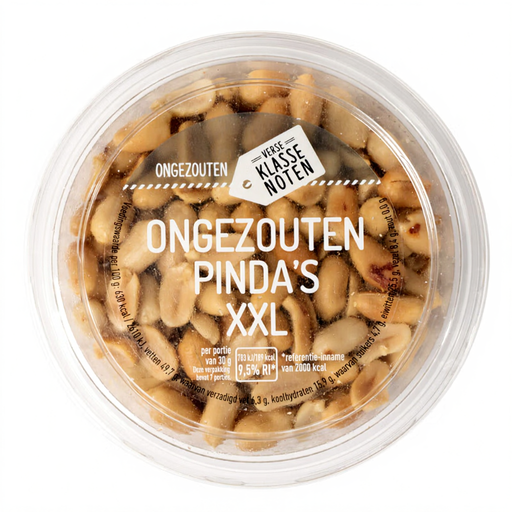
Verse Extra Large roasted peanuts, 210 g
An option if you want to take an unsalted snack with you and calculate the nutritional values for your own portion.
The product description states that it contains 50 g of fat and 0,02 g of salt per 100 g. Seal the pack properly after opening.
Joybuy
 No image available
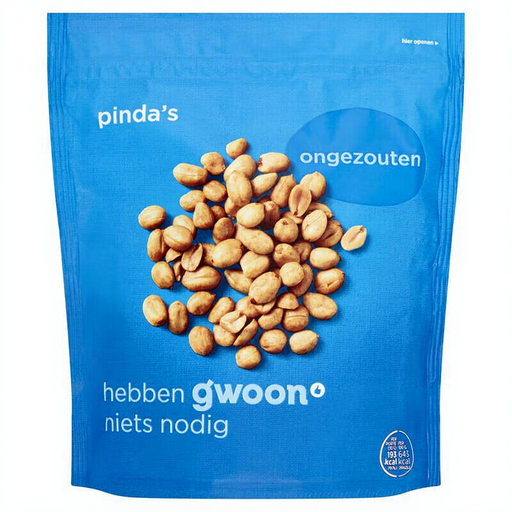
g’woon unsalted peanuts, 250 g
An option if you’re looking for an unsalted variety and want to decide how much to take with you.
The product description states that it contains 50 g of fat and 0,02 g of salt per 100 g. The product may contain cashew nuts.
Joybuy
 No image available
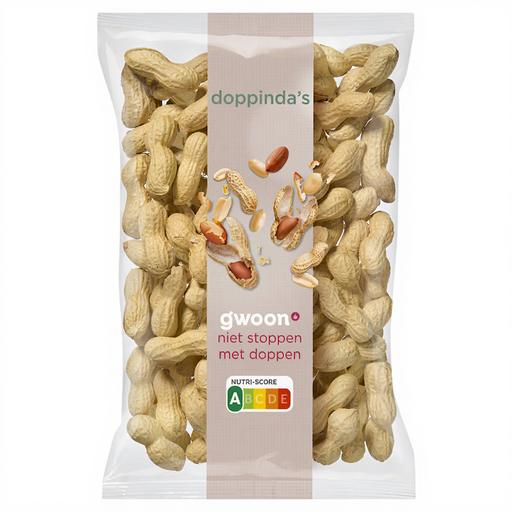
g’woon peanuts in shell, 500 g
This variety is meant to be eaten straight from the shell; bear in mind that the peanuts aren’t shelled when taking them with you.
The product description states that it contains 49 g of fat per 100 g.
Joybuy
 No image available
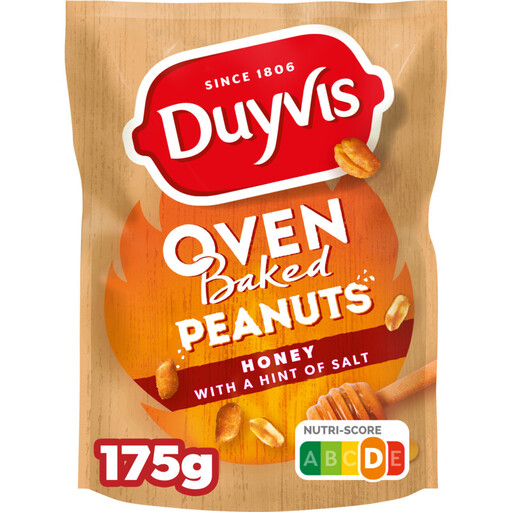
Duyvis Honey & Lightly Salted Oven-Roasted Peanuts
An oven-roasted variety with honey and salt; check the nutritional values if you want to limit salt or fat.
The product description states that it contains 40 g of fat and 1,4 g of salt per 100 g. The product contains wheat and gluten.
Joybuy
Frequently asked questions
Does ‘low fat’ mean the same as ‘less fat’?
No. For solid foods, the European Commission defines a ‘low fat’ claim as no more than 3 g of fat per 100 g. A comparative claim refers to a comparison with another product, so check which comparison is stated and don’t confuse it with the absolute ‘low fat’ claim.
How do I calculate the nutritional values for my travel portion?
Multiply the value per 100 g by the number of grams in your portion, then divide by 100. For 25 g of AH Unsalted Peanuts, which contain 620 kcal and 51 g of fat per 100 g, that works out at 155 kcal and 12,75 g of fat. Use the label for the exact variety you’ve chosen.
Are whole peanuts suitable for young children while travelling?
The product labels reviewed warn that young children can choke on peanuts. A small pack or an unsalted recipe doesn’t automatically make whole peanuts suitable for a young child.
Does a lower fat content make peanuts suitable for a child with a peanut allergy?
No. Jeroen Bosch Hospital states that a child with a peanut allergy must not eat food containing peanuts. A fat claim doesn’t change this allergy requirement.
Which peanut recall warning is relevant?
On 20 May 2026, Albert Heijn published a warning about AH Extra Large Salted Peanuts in a tub with a best-before date of 04-11-2026, due to possible metal fragments. Check that the product name, packaging and date match the details in that specific warning.


