What should you look for when choosing?
When choosing for a toddler, start with the form: the Netherlands Nutrition Centre advises against giving whole peanuts to children under 4. Then compare the ingredients, nutritional values and allergens for the exact product variant.
| What to consider |
What should you check? |
Who is this most relevant to? |
| Suitable form of peanuts |
Check whether the product contains whole peanuts, pieces, or a ground or spreadable form. |
I want to know first whether the form is suitable for my toddler, because whole peanuts are not recommended for children under 4. Around 36% of consumers give choosing a suitable form top priority. |
| Comparing fat content |
Compare the amount of fat per 100 g and, for a relative claim, check which product variant is used as the reference. |
If I’m looking for less fat, I want to know what the claim is compared with and what else is in the jar. Around 29% of consumers put reducing fat first. |
| Ingredients |
Read the ingredients list and check whether salt or sugar has been added. |
For everyday use, I want to know the full ingredients, not just what the words 100% or light on the front suggest. Around 21% of consumers give ingredients top priority. |
| Allergens and location rules |
Check the ingredients, allergen information and the rules at the school or nursery. |
If the peanut butter is going to another location, I want to know in advance which allergens and rules are relevant there. Around 14% of consumers consider this first. |
Peanut butter at Joybuy
These products are spreadable peanut options. They are not low-fat alternatives, so don’t choose them if a proven reduction in fat is your main purchasing priority.
 Image unavailable
PCD Peanut Butter 350g
The product description calls this a spreadable peanut butter made with 100% peanuts.
According to the product description, no salt or sugar has been added.
Joybuy
 Image unavailable
Calve Peanut Butter 100% - 350 g
The product description calls this finely ground peanut butter made with 100% peanuts, suitable for spreading.
The stated nutritional value is 43 g of fat per 100 g.
Joybuy
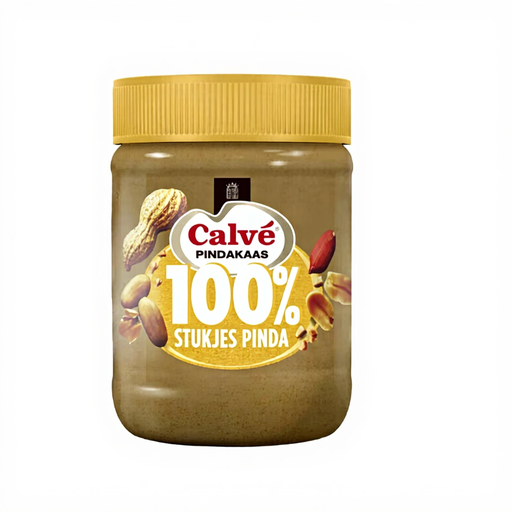 Image unavailable
Calve Peanut Butter Nut 100% - 350 g
The product description calls this a spreadable peanut butter made with 100% peanuts.
The stated nutritional value is 44 g of fat per 100 g.
Joybuy
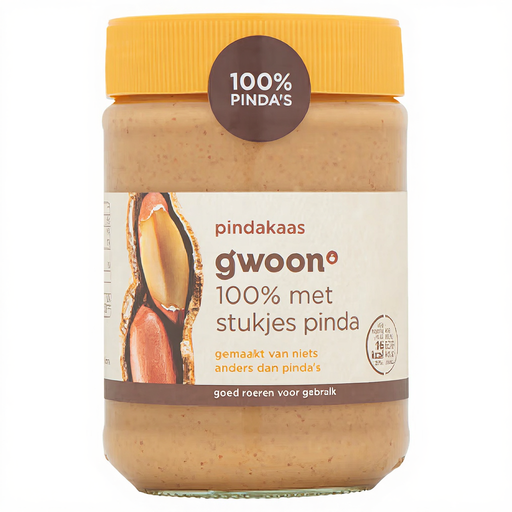 Image unavailable
g’woon Peanut Butter 100% With Pieces - 350g
According to the product description, this spreadable variant contains 100% peanuts and peanut pieces.
The product description says no salt or sugar has been added; the pieces give it a different texture from a smooth variant.
Joybuy
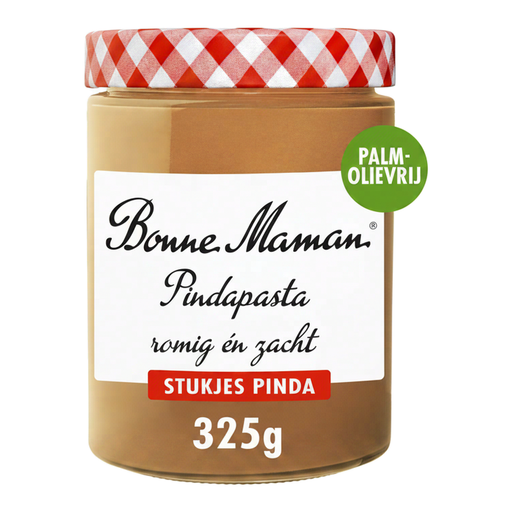 Image unavailable
Bonne Maman Peanut Butter With Peanut Pieces - 325 g
This is a spreadable peanut butter with peanut pieces; the product description states that it contains 79% peanuts.
The listed ingredients also include sugar, cocoa, oil and salt. The stated nutritional value is 47 g of fat per 100 g.
Joybuy
Frequently asked questions
Which form of peanuts is suitable for a toddler?
The Netherlands Nutrition Centre advises against giving whole peanuts to children under 4. If you offer your child peanuts, choose a suitable ground or spreadable form and check the texture of the exact variant.
Is the serving size on a pack automatically suitable for a toddler?
No, the serving size shown on a pack is not automatically a toddler-sized portion. The Netherlands Nutrition Centre’s advice for toddlers recommends 15–20 g of nut butter a day for children aged 1–3. This is a daily amount, not an extra portion on top of other eating occasions.
Is peanut butter with less fat the same as low-fat peanut butter?
No, a relative claim about less fat is not the same as a low-fat claim. The European Commission sets a maximum of 3 g of fat per 100 g for the ‘low fat’ claim on solid foods. If a product claims to contain less fat, also compare it with the stated reference product.
What should I look for in the allergen information on the packaging?
Read both the ingredients list and the allergen information for the exact variant. The Netherlands Food and Consumer Product Safety Authority (NVWA) reported that new rules for allergen information come into force on 1 January 2026, including information about the unintentional presence of allergens through cross-contamination.
Can you take peanut butter to any school or nursery?
Follow the rules of the specific location. For example, OBS De Venen has its own policy banning peanuts and nuts at school; this local rule does not automatically apply to other schools or childcare settings.


