
Consumers checking fat claims
You want to eat less fat, so you check the nutritional values for the exact product variant and the reference used for any comparative claim.


If you specifically want to eat less fat during the summer holidays, compare the nutritional values for the exact product variant and check the reference used for any comparative claim; roasted or unsalted does not automatically mean lower in fat. Historical Duyvis claims on Albert Heijn product pages are marked as discontinued, so they are not current buying options. For a ‘low fat’ claim, solid foods must contain no more than 3 g of fat per 100 g, according to the European Commission.
You want to eat less fat, so you check the nutritional values for the exact product variant and the reference used for any comparative claim.
You want to take or serve a pre-determined amount, and pay attention to the energy per portion and whether the packaging can be resealed securely.
You want a simple peanut snack with no added salt, and check the oil, flavourings and allergens separately from the fat content.
Start by understanding the difference between a comparative claim such as ‘less fat’ and the absolute claim ‘low fat’. Then decide on your portion size and check the salt, ingredients and storage instructions.
| What to consider | What to look for | Who should pay particular attention? |
|---|---|---|
| Fat claim and reference | Compare fat per 100 g and check which products are used as the reference for a comparative claim. | If I want to limit fat, I look at the exact product variant and what the claim compares it with. Around 36% of consumers put reducing fat first. |
| Energy per portion | First compare per 100 g, then look at the portion you have weighed out; label portions can vary. | If I want to control how much I eat at each snack break, I check the energy content and weigh out my portion. Around 29% of consumers prioritise energy and portion size. |
| Salt and ingredients | Read the salt content, full ingredients list and allergen information for the exact flavour. | When choosing unsalted peanuts, I also check the oil, herbs and spices, and allergens. Around 21% of consumers choose based first on salt and ingredients. |
| Taking them with you and storing them | Check the storage instructions, pack size and whether you can reseal the packaging securely after opening. | For a snack on the go, I want to know how to store the opened pack. Around 14% of consumers prioritise taking snacks with them and storing them. |
A cooking description alone does not tell you how much fat a product contains. Albert Heijn lists Duyvis Oven roasted pinda's original as containing 50 g of fat per 100 g; for solid foods, the European Commission sets the limit for ‘low fat’ at no more than 3 g per 100 g.
Check the nutritional values for the exact product variant before using a cooking method as an indication of its fat content.
Albert Heijn lists a portion of 25 g for AH Ongezouten pinda's and a portion of 30 g for Duyvis Original. A per-portion comparison therefore uses different amounts.
First compare the values per 100 g, then assess the same weighed amount.
An Albert Heijn warning dated 20 May 2026 concerns AH Pinda's extra groot gezouten in a tub with a best-before date of 04-11-2026. The warning applies to that specific product variant and date.
For this product variant, check the date and follow the recall instructions. Do not taste a recalled product to assess whether it is safe.
The range includes roasted peanuts and coated snacks for drinks.
AH Ongezouten pinda's 300 g is an own-brand option for unsalted snacking and portion planning.
Jumbo Ongezouten Doppinda's 500 g is an option if you are looking for peanuts in their shells.
PLUS Pinda's ongezouten 250 gram is an own-brand option with a short ingredients list.
ALDI lists roasted, unsalted Trader Joe's peanuts in a 250 g pack.
Lidl lists unsalted peanuts as an option for anyone looking for a product with no added salt.
This selection includes seasoned, coated or roasted peanut snacks. Product titles and flavour descriptions do not prove that a product meets a ‘less fat’ or ‘low fat’ claim; check the nutritional information and claim on the exact pack.
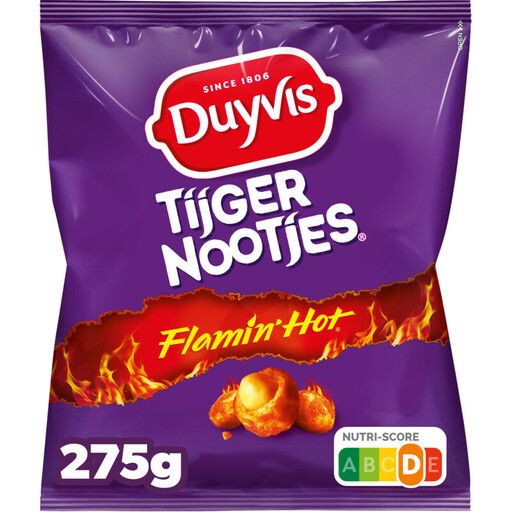 No image available
A good choice if you are looking for a spicy, crunchy coated snack to serve with drinks. The product information lists peanuts and wheat; also check the salt and fat content on the pack.
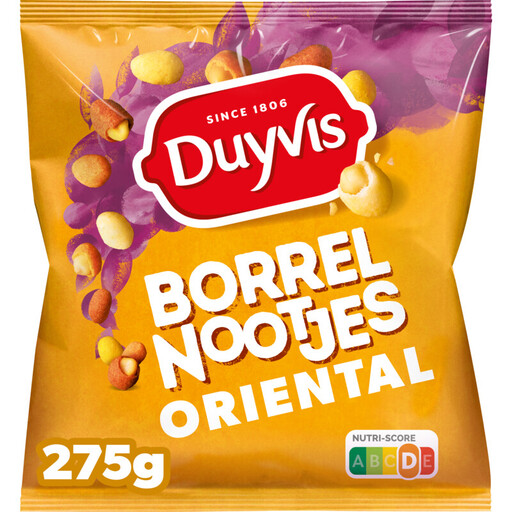 No image available
A coated peanut snack for anyone looking for a seasoned snack to serve with drinks. The product information lists peanuts, wheat and barley; check the current ingredients and allergen information on the pack.
 No image available
A good choice if you are looking for a savoury snack with a crunchy onion and garlic flavour. The product information lists peanuts and wheat; check the pack if allergens or the salt and fat content will influence your choice.
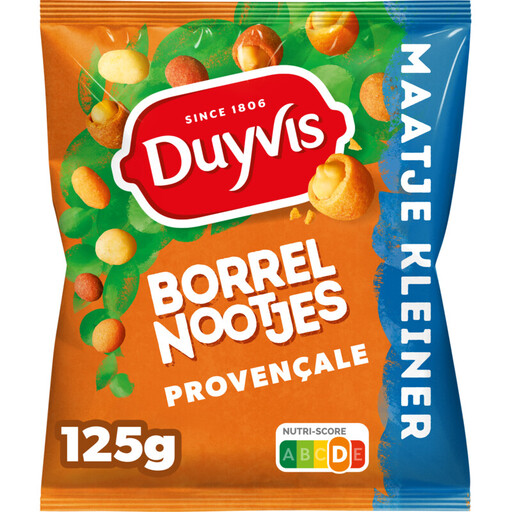
 No image available
This coated peanut snack is a good choice if you are looking for a Provençal onion and garlic flavour. The product information lists peanuts and wheat; check the current pack for allergens, salt and fat.
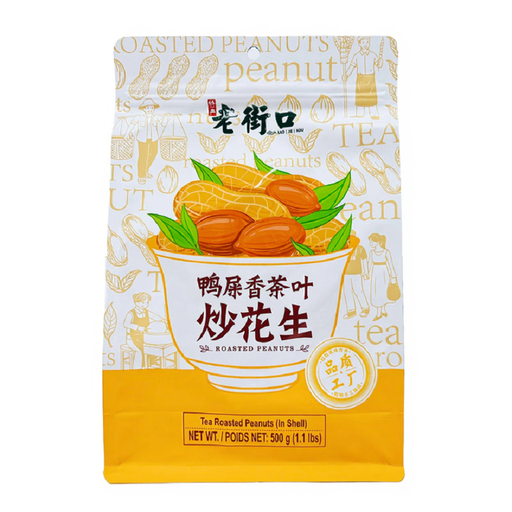 No image available
Roasted peanuts in their shells with a tea aroma, ideal if you are looking for a snack to share. The product information lists peanuts; check the pack for the full ingredients list and nutritional values.
For solid foods, the limit is no more than 3 g of fat per 100 g, according to the European Commission. This is an absolute limit and is not the same as a comparative claim such as ‘less fat’.
Follow the instructions on the pack for the exact product variant. Albert Heijn advises storing AH Ongezouten pinda's in a cool, dark and dry place and closing the pack securely after use; the Netherlands Nutrition Centre also advises storing nuts in a dry, tightly sealed container, preferably somewhere cool.
Read the full ingredients list and allergen warnings for the exact product variant. The NVWA requires allergens to be clearly distinguishable from other ingredients. The product information mentioned varies by flavour and may, for example, list wheat or barley, so always check the pack.
No. Product information from Albert Heijn and Duyvis warns that young children can choke on peanuts. A claim about fat content says nothing about whether a product is suitable for children; follow the warning for the exact product variant.
Do not eat AH Pinda's extra groot gezouten in a tub with a best-before date of 04-11-2026. The Albert Heijn warning dated 20 May 2026 concerns that specific product variant and date; follow Albert Heijn's recall instructions.